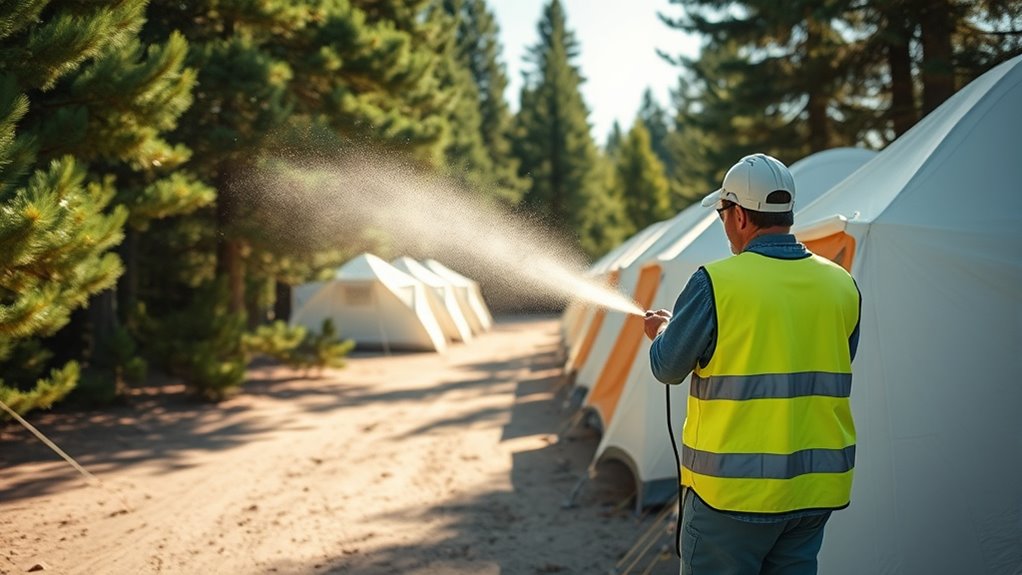

To keep your camp dust-free without using excess water, consider applying eco-friendly dust suppressants that create a durable film on surfaces, reducing the need for frequent watering. Use gravel or crushed stone and keep it well compacted to naturally limit dust. Plant vegetation along edges to trap dust particles, and manage vehicle speeds and traffic routes to prevent dust from stirring up. Exploring these sustainable techniques can help you maintain a cleaner environment more efficiently.
Key Takeaways
- Apply eco-friendly chemical dust suppressants that form long-lasting protective films, reducing the need for frequent watering.
- Stabilize surfaces with gravel, crushed stone, or binders to naturally minimize dust generation.
- Plant vegetation along camp edges to act as natural dust barriers and reduce soil disturbance.
- Manage vehicle movement by limiting traffic, reducing speeds, and designating routes to prevent dust dispersion.
- Focus on sustainable surface maintenance through grading, compaction, and stabilizers to decrease reliance on water-based dust control.

Maintaining a dust-free camp can be challenging, especially when you want to avoid excessive use of water. Dust can quickly become a nuisance, affecting air quality, visibility, and safety. To manage this effectively, you need to focus on dust control methods that prioritize water conservation. Instead of relying heavily on water, which can be wasteful and environmentally damaging, consider alternative strategies that keep dust at bay while conserving this precious resource.
One of the most effective ways to control dust without wasting water is by applying chemical stabilizers or dust suppressants. These products create a thin, durable film on the surface of dirt or gravel roads, preventing dust particles from becoming airborne. They are designed to last for weeks or even months, reducing the need for frequent watering. When you use dust suppressants, you markedly cut down on water consumption and ensure a more sustainable approach to dust control. Just make sure to choose environmentally friendly options that won’t harm nearby vegetation or wildlife.
Applying eco-friendly dust suppressants reduces water use and keeps your camp environment clean and sustainable.
Another technique involves improving the surface material of your camp roads and work areas. Gravel or crushed stone, when properly compacted, naturally limits dust production without needing constant watering. Regular grading and compaction help maintain a stable surface that resists dust generation. If you want to boost effectiveness, consider adding a thin layer of binder or stabilizer that enhances the surface’s cohesion, further reducing dust without additional water use.
Vegetation can also serve as a natural dust barrier. Planting grasses, shrubs, or ground cover along the edges of your camp can trap dust particles and prevent them from drifting into the air. This approach not only improves dust control but also promotes water conservation by reducing the need for frequent watering of roads or exposed soil. Maintaining healthy vegetation is a long-term strategy that creates a more sustainable environment, especially in dry or arid areas.
You should also implement practices like minimizing vehicle speeds and limiting traffic on unpaved surfaces. Reducing speed decreases the amount of dust kicked up by tires, which is a simple yet effective way to improve air quality. Designating specific routes and restricting unnecessary vehicle movement further reduces dust disturbance and conserves water by limiting the need for ongoing suppression efforts. Additionally, incorporating proper surface stabilization techniques can further enhance dust control efforts without relying on water.
Frequently Asked Questions
What Are the Best Eco-Friendly Dust Control Methods?
You can use eco-friendly dust control methods like biodegradable binders, which trap dust particles without harming the environment. Additionally, vegetation stabilization helps reduce dust by anchoring soil with plant roots, minimizing erosion. These methods are sustainable options that avoid excess water use while effectively controlling dust, ensuring your camp remains dust-free and environmentally responsible. Combining biodegradable binders with vegetation stabilization offers a practical, eco-conscious solution.
How Does Climate Affect Dust Management Strategies?
Climate variability substantially impacts your dust management strategies. Warmer, dry conditions increase dust, so you need seasonal adjustments like applying eco-friendly stabilizers more frequently during droughts. Cooler, wetter seasons naturally reduce dust, allowing you to decrease interventions. By monitoring weather patterns, you can adapt your methods proactively, ensuring dust stays under control without overusing water or chemicals. This approach keeps your camp environmentally friendly and effectively dust-free year-round.
Can Natural Materials Reduce Dust Without Water?
Yes, natural materials like straw or bark can reduce dust without water. Imagine a construction site using organic suppressants, such as compost or natural barriers, to stabilize the soil. These materials bind the dust particles, preventing them from becoming airborne. They’re effective, eco-friendly, and reduce water use, making them ideal for dry climates. Incorporating natural barriers and organic suppressants offers a sustainable solution for dust control without excess water.
What Are the Cost Implications of Dust Control Options?
You should conduct a thorough cost analysis to understand the expenses of various dust control options. While natural materials might have higher upfront costs, they often require less ongoing maintenance, fitting into your budget considerations more effectively. Conversely, methods needing frequent water or chemical application could lead to higher long-term costs. Balancing initial investments with operational expenses helps you choose a cost-effective, sustainable dust control solution for your camp.
How Often Should Dust Control Measures Be Reapplied?
You should reapply dust suppression measures regularly, typically every few days or after heavy winds or rain. Consistent reapplication guarantees effective water reduction and continued dust control. Monitor the site closely; if dust becomes visible or airflow stirs up dust, it’s time for another treatment. Regular reapplication maintains a dust-free environment while minimizing water use, helping you stay within budget and protect the environment.
Conclusion
By gently managing dust, you nurture the soul of your camp, turning it into a sanctuary rather than just a place. Every careful step you take is like tending a delicate garden, preserving its beauty without overwatering. When you protect your camp from dust, you’re not just maintaining its appearance—you’re safeguarding memories, stories, and spirits. Let your mindful actions be the steady rain that sustains, ensuring your camp remains a vibrant haven for all who visit.