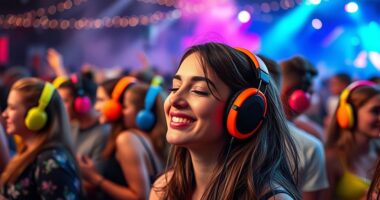
To protect your hearing without missing the music, consider using high-quality earplugs with noise-canceling technology. These devices block out harmful sounds while allowing you to enjoy audio clearly. Look for options that filter important sounds like speech or music, rather than just blocking everything out. Proper fit is key for comfort and effectiveness. If you keep exploring, you’ll discover how advanced solutions can preserve your hearing while keeping the music alive.

Get movie nights delivered free — and shop member deals
- Fast, free delivery on millions of items
- Access to Prime Big Deal Days deals on October 6–7
- Prime Video, Amazon Music and more included
Key Takeaways
- Use high NRR earplugs combined with noise-canceling headphones to block harmful noise while allowing music to pass through clearly.
- Opt for earplugs designed with sound clarity features that reduce volume without muffling important sounds or music.
- Choose custom-molded earplugs for a comfortable fit that maintains sound quality during prolonged listening.
- Incorporate active noise canceling technology to diminish background noise while preserving audio fidelity.
- Balance hearing protection and awareness by selecting devices that filter harmful sounds but amplify speech and music cues.

Have you ever wondered how everyday noises can affect your hearing over time? It’s easy to overlook the subtle damage that constant exposure to loud sounds can cause. That’s why understanding earplug effectiveness is vital. Not all earplugs are created equal; some do a better job of blocking out noise than others. When chosen correctly, they can greatly reduce your risk of hearing loss without sacrificing your enjoyment of music or ambient sounds. Modern noise canceling technology has revolutionized hearing protection, blending safety with the ability to stay connected to your environment. These advanced devices use microphones to pick up external sounds and generate anti-noise signals, effectively canceling out background noise. Whether you’re at a concert, a noisy workplace, or just trying to enjoy some peace, noise canceling technology allows you to tune out harmful sounds while still hearing what matters most. Proper fit and material also play a crucial role in the effectiveness of traditional earplugs, as well as the HEPA filters used in air purifiers to block airborne particles.
Traditional earplugs work by physically blocking sound waves from reaching your eardrum, but their effectiveness depends on proper fit and material. Foam earplugs, for instance, expand to fill your ear canal, creating a seal that reduces noise. Silicone or wax-based plugs mold to your ear shape, offering a snug fit for better noise reduction. The key is to insert them correctly—if they’re not snug or if there are gaps, their effectiveness drops drastically. You might find that some earplugs are more comfortable or easier to use, but comfort shouldn’t compromise protection. When choosing earplug types, consider your environment: for loud concerts, high NRR (Noise Reduction Rating) earplugs are essential, but for occasional use, softer, more comfortable options might suffice. Noise canceling tech takes ear protection a step further by actively managing sound rather than simply blocking it. These devices can be worn discreetly, allowing you to enjoy your favorite music or podcasts without risking hearing damage. They’re especially useful if you’re exposed to varying noise levels, as they adapt in real time to the environment. Unlike traditional earplugs, noise canceling tech can filter out harmful noise while amplifying speech or other important sounds, giving you a better sense of your surroundings. This combination of effective noise reduction and sound clarity helps you protect your hearing without missing the music or important cues in your environment. Ultimately, whether you opt for high-quality earplugs or advanced noise canceling technology, the goal is to strike a balance—protect your hearing, but don’t lose the pleasure of life’s sounds.
noise cancelling earplugs for music
As an affiliate, we earn on qualifying purchases.
As an affiliate, we earn on qualifying purchases.
Frequently Asked Questions
Can I Still Enjoy Live Music While Protecting My Ears?
Yes, you can enjoy live music while protecting your ears. Use the right earplug types, like musician’s or high-fidelity earplugs, which reduce volume without sacrificing sound quality. Hearing protection lets you experience the music safely, preventing damage while still enjoying the event. Just make sure to insert the earplugs properly, and you’ll have a great time without risking your hearing.
Are There Specific Earplugs Designed for Musicians?
Yes, musician earplugs are your secret weapon for enjoying live music without losing clarity. These custom hearing protection devices are tailored to fit your ears perfectly, like a glove, reducing loud sounds while preserving the rich details of the music. With options like custom hearing protection, you get a comfortable, high-quality shield that keeps your ears safe and your experience immersive, so you never have to choose between sound and safety.
How Often Should I Get My Hearing Checked?
You should get your hearing checked at least once every year to maintain good hearing health, especially if you’re frequently exposed to loud sounds or music. Regular hearing tests help catch any early signs of damage, so you can take steps to safeguard your hearing. If you notice any changes in your hearing, schedule an appointment sooner. Staying proactive ensures you enjoy your music without risking long-term hearing issues.
Do Noise-Canceling Headphones Protect Hearing?
Yes, noise-canceling headphones help safeguard your hearing by providing effective noise reduction. They block out background noise, allowing you to listen at lower volumes, which benefits your hearing health. However, it’s important to use them properly and avoid turning up the volume too high if you’re in noisy environments. While they’re a good tool for hearing protection, combining them with regular hearing checkups ensures your hearing stays healthy in the long run.
What Are Signs of Hearing Damage From Loud Sounds?
You might notice ringing in your ears, or tinnitus symptoms, after loud concerts or events. Early signs of hearing damage include difficulty understanding speech, muffled sounds, or needing louder volumes to hear clearly. If you experience these symptoms, it’s a sign to prioritize hearing loss prevention. Ignoring them can lead to permanent damage, so seek hearing assessments promptly and use protective gear during loud activities to safeguard your hearing.
custom molded hearing protection
As an affiliate, we earn on qualifying purchases.
As an affiliate, we earn on qualifying purchases.
Conclusion
By taking simple steps like wearing earplugs at concerts or turning down the volume, you protect your hearing without missing out on the music. Imagine a concertgoer who ignored ear protection and now struggles with hearing loss years later. Don’t let that be your story. Stay mindful, enjoy your favorite tunes, and prioritize your ear health today. After all, preserving your hearing means you can continue to enjoy music for years to come.
active noise canceling headphones for concerts
As an affiliate, we earn on qualifying purchases.
As an affiliate, we earn on qualifying purchases.
As an affiliate, we earn on qualifying purchases.
Evergreen bestsellers Picks
bestsellers
As an affiliate, we earn on qualifying purchases.