
TL;DR

Get movie nights delivered free with Prime
- Fast, free delivery on millions of items
- Prime Video, Amazon Music and more included
- Member-only deals all year
Nick Park’s A Grand Day Out, completed over several years while he was a student, premiered alongside Creature Comforts at the Bristol Animation Festival in November 1989. Park later said he did about 90% of the Wallace and Gromit short himself; the film won a BAFTA and established characters and techniques that shaped his career.
Nick Park made about 90% of A Grand Day Out himself, according to a retrospective by Animation Obsessive on the making of the short that introduced Wallace and Gromit. The film premiered at the Bristol Animation Festival in November 1989 alongside Creature Comforts, beginning the public life of characters and a visual style that would define much of Park’s work.
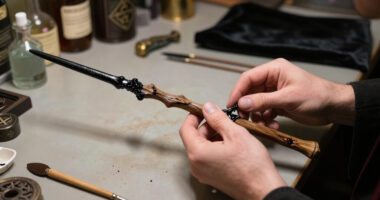
Park began developing A Grand Day Out in 1982, while studying at the National Film and Television School. It started as a graduation film with a simple premise: Wallace and his dog travel to the moon in a rocket built in the basement. The project took years to finish, and a limited budget left Park doing most of the animation and production work himself. He later described the film as an ambitious project he had considered abandoning more than once.
The production was not entirely solitary. Park said a friend, Steve Rushton, helped with the earliest script; animators Alison Snowden and David Fine made some props; and a school technician built the rocket’s light-up console. Park also received Plasticine from its manufacturer, while actors Peter Sallis and Peter Hawkins provided character voices as a favor. These contributions supported a film that remained mainly Park’s work.
Several defining character choices emerged during production. Gromit was first conceived as a cat, but Park found a dog easier to model. He dropped Gromit’s dialogue during the first week of animation because it was difficult to animate, and said he discovered the character could express himself through his eyes. Wallace’s wide mouth also developed as Park animated Sallis’s pronunciation of “cheese.”
A Short That Set Park’s Style
The film’s significance is not just that it introduced Wallace and Gromit. Park later said the characters gave him his style, including Wallace’s exaggerated mouth movements and Gromit’s expressive eyes. The production details show how those signature elements emerged through hands-on problem-solving rather than from a fully staffed studio process.
A Grand Day Out also helped bring Park to wider attention. Although the short did not win the Academy Award—Creature Comforts was the Academy’s choice—it won a BAFTA, according to the report. Its reception helped launch a body of work that would make Park one of the best-known figures associated with Aardman. For readers interested in animation, the account offers a specific look at how a long, resource-constrained student project became a landmark in a major British animation career.
Plasticine modeling clay for animation
As an affiliate, we earn on qualifying purchases.
As an affiliate, we earn on qualifying purchases.
From Film School to Bristol
Park was already making animation as a child, using an 8 mm camera supplied by his parents, who encouraged his experiments. At film school, he returned to an old sketchbook for the characters in his graduation project. Gromit’s original design was a cat, while Wallace initially had a mustache; both details changed as Park worked out what he could model and animate effectively.
Aardman co-founders David Sproxton and Peter Lord visited Park during production and saw promise in the film before much of it had been shot. Sproxton recalled that Park’s use of Plasticine and sets showed an unusual ambition and charm. After the November 1989 festival screenings, the films did not immediately produce a surge of media attention, but A Grand Day Out was later shown on Channel 4 in 1990, bringing Park’s work to a broader audience.
The two shorts followed different award paths. Creature Comforts received the Academy’s recognition, while A Grand Day Out earned the BAFTA cited in the report. Park later recalled being surprised that animated shorts could be nominated for an Oscar at all. That response captures how uncertain the project’s prospects appeared to its maker while he was still laboring over it.
“I did probably 90% of it myself.”
— Nick Park, as quoted in the Animation Obsessive report
As an affiliate, we earn on qualifying purchases.
What the 90% Estimate Covers
Park’s figure is an approximate retrospective estimate, not a production accounting breakdown. The report does not specify how the 90% was calculated or provide a task-by-task division of labor. It does name several people who contributed, but the precise share of work carried out by each person is not clear.
The account also does not quantify the film’s audience or wider reception at the time of the Bristol premiere. It describes the screenings as successful but says they did not bring an immediate wave of media coverage. The available material does not establish how quickly its reputation grew after the Channel 4 showing, beyond noting the later awards and recognition.
As an affiliate, we earn on qualifying purchases.
The Film’s Lasting Record
The source is a retrospective, not a report of a new production or release. It does not announce a forthcoming Wallace and Gromit project, screening or anniversary event. The next development is therefore not a scheduled milestone but the continuing reassessment of A Grand Day Out through accounts of its production and its place in Park’s career.
For readers following the series, the report’s clearest takeaway is the contrast between the film’s modest, labor-intensive beginnings and the lasting influence Park attributed to it. Further detail on the production would require additional records or interviews that break down the work behind the short more precisely.
As an affiliate, we earn on qualifying purchases.
Key Questions
What does “90% alone” refer to?
It refers to Nick Park’s estimate that he did about 90% of A Grand Day Out. The report does not provide a detailed calculation of that share.
When did A Grand Day Out premiere?
The short premiered at the Bristol Animation Festival in November 1989, alongside Park’s Creature Comforts.
Did A Grand Day Out win an Academy Award?
No. The report says Creature Comforts was the Academy’s pick. A Grand Day Out won a BAFTA.
How did Gromit become a silent dog?
Gromit was first planned as a cat. Park said he made him a dog because dogs were easier to model, then cut his dialogue early in the shoot because it was difficult to animate. He found that Gromit could communicate through his eyes.
Who else worked on the film?
Contributors included Steve Rushton on the earliest script, Alison Snowden and David Fine on props, a school technician on the rocket console, and voice actors Peter Sallis and Peter Hawkins. The report says Park nevertheless did most of the work himself.
Source: hn
Columbus Day / Indigenous Peoples' Day Picks
long weekend sales
As an affiliate, we earn on qualifying purchases.