To make your B-roll truly elevate your story, focus on deliberate cutaways that clarify scenes, deepen emotions, and control pacing. Use close-ups, detailed shots, or mood-setting visuals to guide your viewers’ focus and heighten emotional impact. Strategic cutaways break up scenes, add layers of meaning, and keep viewers engaged. When you choose your shots carefully, your storytelling becomes more compelling and memorable—if you keep exploring, you’ll discover even more ways to enhance your visuals.
Key Takeaways
- Use purposeful cutaways to clarify complex scenes and focus viewer attention on key details.
- Incorporate emotional visuals like trembling hands or ticking clocks to deepen audience connection.
- Vary shot length and timing to control scene pacing, building suspense or allowing emotional absorption.
- Highlight subtle details or expressions to reinforce storytelling themes and evoke specific feelings.
- Employ strategic cutaways to guide narrative flow, emphasize critical moments, and enhance overall storytelling impact.
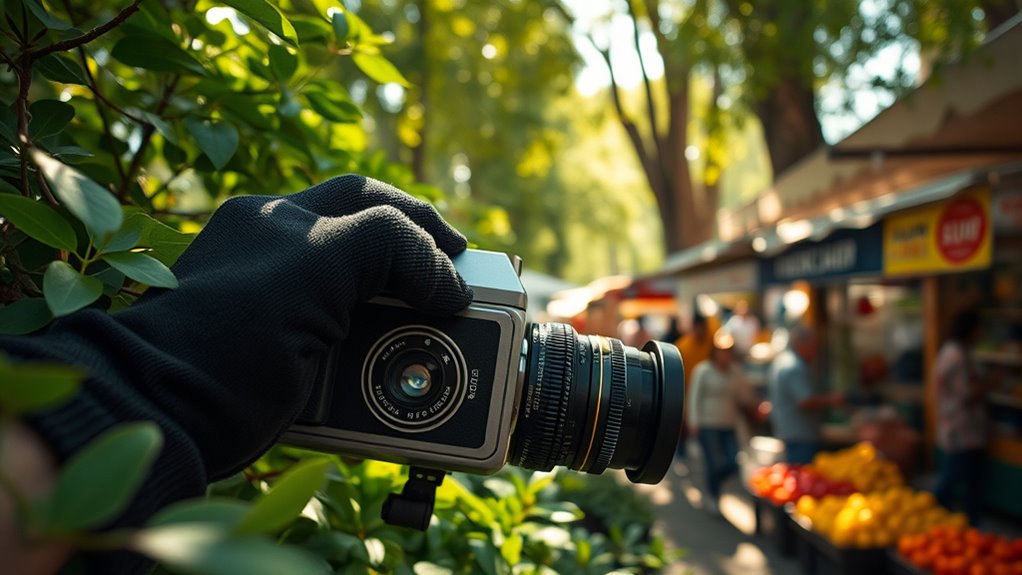
Cutaways are powerful filmmaking tools that can instantly elevate your storytelling. They act as visual cues that deepen the narrative, guiding viewers through the story with clarity and purpose. When used effectively, cutaways enhance your visual storytelling by providing context, emphasizing details, or building emotional impact. Instead of relying solely on continuous shots, you insert these brief visuals to highlight what matters most, creating a richer, more layered experience for your audience.
Think of cutaways as a way to break up the main action with strategic shots that add meaning or emotion. For example, after a tense exchange, a close-up of a character’s trembling hand or a lingering shot of a ticking clock can communicate anxiety or impatience without a single word. These small but deliberate visuals serve to evoke feelings, making the scene more visceral for viewers. When you include cutaways that resonate emotionally, you deepen the connection between your audience and the story, making every moment more memorable.
Cutaways evoke emotion and deepen connection, making scenes more memorable without words.
Using cutaways thoughtfully also helps clarify complex scenes. If your main footage shows a busy street or chaotic environment, inserting cutaways of individual expressions, objects, or details can guide viewers’ focus. This prevents confusion and keeps the story clear. For instance, a shot of a character’s eyes darting around can signal suspicion or fear, reinforcing the scene’s emotional tone. In this way, cutaways become an essential tool for storytelling precision, ensuring your message isn’t lost or misinterpreted.
Moreover, cutaways allow you to control pacing and rhythm. A quick cut to a meaningful detail can heighten suspense or give viewers a moment to process what they’ve seen. Conversely, longer cutaways can pause the narrative, allowing viewers to absorb the emotional weight of a scene. When you master the timing and selection of these shots, you create a dynamic flow that keeps your audience engaged and emotionally invested.
Ultimately, the power of cutaways lies in their versatility. They’re not just filler shots but deliberate choices that shape how your story is perceived. When you focus on visual storytelling and aim for emotional impact, these brief visuals become your storytelling allies. They help you convey mood, highlight subtle details, and foster a deeper connection with your viewers. Additionally, understanding visual storytelling principles can help you craft more compelling narratives. By skillfully integrating impactful cutaways, you reinforce your narrative’s core message and make your storytelling more compelling and memorable.
As an affiliate, we earn on qualifying purchases.
Frequently Asked Questions
How Do I Choose the Best Cutaways for My Story?
To choose the best cutaways for your story, focus on storytelling techniques that emphasize key moments and emotions. Look for visuals that add depth and context, enhancing your visual storytelling. Consider shots that complement or contrast the main scene, guiding viewers’ attention and creating a smooth flow. Always select cutaways that support your narrative, making your story more engaging and memorable through thoughtful visual choices.
What Are Common Mistakes to Avoid With Cutaways?
Did you know overusing cutaways can reduce storytelling impact? To avoid mistakes, don’t neglect story relevance; each cutaway should enhance your narrative. A common error is including random shots that distract viewers. Keep cutaways purposeful, supporting key moments. Steer clear of overloading scenes with unnecessary visuals, which can confuse or bore your audience. Instead, choose relevant, compelling cutaways that strengthen your story without overshadowing the main footage.
How Can Cutaways Improve Pacing and Flow?
Cutaways improve pacing and flow by breaking up long shots, keeping your audience engaged, and emphasizing key moments. They enhance visual storytelling by adding context, emotion, or detail that complements the main footage. Use them strategically to shift seamlessly between scenes, maintain narrative momentum, and prevent your story from feeling static. Well-timed cutaways create a dynamic rhythm, ensuring your audience stays invested and your message resonates clearly.
What Equipment Is Needed for Capturing Effective Cutaways?
Ever wondered what equipment you need for effective cutaways? You’ll want a good camera with versatile settings, along with essential camera accessories like a tripod or stabilizer to keep shots steady. Don’t forget lighting techniques—using reflectors or portable lights can dramatically improve image quality. A macro lens can add detail, and extra batteries guarantee you’re ready. Is your gear optimized to capture smooth, compelling cutaways that enhance your story?
Are There Different Styles of Cutaways for Various Genres?
Yes, there are different styles of cutaways tailored to various genres. In visual storytelling, genre-specific techniques help convey mood and context, whether it’s quick, dynamic shots for action films or slow, intimate details for dramas. You should adapt your cutaway style to match the tone and narrative of your project, ensuring each shot enhances your story and keeps viewers engaged. This approach makes your storytelling more compelling and authentic.
As an affiliate, we earn on qualifying purchases.
Conclusion
So next time you’re filming, remember: a well-placed cutaway isn’t just a filler—it’s the secret weapon that can turn a good story into an unforgettable masterpiece. Imagine your footage transforming into a cinematic universe where every tiny detail sings, screams, and shouts its importance. With the right cutaways, you hold the power to make viewers feel like they’re right there, living every moment — because, honestly, a great cutaway can make or break your story’s legacy.
As an affiliate, we earn on qualifying purchases.
emotional storytelling video accessories
As an affiliate, we earn on qualifying purchases.
As an affiliate, we earn on qualifying purchases.