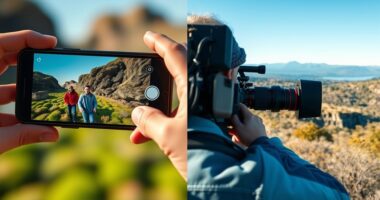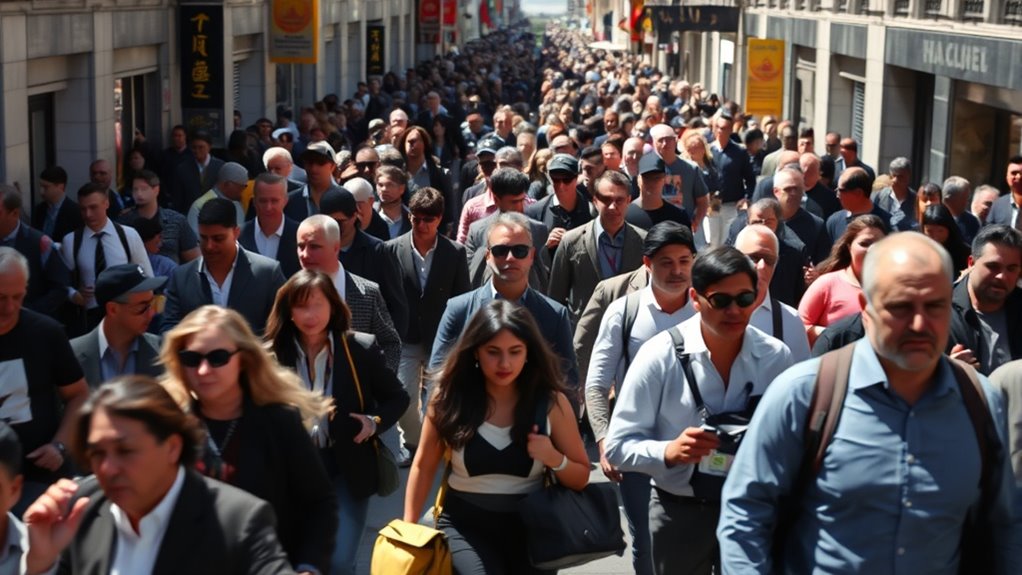

To stay safe while capturing in tight crowds, plan your routes using pathways with minimal obstacles and anticipate crowd movement to avoid surprises. Use lightweight gear like smartphones with stabilizers or small mirrorless cameras, and move deliberately with smooth, controlled motions. Stay aware of your surroundings and communicate clearly with your team to adjust your position as needed. Mastering these techniques helps you film steadily without disrupting or risking injury—discover more tips to perfect your approach.
Key Takeaways
- Plan and scout routes to navigate through the crowd smoothly and avoid obstacles or congested areas.
- Use lightweight, stabilizer-equipped gear like gimbals or smartphones for steady footage in tight spaces.
- Move deliberately with controlled, gradual adjustments, keeping a steady line of sight to prevent jerky footage.
- Maintain awareness of crowd behavior to anticipate movements and avoid getting boxed in or knocked over.
- Establish clear communication signals within your team to coordinate safe and efficient camera movements.
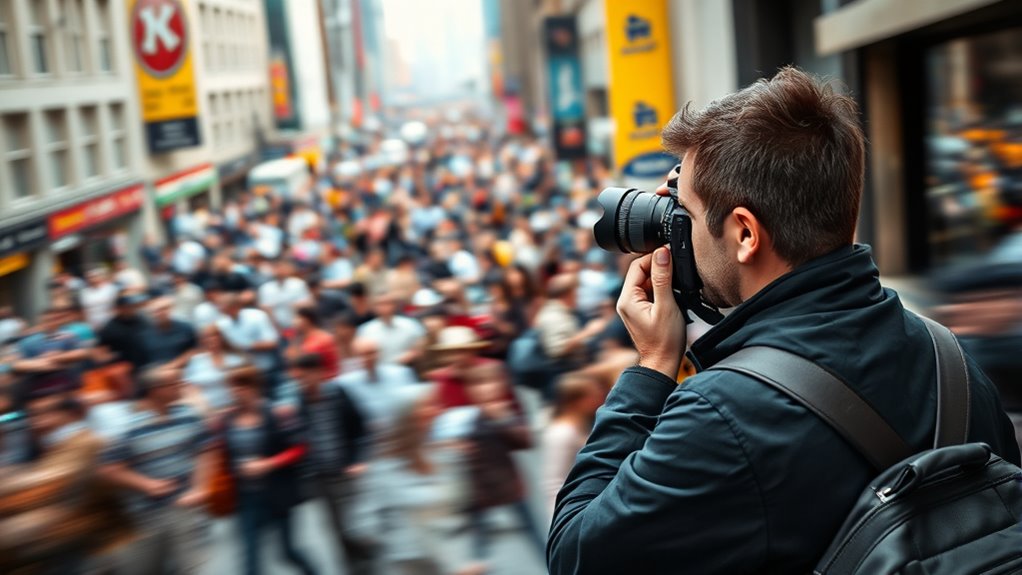
Controlling camera movement in tight crowds requires careful planning and precise execution, especially when you want to maintain clarity and focus on your subject. To do this effectively, you need to master crowd maneuvering—moving smoothly through dense groups without disturbing or losing your shot. This involves understanding how people move and anticipating their patterns so you can weave through without causing disruptions. Before you start filming, scout the area. Identify the paths that offer the clearest routes with the least obstruction, and plan your route accordingly. Staying aware of your surroundings is essential in crowded environments; constantly adjusting your path ensures you don’t get boxed in or knocked over.
Master crowd maneuvering by planning your route and anticipating movements to capture stable, clear footage in tight crowds.
Equipment selection plays a fundamental role in maintaining stability and safety while traversing tight spaces. Opt for lightweight, compact gear that’s easy to handle and quick to set up. A small mirrorless camera or a smartphone with stabilizers can be invaluable, as they allow for more flexible movement and less fatigue. Consider using a gimbal stabilizer designed for handheld use; it helps keep your footage steady even when you’re on the move. Additionally, a good grip or harness system can distribute the weight of your equipment evenly, reducing strain during prolonged shoots. Keep your gear protected with weather-resistant covers or cases, especially in unpredictable outdoor crowds.
When you’re maneuvering through crowds, prioritize smooth, controlled movements over hurried or jerky ones. Sudden stops or quick turns can cause accidents or make your footage shaky. Instead, move deliberately, maintaining a steady pace that matches the flow of the crowd. Use your body to absorb shocks—bend your knees slightly and keep your arms close to your body to stabilize your camera. A shoulder rig or handle can also improve control, allowing you to lean into your movement rather than fighting against it. Always keep a clear line of sight to your subject, adjusting your position gradually while avoiding abrupt shifts that could cause confusion or collision. Developing a good understanding of crowd behavior is essential to anticipate movements and navigate safely through tight spaces.
In crowded settings, communication and awareness are key. If you’re working with a team, establish signals to coordinate movements and avoid bumping into each other. Be mindful of other people’s personal space and the environment around you—your safety and theirs depend on it. By mastering crowd maneuvering techniques and choosing the right equipment, you can achieve dynamic, professional-looking footage without compromising safety or clarity. Remember, patience and preparation are your best tools in tight crowds, helping you deliver compelling shots while keeping everyone safe.
Frequently Asked Questions
How Do Camera Operators Communicate in Noisy, Crowded Environments?
You communicate in noisy, crowded environments mainly through hand signals and radio communication. Hand signals let you give quick, clear instructions without shouting over the noise, while radios keep you connected with your team for real-time updates. Make certain everyone is familiar with the signals beforehand. Using both methods ensures your commands are understood and your safety is maintained, even in chaotic, loud settings.
What Are the Legal Considerations When Filming in Crowded Public Spaces?
When filming in crowded public spaces, you need to take into account privacy concerns and permit requirements. Make sure you obtain any necessary permits from local authorities before filming. Respect individuals’ privacy rights by avoiding close-ups without consent, especially in sensitive situations. Being aware of these legal considerations helps you stay compliant and avoids potential lawsuits or penalties, ensuring your shoot proceeds smoothly and ethically.
How Can Equipment Be Protected From Damage in Tight Crowds?
You might worry about equipment damage in tight crowds, but a sturdy camera case offers great protection. Keep your gear stable by holding it close and using straps or harnesses, preventing accidental drops or bumps. Don’t forget to secure your camera when moving through dense crowds, and choose lightweight yet durable cases to guarantee easy handling without sacrificing safety. With these tips, your equipment stays safe and ready to film.
What Training Is Recommended for Safe Camera Operation in Dense Crowds?
You should undertake specialized training protocols focused on safe camera operation in dense crowds. Seek safety certifications that cover crowd dynamics, personal safety, and equipment handling. Practice quick reflexes and situational awareness to avoid accidents. By following these protocols and obtaining relevant certifications, you’ll be better prepared to navigate tight crowds safely, protecting both yourself and your equipment while capturing essential footage effectively.
How Do Weather Conditions Affect Camera Movement Safety in Crowds?
You dodge raindrops and gusts of wind like a skilled navigator, but weather hazards can threaten your safety and equipment stability. Wet surfaces make footing slippery, risking falls, while strong winds can jostle your camera, causing unstable shots. To stay safe, secure your gear with sturdy straps, use weather-resistant equipment, and stay alert to changing conditions. Adjust your movements quickly to maintain control and protect both yourself and your camera.
Conclusion
Staying safe in tight crowds is like maneuvering a battlefield—you need precision and awareness. By mastering smooth camera movements, you keep yourself protected and in control, avoiding chaos and danger. Remember, a steady hand and clear focus can be your best allies amidst the chaos, turning a potentially overwhelming situation into a manageable one. With these techniques, you won’t just survive the crowd—you’ll conquer it, feeling as unstoppable as a force of nature.