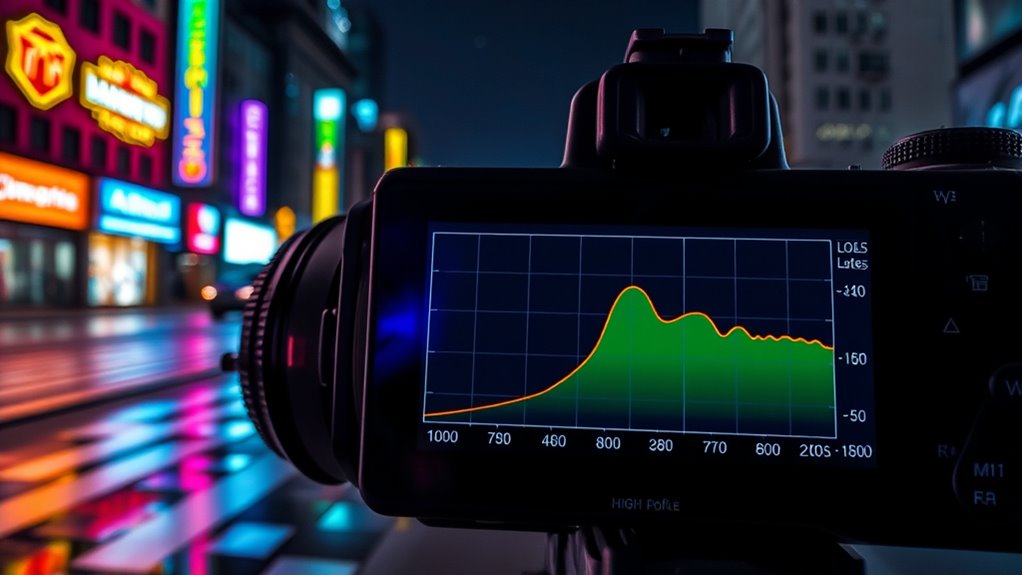

Using proper color profiles, calibrated displays, and Log recording is vital for capturing clear, accurate night footage. Color profiles ensure your camera’s color science stays consistent, while calibration makes sure your monitor shows true-to-life colors. Log recording helps preserve dynamic range and detail in low-light scenes, giving you more flexibility in post-production. When combined, these tools help you achieve professional-quality results. Keep exploring to discover how each element enhances your night shots even further.
Key Takeaways
- Use proper calibration tools to ensure your monitor displays accurate colors, aiding effective grading of Log footage at night.
- Select the correct color profile tailored for night shooting to preserve shadows and highlights without color shifts.
- Apply a dedicated log profile during recording to maximize dynamic range and retain detailed luminance and color information.
- Regularly calibrate your camera and display to maintain consistency and prevent color inaccuracies during night footage editing.
- Combine calibrated equipment with appropriate color grading techniques to enhance night scenes, ensuring vivid, natural-looking results.
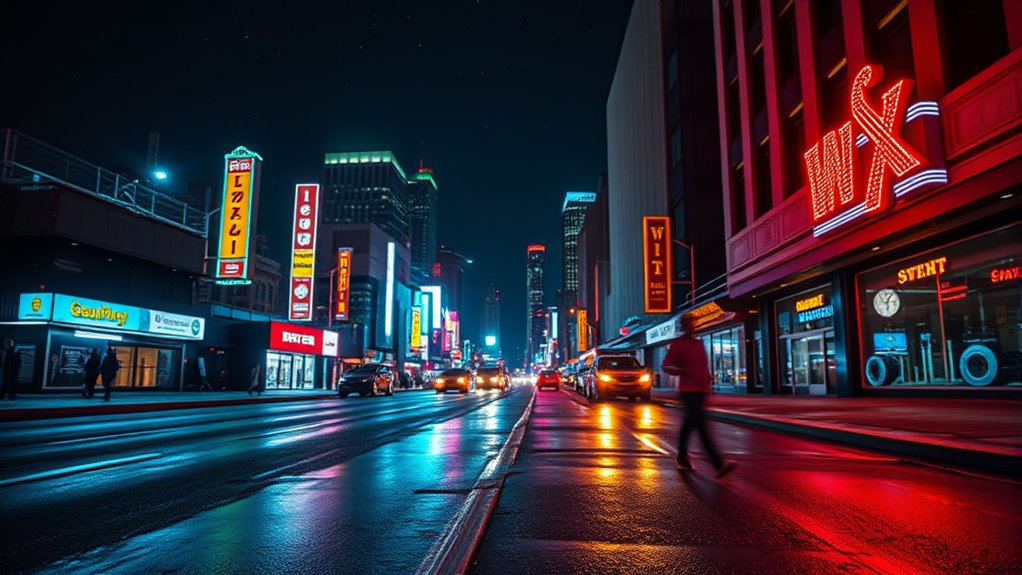
When shooting at night, understanding how color profiles and Log recording work together can considerably improve your footage’s quality. Night scenes often present challenging lighting conditions, making it essential to get your camera settings right from the start. One of the key steps is proper camera calibration, which guarantees your camera’s color science aligns with expected standards. Accurate camera calibration means your footage’s colors will be consistent and true to life, even in low-light environments. Without it, you might notice color shifts or muddiness that can be hard to correct later. Calibration helps establish a baseline, so your Log footage retains its dynamic range and color information without distortion. Ensuring your camera’s settings are optimized for night shooting can also help prevent noise and improve overall image clarity. Display accuracy is equally vital when working with Log footage. Since Log profiles are designed to capture a wide gamut of colors and luminance levels, you need a monitor that accurately displays this data. If your display isn’t calibrated or lacks accuracy, what you see isn’t what you’ll get in the final grade. This can lead to misguided adjustments, overcorrections, or missed details in shadows and highlights. To truly leverage Log recording at night, you should calibrate your monitor regularly using professional tools. Accurate display calibration ensures you’re making color grading decisions based on a true representation of your footage, which ultimately results in a more polished and consistent look. When combining Log profiles with proper camera calibration and display accuracy, you gain more control over your night footage. Log footage preserves a wealth of information, but it can look flat and dull straight out of the camera. This is where calibration plays a crucial role, enabling you to interpret and enhance the raw data effectively. You’ll be able to recover details in dark areas and prevent blown-out highlights, creating a balanced image. Additionally, understanding how to correctly interpret Log footage on an accurate display leads to better color grading, ensuring your night scenes are vivid without appearing unnatural. Proper monitor calibration is essential for accurate color grading, especially in low-light conditions. In essence, mastering camera calibration and display accuracy isn’t just about technical correctness—it’s about opening the full potential of your Log footage. These practices give you a reliable foundation to work from, especially in the tricky lighting of night shoots. When you pay attention to these details, your footage will not only look more professional but also save you time in post-production by reducing guesswork and corrections. Ultimately, the synergy between well-calibrated equipment and thoughtful color management makes a significant difference in how your night scenes turn out.
Frequently Asked Questions
How Do I Choose the Best Color Profile for Night Photography?
To choose the best color profile for night photography, start by setting your white balance to match the lighting conditions, like tungsten or daylight. Use a profile that preserves natural colors and minimizes noise, such as Adobe RGB or sRGB. Enable noise reduction in your camera settings to prevent grainy images. Experiment with different profiles and adjustments to find the one that best captures the night scene’s details and colors.
Are Log Formats Suitable for All Types of Night Scenes?
Log formats aren’t suitable for all night scenes because they can amplify sensor noise, making images look grainy. While log offers a wider dynamic range, it’s best for scenes with high contrast, like cityscapes or starry skies. For low-light, low-contrast shots, standard profiles often work better, helping you manage noise and retain detail without overly complex processing. Choose your profile based on scene contrast and noise control needs.
What Hardware Is Needed for Capturing Log Footage at Night?
To capture log footage at night, you need a camera with high sensor sensitivity, allowing it to perform well in low light. Make certain your lens is compatible and has a wide aperture to gather more light. Using a camera with good low-light performance, combined with appropriate lens compatibility, helps you get clearer, detailed log footage even in challenging nighttime conditions. This setup maximizes your camera’s ability to record quality night scenes.
How Does Color Grading Differ With Log Footage Versus Standard Profiles?
Think of log footage as a blank canvas waiting for your brushstrokes. When you color grade, you’ll notice that log footage offers a broader dynamic range, giving you more detail in shadows and highlights. This means you can use advanced color grading techniques to craft a cinematic look, unlike standard profiles, which require less correction. Your workflow becomes more flexible, allowing for precise control over mood and tone.
Can I Convert Log Footage to Standard Color Profiles Easily?
Yes, you can convert log footage to standard color profiles easily. You’ll want to adjust the color space and apply gamma correction to match the target profile. Use your editing software’s color grading tools or LUTs designed for this purpose. This process transforms your footage, making it look more natural and easier to work with in standard color workflows, ensuring consistent color and brightness across your project.
Conclusion
In the end, choosing the right color profiles and log settings can truly transform your night shots. Don’t doubt, delve into details, and discover what works best for you. Remember, mastering these methods makes your nighttime narratives more nuanced and natural. So, stay savvy, experiment earnestly, and elevate every evening endeavor. With a little patience and practice, you’ll produce pictures that pop, impress, and truly tell your tale in the twilight.