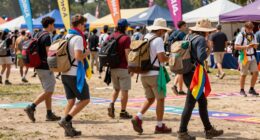
When capturing crowd shots, you need to blur or obscure faces and identifiable features of individuals who aren’t the main focus. This helps protect their privacy, especially if you plan to share or publish the images. Focus on anonymizing people to avoid legal and ethical issues, and verify you’re respectful of people’s rights. If you want to learn effective ways to do this and understand legal considerations, keep exploring the best practices.
Key Takeaways
- Blur or pixelate faces and identifiable features of individuals who are not the main subject.
- Focus on anonymizing sensitive details like license plates, tattoos, or personal items.
- Consider context; avoid revealing private activities or locations inadvertently.
- Follow local laws and regulations regarding public crowd photography and privacy.
- Prioritize ethical responsibility by obtaining consent when possible and respecting individuals’ privacy.
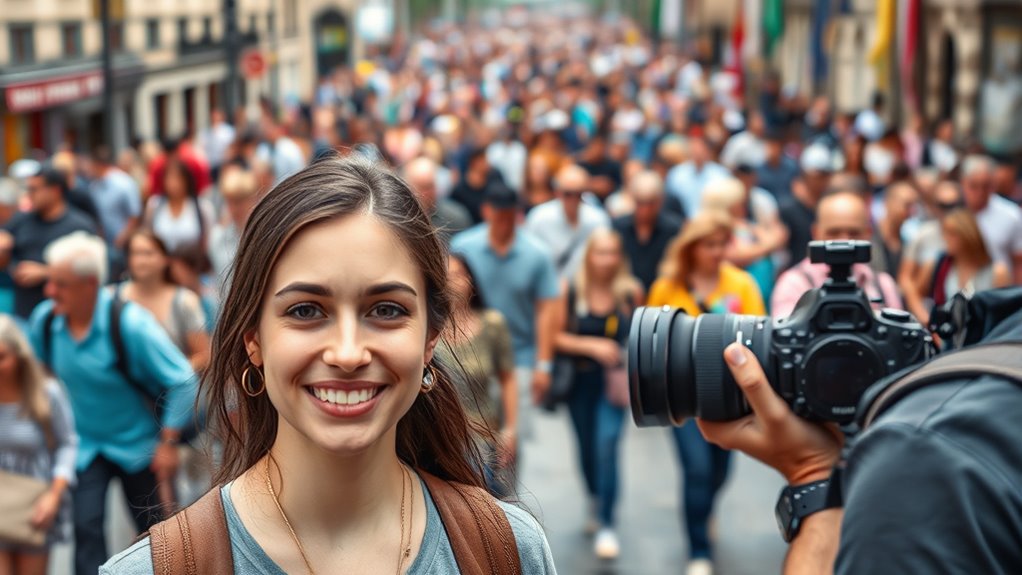
In today’s busy public spaces, capturing crowd shots has become commonplace, but it raises important questions about privacy. As a photographer or videographer, you might not always think about the broader implications of your images. Surveillance concerns are at the forefront of many discussions, especially as governments, companies, and individuals gather more visual data. When you take a photo of a crowd, you might unintentionally include people who haven’t given their consent. This creates consent challenges that can have legal and ethical implications, making it essential to consider how your images affect others’ privacy.
Many public events seem safe for crowd shots because they’re held in open spaces, but that doesn’t automatically mean you can photograph freely without consequences. Surveillance concerns grow when images are shared online or used commercially, as they can reveal personal details or behaviors that people prefer to keep private. For instance, someone might be captured in a way that reveals their location, appearance, or even sensitive activities. Without proper awareness, you risk infringing on individuals’ privacy rights, which can lead to legal trouble or damage your reputation.
Public event photos can reveal private details; sharing them online or commercially raises privacy and legal concerns.
The challenge lies in balancing your creative intent with respect for personal privacy. When photographing crowds, it’s wise to blur or obscure identifiable features of individuals who are not the main subjects. This is especially essential if your images are for public distribution or commercial purposes. Blurring faces or bodies helps mitigate surveillance concerns by reducing the risk of identifying specific people. It also respects the consent challenges that come with large group photography, where getting explicit permission from every person is often impossible. By taking proactive steps to anonymize individuals, you demonstrate responsibility and sensitivity toward privacy issues.
Moreover, understanding local laws and regulations is crucial. Some jurisdictions have strict rules about photographing crowds, especially in sensitive or private areas. Familiarize yourself with these regulations to avoid legal pitfalls. Even in places with lenient laws, practicing ethical photography by respecting people’s privacy can prevent conflicts and foster trust within communities. When you’re unsure about whether you should include someone in a shot, err on the side of caution and opt to blur or exclude that person. Additionally, being aware of Retirement Planning considerations can help you make more informed decisions about how your images are used or shared, especially if they involve vulnerable populations or sensitive environments.
![VideoPad Video Editor - Create Professional Videos with Transitions and Effects [Download]](https://m.media-amazon.com/images/I/91zAUcPqOhL._SL500_.png)
VideoPad Video Editor – Create Professional Videos with Transitions and Effects [Download]
Apply effects and transitions, adjust video speed and more
As an affiliate, we earn on qualifying purchases.
As an affiliate, we earn on qualifying purchases.
Frequently Asked Questions
Can I Legally Publish Crowd Shots Without Permission?
You can usually publish crowd shots without permission if individuals are not clearly identifiable, but it’s safer to get model releases for recognizable people. Without them, your rights might be limited, especially if someone objects. Legal exemptions often cover photos taken in public places, but privacy laws vary. To avoid legal issues, consider blurring faces and securing releases when possible, protecting both your rights and the privacy of those in your shots.
How Do I Identify Individuals in Crowd Images?
To identify individuals in crowd images, you should look for facial features and use facial recognition technology carefully, ensuring you comply with privacy laws. Always seek consent waivers from people if possible, especially in sensitive situations. Remember, even with technology, respecting privacy is key, so consider blurring faces or obtaining explicit permission to avoid legal issues and protect people’s privacy rights.
Are There Specific Laws for Photographing Crowds in Public Events?
Imagine capturing a vibrant festival, but suddenly realizing privacy regulations in public space photography differ by location. Laws vary, and some places require you to get consent before photographing crowds, especially if individuals are clearly identifiable. You must comprehend these laws to avoid legal trouble or invading privacy. Always check local regulations to ensure you’re respecting privacy rights, even in bustling public events. Ignorance isn’t a shield—knowledge keeps you safe.
What Tools Can Automatically Blur Faces in Bulk?
You can use privacy tools like Adobe Photoshop, GIMP, or specialized software such as Facepixelizer and Blur Faces. These tools utilize face recognition technology to automatically detect and blur faces in bulk. They save you time and help protect privacy. Simply upload your images, select the automatic face detection feature, and let the software handle the rest, ensuring your crowd shots stay compliant with privacy standards.
How Should I Handle Consent for Minors in Crowd Photos?
You should always seek parental consent when photographing minors in crowd shots. To handle this properly, verify their age with reliable age verification methods before taking or sharing images. This guarantees you’re respecting privacy laws and ethical standards. If you’re unsure, obtain explicit consent from a parent or guardian, especially for public or commercial use. Prioritizing age verification and parental consent helps protect minors’ privacy and avoids potential legal issues.
pixelation tool for crowd shots
As an affiliate, we earn on qualifying purchases.
As an affiliate, we earn on qualifying purchases.
Conclusion
As you navigate capturing crowd shots, remember the importance of respecting privacy. Blurring faces isn’t just a legal obligation; it’s a sign of ethical responsibility. With technology making it easier to identify individuals, isn’t it your duty to safeguard their rights? By taking simple steps to blur faces, you ensure your photos remain respectful and considerate. After all, isn’t preserving dignity just as valuable as capturing a perfect shot?
Portable Fitting Room Changing Booth, 78.7" High Privacy Pop-Up Tent with Curtain, 66lbs Capacity for Retail Events Beach Camping Photography Studio (Black)
🛡️【Durable Iron Frame & Blackout Curtain】: Iron pipe frame with linen flannel fabric provides sturdy structure and excellent…
As an affiliate, we earn on qualifying purchases.
As an affiliate, we earn on qualifying purchases.

GIMP 2025 Photo Editor USB – Compatible with Windows – Full Image Editing Software – Open Source Alternative to Photoshop – Includes PDF Guide
Professional image editing software for Windows and macOS, preloaded on a convenient USB drive with no internet required…
As an affiliate, we earn on qualifying purchases.
As an affiliate, we earn on qualifying purchases.