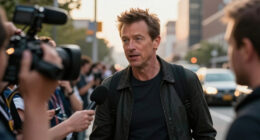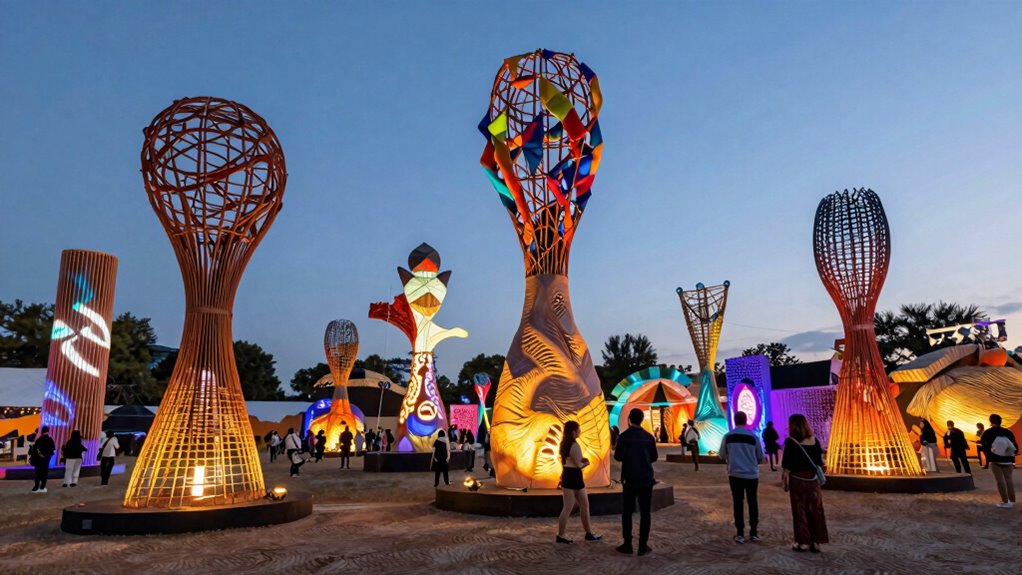
To film festival installations and art areas effectively, use natural light whenever possible and control it with diffusers and reflectors to enhance textures and atmosphere. Experiment with different camera angles—from wide shots showing scale to close-ups for details—and incorporate dynamic movements like panning or tracking to create a storytelling flow. Plan your shots in advance, manipulate lighting creatively, and consider stable equipment like tripods. Keep exploring these techniques to capture the true essence of each space.
Key Takeaways
- Use natural light with diffusers and reflectors to highlight textures and create an authentic atmosphere.
- Choose camera angles like low or high perspectives to emphasize installation scale or intricate details.
- Incorporate dynamic movements such as panning or tracking to guide storytelling and reveal spatial relationships.
- Pre-visualize shots and stabilize with a tripod for sharp, well-composed footage, adjusting lighting for mood.
- Capture both physical presence and emotional resonance by combining lighting, angles, and strategic shot selection.
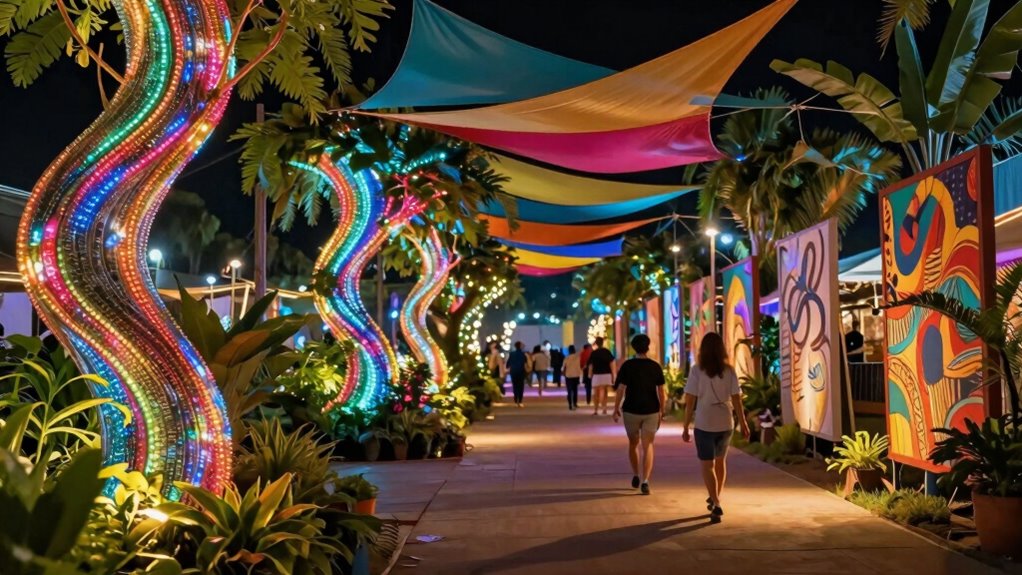
Filming festival installations and art areas requires careful planning and an eye for detail to capture their unique essence. You need to contemplate how lighting techniques can dramatically influence the mood and clarity of your shots. Natural light can emphasize the authenticity of an installation, but it’s often unpredictable. To control the ambiance, incorporate diffusers, reflectors, or additional light sources to highlight key features without overwhelming the scene. Warm lighting can evoke intimacy, while cooler tones may create a more modern or sterile feel. Experimenting with different lighting setups allows you to emphasize textures, colors, and spatial relationships within the installation, guaranteeing viewers experience the artwork as if they’re right there. Understanding emerging trends in digital publishing can also inspire innovative ways to present your footage and reach wider audiences.
Equally important are your camera angles. Your choice of perspective can either reveal the installation’s scale or focus on intricate details. Low angles can make larger installations seem imposing and grand, giving viewers a sense of awe. Conversely, high or bird’s-eye views can showcase the spatial arrangement and how different elements interact within the space. Close-up shots highlight textures, brushstrokes, or the minute craftsmanship that might otherwise go unnoticed. You should also contemplate dynamic camera movements—panning, tilting, or tracking—to guide viewers through the installation, creating a narrative flow and maintaining visual interest. Don’t be afraid to experiment with unconventional angles, such as tilted shots or framing through objects, to add a sense of intrigue or to emphasize certain aspects of the art. Additionally, understanding visual storytelling techniques can help you craft more compelling narratives through your footage. Exploring lighting control methods can further enhance the atmosphere and emphasize the artistic intent behind installations. Being mindful of shot composition helps ensure your footage is balanced and engaging, emphasizing the most important elements of the installation.
Planning your shots beforehand helps guarantee you don’t miss essential details or miss opportunities to capture the installation’s full impact. Walk around the space, visualize different angles, and think about how lighting can be manipulated to enhance each perspective. Using a tripod can stabilize your camera for sharp, steady shots, especially in low-light conditions, while handheld filming offers a more immersive, spontaneous feel that can bring viewers closer to the experience. Remember, the goal is to translate the atmosphere and visual language of the installation into your footage, capturing both its physical presence and emotional resonance. Incorporating high contrast ratios can significantly improve the depth and clarity of your images, making details pop even in challenging lighting situations. By combining thoughtful lighting techniques and strategic camera angles, you’ll produce compelling footage that authentically represents the art’s essence and invites viewers into its world.
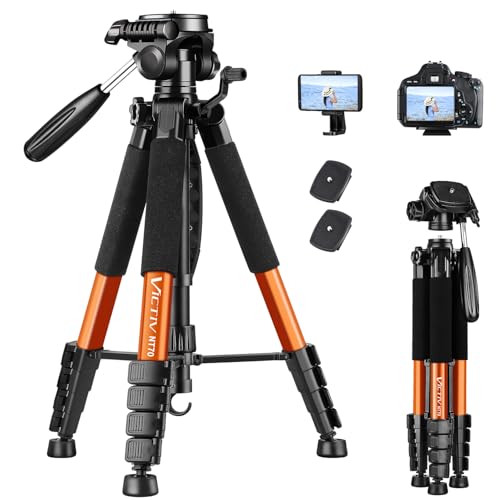
Victiv Tripod 74-Camera-Tripod for Cell Phone, Aluminum Professional Heavy Duty Camera Tripod Stand, Tripod for Camera DSLR SLR with Carry Bag, Compatible with Canon Nikon iPhone
- Adjustable Height Range: 19-74 inches for versatile shots
- Lightweight and Portable: Weighs 3.14 lbs with carrying bag
- Universal Compatibility: Fits all cameras and smartphones
As an affiliate, we earn on qualifying purchases.
As an affiliate, we earn on qualifying purchases.
Frequently Asked Questions
What Gear Is Best for Capturing Immersive Festival Art?
You should use a versatile camera with good low-light performance to capture immersive festival art. Incorporate lighting techniques like diffused lighting or backlighting to enhance details and mood. Use wide-angle lenses for dynamic shots, and experiment with composition tips like framing and leading lines to draw viewers into the scene. Stabilizers help keep footage smooth, ensuring your audience feels immersed in the vibrant, textured environment of festival installations.
How Do I Get Permission to Film in Private Installations?
Did you know that 75% of private art installations require explicit permission before filming? To get permission, you should contact the gallery or artist directly, explaining your intent clearly. Always ask for guest permissions and be aware of legal considerations, such as copyright or proprietary rights. Respect their policies, and get any written consent needed to avoid legal issues. This approach guarantees you film ethically and with proper authorization.
What Camera Settings Suit Varied Lighting Conditions?
To handle varied lighting conditions, you should use manual camera settings and adjust your aperture, ISO, and shutter speed accordingly. Use lighting techniques like increasing ISO in low light and lowering it in bright areas. Maintain camera stability with a tripod or stabilizer to avoid shaky footage. Always monitor your exposure, and consider shooting in RAW for better post-production flexibility. These steps guarantee clear, well-exposed footage across different lighting environments.
How Can I Ensure Audio Quality in Noisy Environments?
To cut through noisy environments like a blade, you need sharp soundproofing techniques—think thick blankets or foam panels blocking out chaos. Use a directional microphone to focus on your subject’s voice, and keep background noise at bay. During editing, smooth out inconsistencies with audio editing tips, adjusting levels and filtering unwanted sounds. This way, your audio remains clear and crisp, even amidst the clamor.
What Are Copyright Considerations When Filming Art?
When filming art, you need to respect intellectual property and artistic rights. Always seek permission from the artist or owner before capturing their work, especially if you plan to use the footage commercially. Be aware of copyright laws that protect original works. Give proper credit, and avoid reproducing or distributing the art without authorization, ensuring you don’t infringe on the creator’s legal rights or violate copyright regulations.

YUOCU 35"x47"/90x120cm Light Reflector Flag Panel Kit, 5-in-1 Diffusion Scrim Translucent/Gold/Silver/Black/White Lighting Diffuser, Stainless Steel Foldable Frame for Studio Portrait Photography
- Versatile 5-in-1 Diffuser Kit: Softens sunlight and artificial light
- Multiple Reflector Covers: Gold, Silver, Black, White options
- Wide Application: Studio, portrait, product, wedding, fashion
As an affiliate, we earn on qualifying purchases.
As an affiliate, we earn on qualifying purchases.
Conclusion
As you film festival installations, imagine capturing both the chaos and calm—the vibrant colors and silent shadows coexisting. Your camera becomes a bridge, revealing the intricate dance between movement and stillness, chaos and order. Just like a painter’s brush strokes, your shots highlight contrasts, inviting viewers into a world where art speaks in whispers and shouts. In this dance of visuals, you create a story that’s as dynamic and layered as the installations themselves.

Freewell 16mm Wide Angle Lens for 17mm Mount Phone Case
- Quick Attachment: Securely thread into 17mm mount
- Wide Field of View: 105° for expansive shots
- Close Focus: Focus as close as 0.5 meters
As an affiliate, we earn on qualifying purchases.
As an affiliate, we earn on qualifying purchases.
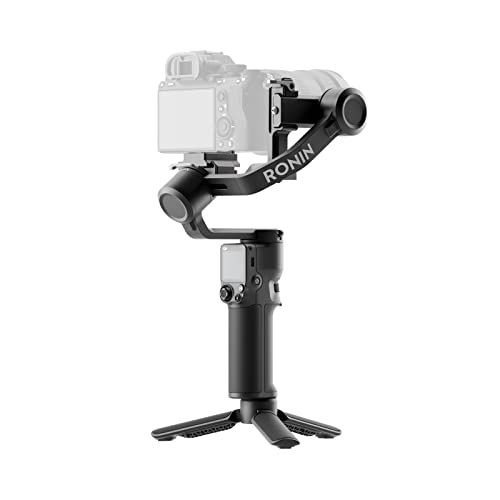
DJI RS 3 Mini, Camera Gimbal Stabilizer, Canon/Sony/Nikon/Fujifilm
- Lightweight and Portable: 795g for easy travel and extended use
- Wide Compatibility: Supports cameras up to 2kg (4.4 lbs) with various lenses
- Bluetooth Shutter Control: Remotely control camera shutter and recording
As an affiliate, we earn on qualifying purchases.
As an affiliate, we earn on qualifying purchases.