
To capture stunning sunrise festival shots, you’ll want to balance natural and artificial lighting, using reflectors and diffusers to soften harsh morning light. Choose high-sensitivity cameras and wide-angle lenses, and use tripods or drones for stability and wide views. Adjust your setup as the light changes—moving reflectors and switching lenses—to keep the scene vibrant. If you keep exploring, you’ll discover even more tips to master the perfect dawn shot.

Get movie nights delivered free — and shop member deals
- Fast, free delivery on millions of items
- Access to Prime Big Deal Days deals on October 6–7
- Prime Video, Amazon Music and more included
Key Takeaways
- Use high-sensitivity cameras and stable tripods to handle low-light conditions and capture sharp sunrise visuals.
- Employ reflectors and diffusers to soften early morning light and enhance natural glow.
- Incorporate portable LED lights with warm hues to mimic sunrise tones and add depth.
- Timing shots precisely at dawn’s peak to seize the scene’s natural vibrancy and fleeting moments.
- Adjust lighting and camera settings dynamically as natural light changes during sunrise progression.
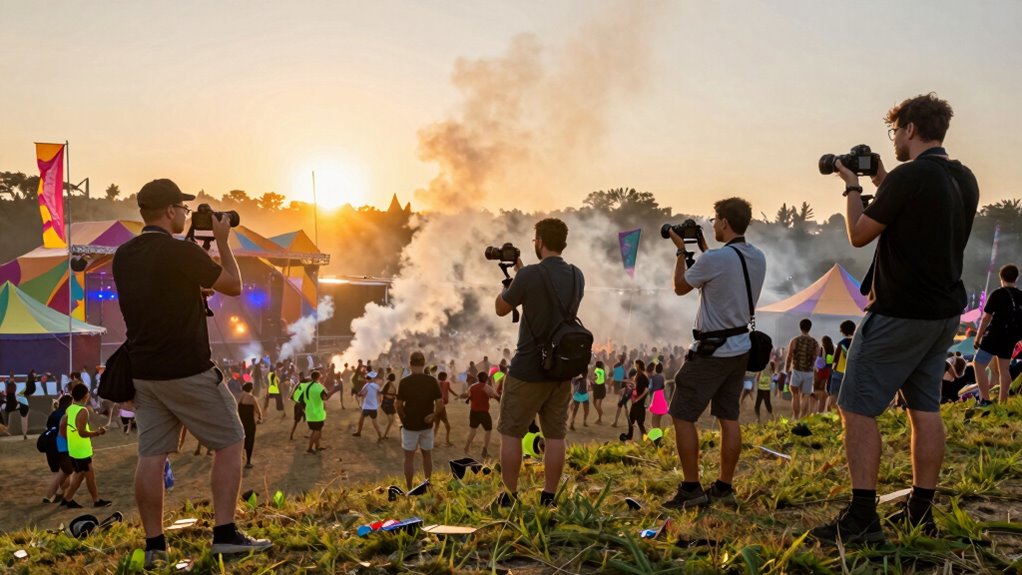
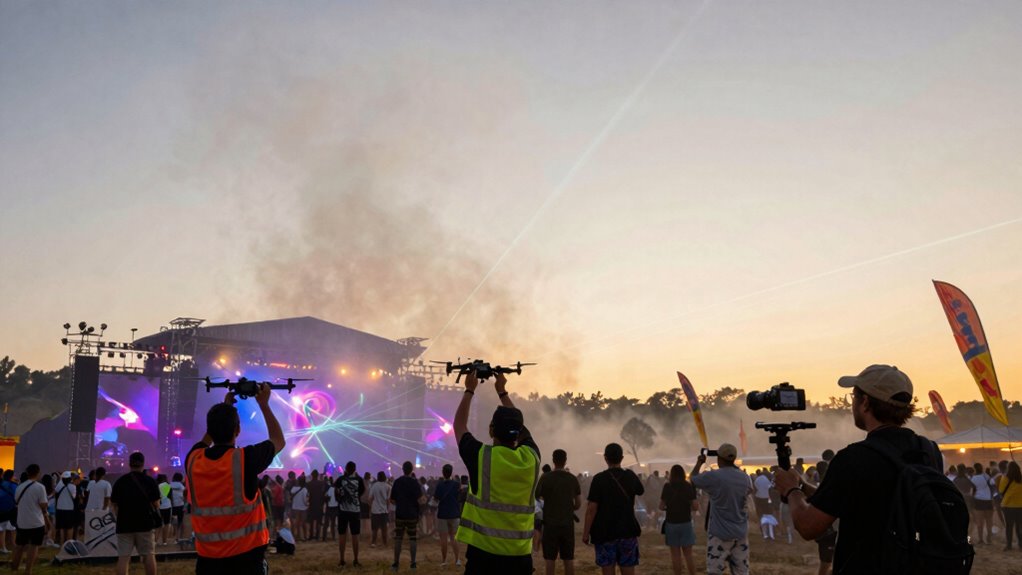
As the first light of dawn breaks over the horizon, music video crews are busy capturing stunning shots at the Sunrise Festival. You realize that, at this early hour, lighting techniques are essential to creating the perfect mood. With the sun just emerging, you carefully adjust your lighting to complement the natural glow. Using reflectors and diffusers, you soften the harsh morning light, making sure it doesn’t overpower your shot. You might also employ portable LED lights that mimic the warm hue of sunrise, adding depth and richness to your visuals. These lighting techniques help you craft a seamless blend of natural and artificial illumination, capturing the ethereal beauty of dawn while maintaining control over the scene’s tone. Additionally, understanding how to manage contrast ratio can further enhance the depth and clarity of your footage in varying lighting conditions.
When it comes to equipment choices, you recognize the importance of selecting gear suited for low-light conditions. Lightweight, high-sensitivity cameras become your best friends, allowing you to shoot with minimal noise and maximum clarity during the early, dim hours. You opt for sturdy tripods to keep your shots steady despite gentle breezes or uneven ground, ensuring crisp, professional footage. Wide-angle lenses are your go-to for capturing expansive vistas, emphasizing the vastness of the sunrise and the festival setting. You also pack drone cameras to get sweeping aerial shots of the crowd and landscape, adding a dynamic perspective that elevates your visuals. In the quiet moments before the festival fully wakes, every piece of equipment is chosen to maximize efficiency and image quality, so you can quickly adapt as the scene evolves. Employing lighting techniques and appropriate equipment choices allows you to better harness both natural and artificial light sources. You might also experiment with different lighting setups to achieve the desired atmosphere, especially when working in unpredictable outdoor environments. Throughout the shoot, you’re constantly adjusting your gear and lighting setups to match changing conditions. As the sun rises higher, you switch from diffused, soft lighting to more direct sunlight, modifying your equipment and techniques accordingly. You might move your reflectors to harness the sunlight better or change lenses to capture different focal lengths. Your awareness of lighting trends in outdoor filming helps you stay ahead of the changing light conditions. Your goal is to preserve the natural vibrancy of the scene while enhancing it with your technical choices. Every decision, from lighting techniques to equipment choices, helps you build a visual story that’s both engaging and true to the moment. Working swiftly and precisely, you ensure that no stunning sunrise shot is missed, capturing the magic of the Sunrise Festival at its most beautiful.
high sensitivity digital camera for low light
As an affiliate, we earn on qualifying purchases.
As an affiliate, we earn on qualifying purchases.
Frequently Asked Questions
What Camera Settings Are Best for Sunrise Shots?
For sunrise shots, you should set your camera to a low ISO, around 100-200, to keep images clear and noise-free. Use a small aperture like f/8 to f/11 for sharpness and depth. Incorporate time lapse techniques to capture the changing light gradually. Lens selection matters too—wide-angle lenses help capture the expansive sky and festival scene, creating stunning, immersive sunrise visuals.
How Do Crews Coordinate Timing During Early Mornings?
You become the conductor of a dawn symphony, orchestrating crew communication and timing synchronization with precision. Before sunrise, you plan meticulously, sharing detailed schedules and using walkie-talkies to keep everyone in harmony. As the sky changes hue, you rely on signals and real-time updates, ensuring every shot happens seamlessly. This harmony between crew members captures the perfect sunrise moment, turning fleeting light into a masterpiece.
What Safety Precautions Are Taken During Sunrise Shoots?
During sunrise shoots, you prioritize safety by ensuring drone safety protocols are strictly followed, keeping drones away from people and obstacles. You also maintain clear crew communication, using radios or signals to coordinate movements and prevent accidents. By staying alert and respecting safety guidelines, you create a secure environment for everyone involved, allowing the crew to capture stunning sunrise shots without risking injuries or equipment damage.
How Do Weather Conditions Affect Sunrise Filming Plans?
Weather conditions profoundly impact your sunrise filming plans. If the sky color is dull or overcast, it can dull the vibrant hues you want to capture, prompting adjustments in timing or camera settings. Wind influence also matters; strong gusts can shake your equipment or disturb natural light, making stabilization essential. You might need to wait for calmer conditions or adapt your shots to the changing sky and wind to get the perfect sunrise footage.
What Equipment Is Essential for Capturing Sunrise Festival Scenes?
You need essential equipment like lighting techniques and drone footage to capture sunrise festival scenes vividly. Use portable LED lights or reflectors to enhance natural light, creating a magical glow. A drone offers sweeping aerial shots that mimic the horizon’s fiery colors. Together, these tools help you seize the fleeting beauty of sunrise, turning fleeting moments into stunning visuals that feel as alive as the festival itself.
As an affiliate, we earn on qualifying purchases.
Conclusion
Just as dawn’s first light paints the sky with promise, your camera crew becomes the alchemists transforming fleeting moments into timeless art. With each shot, you’re capturing more than visuals—you’re holding onto the sunrise’s whispered secrets. Remember, in this dance of light and shadow, you’re not just documenting a festival, but weaving a story that echoes like a sunrise—eternal, inspiring, and endlessly unfolding. Your footage becomes the dawn’s enduring song.
wide angle camera lens for landscape
As an affiliate, we earn on qualifying purchases.
As an affiliate, we earn on qualifying purchases.
camera tripod for outdoor filming
As an affiliate, we earn on qualifying purchases.
As an affiliate, we earn on qualifying purchases.
Fall Picks
fall essentials
As an affiliate, we earn on qualifying purchases.