When filming artists and crowds ethically, you should start by clearly explaining your intentions and how the footage will be used. Always obtain written releases from individuals if possible, especially for commercial purposes. In public spaces, approach strangers politely and respect their decisions to decline. Keep thorough records of permissions to protect yourself legally. Understanding these key practices helps guarantee respect for privacy and stays within legal boundaries—continue exploring for more essential tips.

Get movie nights delivered free — and shop member deals
- Fast, free delivery on millions of items
- Access to Prime Big Deal Days deals on October 6–7
- Prime Video, Amazon Music and more included
Key Takeaways
- Clearly explain your intentions and usage plans to artists and crowds before filming.
- Obtain written release forms from identifiable individuals, especially for commercial or promotional use.
- Respect public space norms; seek permission when filming focused individuals or in sensitive areas.
- Research local laws regarding filming rights and privacy to ensure compliance and ethical standards.
- Keep detailed records of all permissions, releases, and communications to protect legally and maintain transparency.
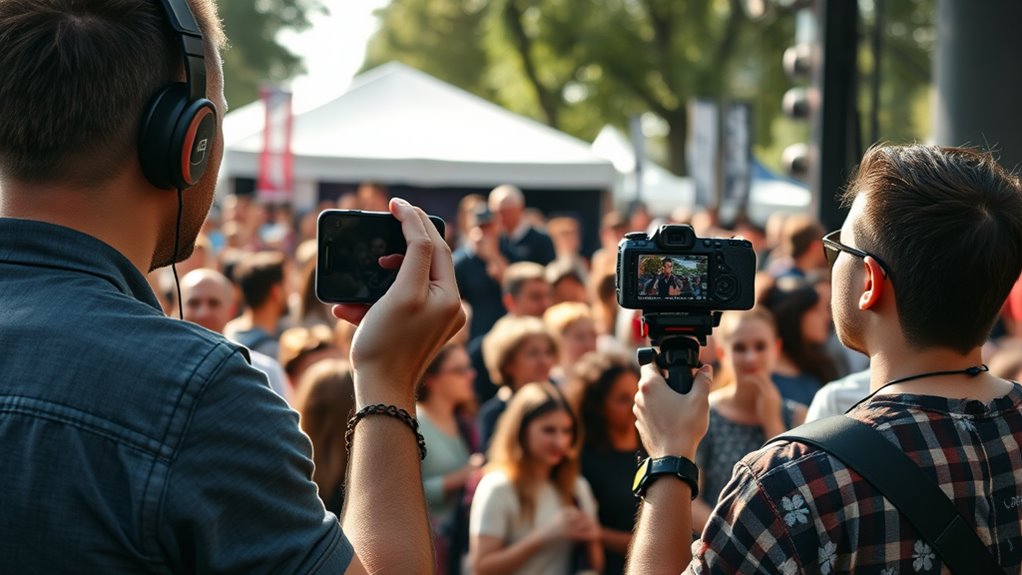
Ever wonder what permissions are and why they matter? When you’re filming artists and crowds, understanding permissions is essential to avoid legal trouble and maintain ethical standards. Permissions are the legal rights granted by individuals or entities to allow you to record or photograph them. Without these rights, you risk infringing on privacy, violating rights, or facing lawsuits. Permissions serve as a clear agreement that everyone involved understands and consents to the recording, protecting both your project and the rights of those you’re filming.
Permissions are legal rights that ensure consent and protect your project and subjects.
Getting permissions begins with clear communication. You need to approach artists and crowd members directly and explain your intentions, what the footage will be used for, and where it might appear. This transparency helps establish trust and encourages cooperation. When dealing with artists, especially professionals, ask for a written release form that details their agreement to be filmed. This document should specify the scope of use, whether it’s for commercial purposes, promotional videos, or other projects. Having these forms signed protects you legally and ensures everyone is on the same page.
Crowds pose a unique challenge because you might be filming in public or semi-public spaces. In many cases, capturing footage of strangers in public doesn’t require explicit permission, but if your project is commercial or if individuals are the focus, it’s best practice to obtain releases. Even in public settings, approaching people politely and explaining your project can lead to better cooperation and avoid conflicts. If someone declines to be filmed, respect that decision and exclude them from your footage. Respecting people’s comfort and privacy fosters ethical filmmaking and maintains your reputation.
In addition to obtaining permissions, always be aware of specific laws and regulations that vary by location. Some areas have strict rules about filming in public spaces or capturing identifiable individuals. Research local laws beforehand so you’re well-informed. When in doubt, err on the side of caution and seek permission. Not only does this protect you legally, but it also demonstrates respect for people’s rights, which is fundamental to ethical filmmaking. Utilizing high-quality projectors with accurate color reproduction can also help ensure your footage looks professional and respects the visual integrity of those you film.
Finally, keep thorough records of all permissions, releases, and correspondence. Digital copies are fine, but ensure they’re stored securely and can be retrieved if needed. This documentation provides peace of mind and serves as evidence if any disputes arise. By prioritizing permissions and ethical practices, you create a respectful environment for everyone involved, ensuring your project proceeds smoothly and responsibly.
professional release forms for filming
As an affiliate, we earn on qualifying purchases.
As an affiliate, we earn on qualifying purchases.
Frequently Asked Questions
Can I Film in Private Homes Without Explicit Permission?
You generally can’t film in private homes without explicit permission from the owner or occupant. Doing so without consent may violate privacy laws and could lead to legal trouble. Always ask for permission beforehand, clearly explaining your intentions. If someone refuses, respect their decision and find alternative locations. Being transparent and respectful helps you avoid legal issues and maintains ethical standards when filming in private spaces.
What Are the Legal Consequences of Filming Without Consent?
If you film without consent, you risk legal trouble like lawsuits or fines, much like stepping on a landmine—you never know when it’ll explode. For example, in many places, recording someone without permission can lead to invasion of privacy claims or criminal charges. You could face lawsuits, damage your reputation, or even criminal penalties. Always get explicit consent to avoid these serious consequences and protect your work.
How Do I Handle Sensitive or Vulnerable Crowd Members?
You should approach sensitive or vulnerable crowd members with respect and caution. Ask for their consent privately and clearly explain how you’ll use the footage. If they’re uncomfortable, respect their wishes and avoid filming them. Be empathetic, listen carefully, and give them options. Always prioritize their comfort and privacy, and remember that their well-being comes first. This way, you maintain ethical standards and build trust with your audience.
Are There Age Restrictions for Filming Minors?
You should always check local laws, as age restrictions for filming minors vary. Typically, you need parental consent or a guardian’s permission if the minors are under 18. It’s easy to forget how important this is—especially if you’re caught up in the moment. Always prioritize getting proper permissions to protect everyone’s rights and avoid legal issues, because a little extra effort now saves headaches later.
How Do International Filming Laws Differ From Domestic Ones?
International filming laws vary widely from domestic ones, so you need to research each country’s regulations. Some countries require permits, consent from local authorities, or specific notices, while others have strict restrictions on filming in certain areas. You must also consider cultural sensitivities and privacy laws. Always consult local legal experts before filming internationally to guarantee you’re compliant, avoid fines, or legal trouble, and respect local customs.
public space filming permission signs
As an affiliate, we earn on qualifying purchases.
As an affiliate, we earn on qualifying purchases.
Conclusion
Think of permissions like a garden’s fence—you wouldn’t want to trample someone’s flowers without asking. Respecting artists and crowds is your way of planting trust, nurturing relationships, and avoiding a messy tangle of weeds. When you seek consent, you’re watering the seeds of collaboration and respect. So, handle permissions with care, and watch your creative orchard flourish, thriving on honesty and mutual understanding. That’s how you grow ethically and creatively, hand in hand.
As an affiliate, we earn on qualifying purchases.
film permits and permission documentation
As an affiliate, we earn on qualifying purchases.
As an affiliate, we earn on qualifying purchases.
Fall Picks
fall essentials
As an affiliate, we earn on qualifying purchases.