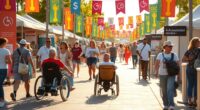
When interviewing artists on-site, focus on questions that feel natural and adapt to what they share. Start by observing their environment and ask how it influences their work, then explore their creative process and sources of inspiration. Encourage them to discuss specific pieces or techniques, and follow interesting threads as they unfold. Keep the flow open and flexible—if you stay attentive, you’ll discover many authentic insights, and there’s so much more to explore beyond the basics.

Get movie nights delivered free with Prime
- Fast, free delivery on millions of items
- Prime Video, Amazon Music and more included
- Member-only deals all year
Key Takeaways
- Develop open-ended, environment-focused questions that encourage natural dialogue about the artist’s workspace and creative process.
- Observe the studio setting to tailor questions dynamically, highlighting elements that inspire or influence the artist.
- Ask about the artist’s journey, techniques, and how their environment impacts their work to foster deeper insights.
- Explore sources of inspiration, creative blocks, and recurring themes to create meaningful, flowing conversations.
- Conclude with future plans and advice, allowing the artist to share personal aspirations and leave a lasting impression.

Have you ever wondered what it’s like to interview artists directly at their creative spaces? When you step into their world, you get a genuine glimpse of their process, environment, and passion. This firsthand experience not only enriches your questions but also helps you build a more authentic connection. To make the most of these on-site interviews, it’s essential to prepare questions that encourage openness and flow naturally with the setting. Instead of sticking to a rigid script, let your questions evolve based on what you observe and the artist’s responses.
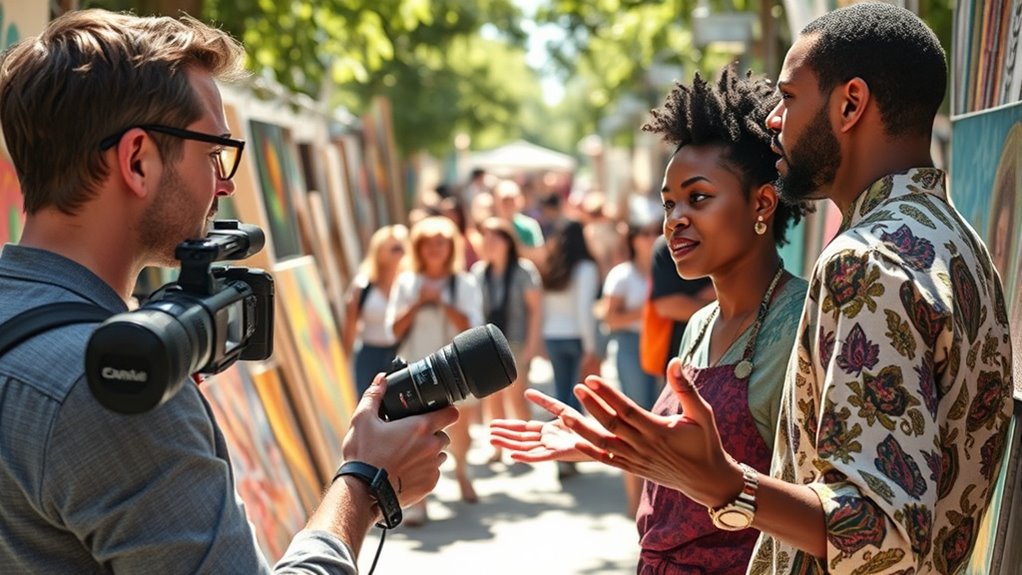
Begin by asking about their environment. For example, “How does this space influence your work?” or “Are there specific elements in your studio that inspire you?” These questions show genuine interest and allow the artist to share insights about their creative process. As they describe their workspace, listen carefully for details you can follow up on. If they mention a particular piece or technique, ask, “What inspired this project?” or “Can you walk me through your process here?” This invites them to elaborate, creating a natural conversation rather than a one-sided Q&A.
Ask about their workspace to reveal insights and inspire natural, flowing conversations.
Another effective approach is to inquire about their artistic journey. Questions like, “What drew you to this medium?” or “How has your work evolved over time?” help uncover personal stories that add depth to your interview. Since you’re on-site, you can also comment on specific pieces or details. For instance, “This piece has a lot of texture—what’s your technique here?” This not only shows your engagement but encourages the artist to share technical insights and personal reflections.
Don’t forget to explore their sources of inspiration. Ask, “Where do you find ideas when you’re feeling stuck?” or “Are there themes you keep returning to?” These questions foster meaningful dialogue about their creative motivations. Additionally, understanding market trends relevant to their work can provide context and deepen the conversation. As the conversation flows, remain flexible. If they start discussing a new project or concept, follow that thread naturally. The key is to listen actively and adapt your questions based on their responses.
Finally, wrap up with questions that reveal their future plans or advice for aspiring artists. For example, “What’s next for you?” or “What advice would you give someone starting out?” These closing questions leave the artist with space to share their aspirations and wisdom, rounding out the interview with a personal touch. By focusing on questions that flow organically from the environment and responses, you create a dynamic, engaging interview that offers genuine insight into their creative world.
As an affiliate, we earn on qualifying purchases.
Frequently Asked Questions
How Do You Build Rapport Quickly With Artists During On-Site Interviews?
You build rapport quickly by showing genuine interest and active listening. Smile, make eye contact, and use open body language to create a welcoming atmosphere. Start with easy, personal questions about their passions or inspirations, and share your own relatable experiences. Be respectful and patient, letting them feel comfortable. This approach encourages openness, trust, and a natural flow in the interview, making the artist feel valued and understood.
What Techniques Help Capture Authentic Reactions on Camera?
You can capture authentic reactions by creating a relaxed environment where artists feel comfortable expressing themselves. Use open-ended questions, maintain eye contact, and listen actively to encourage genuine responses. Keep the camera nearby but unobtrusive, so they forget about it. Encourage spontaneous moments by staying flexible and observant. Your calm demeanor and genuine interest will help artists react naturally, resulting in more authentic, compelling footage.
How Do You Navigate Language Barriers With Diverse Artists?
You should learn basic phrases in the artist’s native language to build rapport and show respect. Use a translator app or bring a bilingual assistant if possible, and speak slowly and clearly. Non-verbal cues like nodding and smiling help convey understanding. Be patient and adaptable, allowing extra time for communication, and always confirm understanding by paraphrasing or asking simple questions to guarantee clarity.
What Safety Precautions Are Essential When Interviewing in Artist Studios?
Think of safety precautions as your armor when visiting artist studios. You should wear protective gear if necessary, be mindful of hazardous materials, and respect the space’s rules. Always check for proper ventilation, avoid touching sensitive equipment, and keep a first aid kit nearby. Communicate clearly with the artist about safety concerns, and stay alert for any potential risks. This way, you guarantee a smooth, secure interview experience for both of you.
How Do Environmental Factors Influence Your Interview Approach?
Environmental factors critically shape your interview approach. You adapt by observing space constraints, lighting, and noise levels, which influence how you position yourself and ask questions. If the studio is noisy, you keep your questions concise and attentive. Poor lighting might require you to bring additional equipment or adjust your angles. By staying flexible and observant, you guarantee your questions flow smoothly despite environmental challenges, creating a comfortable space for the artist to share.
artistic process interview guide
As an affiliate, we earn on qualifying purchases.
As an affiliate, we earn on qualifying purchases.
Conclusion
When you interview artists on-site, let your questions flow naturally and stay curious. Trust in the process—sometimes the best insights come from spontaneous moments or unexpected answers. Remember, engaging genuinely often reveals more than prepared scripts. Don’t underestimate the power of active listening and adaptability; they allow the conversation to unfold authentically. Ultimately, embracing this flexible approach can uncover truths that enrich your understanding and storytelling, proving that the best interviews happen when you go with the flow.
As an affiliate, we earn on qualifying purchases.
As an affiliate, we earn on qualifying purchases.
Halloween Picks
halloween
As an affiliate, we earn on qualifying purchases.