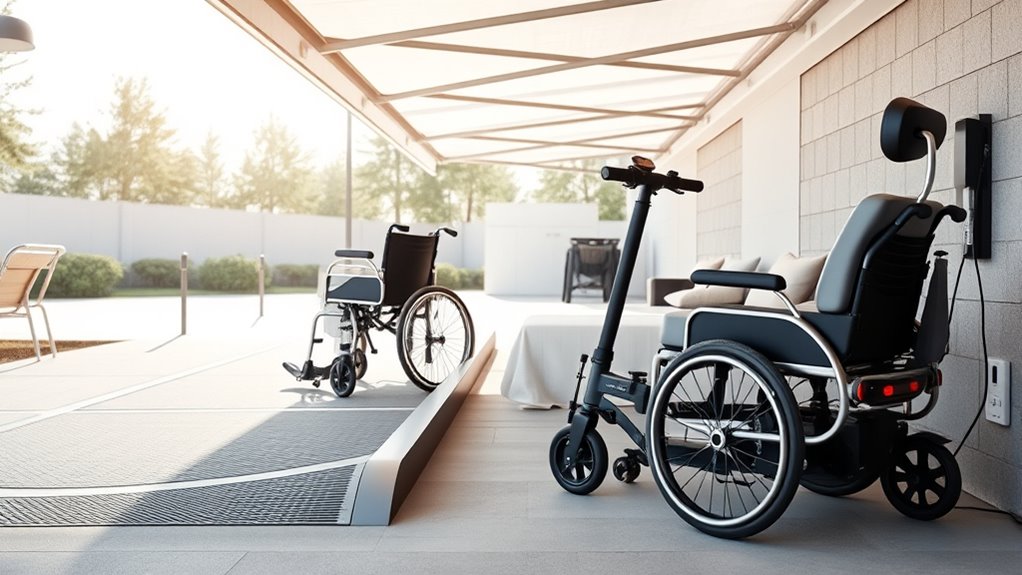

To prepare for accessibility, guarantee that your space has wide doorways and smooth pathways for easy wheelchair movement. Install ramps, adjustable seating, and accessible counters to meet diverse physical needs. Incorporate assistive tech like voice controls and wireless charging for convenience. Use clear digital navigation compatible with screen readers, and consider community feedback to create an inclusive environment. Keep exploring these strategies to make your space truly welcoming and adaptable for everyone.
Key Takeaways
- Ensure doorways and pathways are wide, smooth, and unobstructed for wheelchair mobility.
- Install accessible power outlets and wireless charging stations at various locations.
- Use adjustable, removable seating and ramps to accommodate diverse physical needs.
- Integrate assistive technologies like voice controls and smart apps for easier navigation.
- Design digital content with screen reader compatibility, clear labels, and keyboard accessibility.
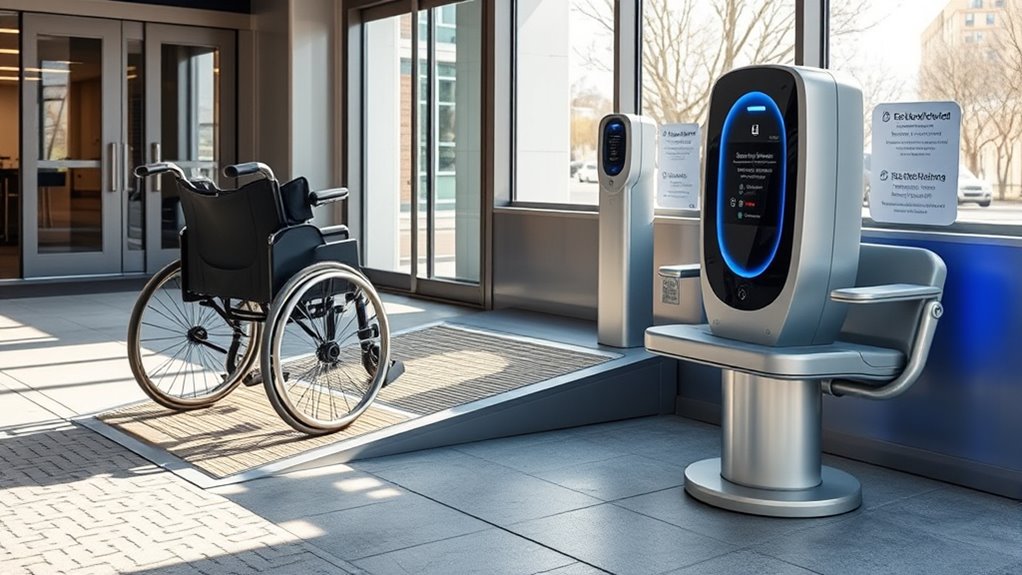
Are you prepared to make your events, websites, or products accessible to everyone? Accessibility isn’t just about compliance; it’s about inclusion. When considering mobility, one of the most effective ways to guarantee everyone can participate is by incorporating wheelchair modifications and assistive technology into your planning. These adaptations can drastically improve accessibility, making your space or service welcoming to all users. Start by evaluating the physical environment. Are doorways wide enough to accommodate wheelchairs? Do pathways have smooth, firm surfaces free of obstructions? Implementing wheelchair modifications, such as ramps, adjustable counters, and accessible seating, makes a significant difference. These changes not only help individuals with mobility challenges but also demonstrate your commitment to inclusivity. Assistive technology plays a vital role here, providing tools that enhance independence. For example, powered wheelchairs with customizable controls can be tailored to individual needs, enabling users to navigate with ease. In addition to physical modifications, consider technological solutions like voice-activated controls or smartphone apps that assist in mobility. These technologies reduce barriers by allowing users to operate devices or access information effortlessly. When planning seating arrangements, prioritize flexibility and comfort. Use adjustable chairs, removable armrests, and space for mobility aids. Accessibility isn’t just about meeting minimum requirements; it’s about creating a space that adapts to diverse needs. For websites and digital interfaces, verify that content is compatible with assistive technology such as screen readers, voice recognition, and alternative input devices. Clear navigation, descriptive labels, and keyboard accessibility help users with disabilities engage fully. For physical products or services, consider how assistive technology can be integrated. For example, offering remote controls, adjustable stands, or voice command features can make your offerings more inclusive. Think about charging stations too—provide accessible power outlets and wireless charging options so users can keep their devices powered without hassle. Mobility and charging solutions should be seamlessly integrated into your environment, making sure that no user feels left out because of technical or physical limitations. Additionally, staying informed about accessible design principles can help you continuously improve your environment for all users. Ultimately, the goal is to design with empathy and foresight, making certain that every aspect of your event, website, or product accommodates diverse mobility needs. By investing in wheelchair modifications and assistive technology, you create an inclusive environment that respects individual differences and promotes participation. Being prepared means thinking ahead about how people move, communicate, and operate within your space. When you prioritize accessibility, you’re not just following regulations—you’re fostering a community where everyone feels valued, supported, and empowered to engage fully.
Frequently Asked Questions
How Do I Choose the Right Mobility Device for My Needs?
You should evaluate your daily activities and mobility needs to choose the right device. Consider portable ramps for easy access over steps and hand controls for easier operation if you have limited hand strength. Test different options to see what feels most comfortable and efficient. Consulting with a mobility specialist can help you determine whether a power wheelchair, scooter, or manual wheelchair suits your lifestyle best, ensuring safety and independence.
What Are the Best Charging Options for Electric Mobility Devices?
You should use the best charging options for your electric mobility device by regularly maintaining your battery and using portable chargers when needed. Keep your battery in good condition by following manufacturer guidelines, such as avoiding overcharging and keeping it at ideal temperature. Portable chargers are handy for on-the-go top-ups, ensuring your device stays charged throughout the day. This approach helps prolong battery life and keeps your mobility device ready when you need it.
How Can I Assess Seating Comfort and Support?
You can assess seating comfort and support by conducting an ergonomic evaluation, focusing on how well the seat aligns with your body’s needs. Test different cushion selections to find the right level of pressure relief and support. Pay attention to your comfort during extended periods and guarantee the seat promotes good posture. Adjustments should improve comfort and prevent strain, helping you stay supported and comfortable throughout the day.
Are There Specific Accessibility Standards I Should Follow?
Like stepping into a time machine, you should follow current accessibility standards, such as ADA guidelines, to guarantee inclusivity. Focus on accessible signage that clearly directs users and implement user training to foster understanding. These standards help you create safe, welcoming spaces, much like the vintage charm of a well-loved jukebox. Staying compliant not only meets legal requirements but also shows your commitment to accessibility and respect for all users.
How Do I Prepare for Emergencies With Mobility Aids?
You should create detailed emergency plans that include specific procedures for assisting individuals with mobility aids. Conduct accessibility training so everyone knows how to support those with mobility challenges during emergencies. Make sure your plans cover evacuation routes, accessible exits, and safe zones. Regularly review and practice these plans, guaranteeing staff and users understand their roles. This proactive approach helps ensure safety and inclusivity for all during emergencies.
Conclusion
Now, picture yourself stepping into a space where every detail is designed for ease—smooth ramps welcoming your every step, charging stations humming quietly nearby, and comfortable seating inviting you to pause. With these accessibility preparations in place, you create an environment that feels open and inviting, where everyone can move freely and confidently. It’s not just about physical features; it’s about crafting a place where all can truly belong and feel at home.