To guarantee smooth access, start by evaluating the environment for barriers through walkthroughs and feedback from diverse users. Design physical spaces with wide pathways, ramps, and accessible seating, and use clear, high-contrast signage with tactile elements. Incorporate technology like captioning and accessible websites, and train your staff to assist respectfully and effectively. Ongoing assessment and adaptation are key, so continue exploring how to create an inclusive space that truly welcomes everyone.
Key Takeaways
- Conduct thorough environment assessments involving diverse needs to identify and address potential barriers.
- Ensure physical spaces feature wide, unobstructed pathways, ramps, and accessible seating options.
- Use clear, high-contrast signage with tactile, braille, and audio cues for inclusive wayfinding.
- Provide accessible communication tools, such as captioning, sign language interpreters, and compatible digital content.
- Train staff on respectful assistance, gather ongoing feedback, and continuously adapt accessibility measures.
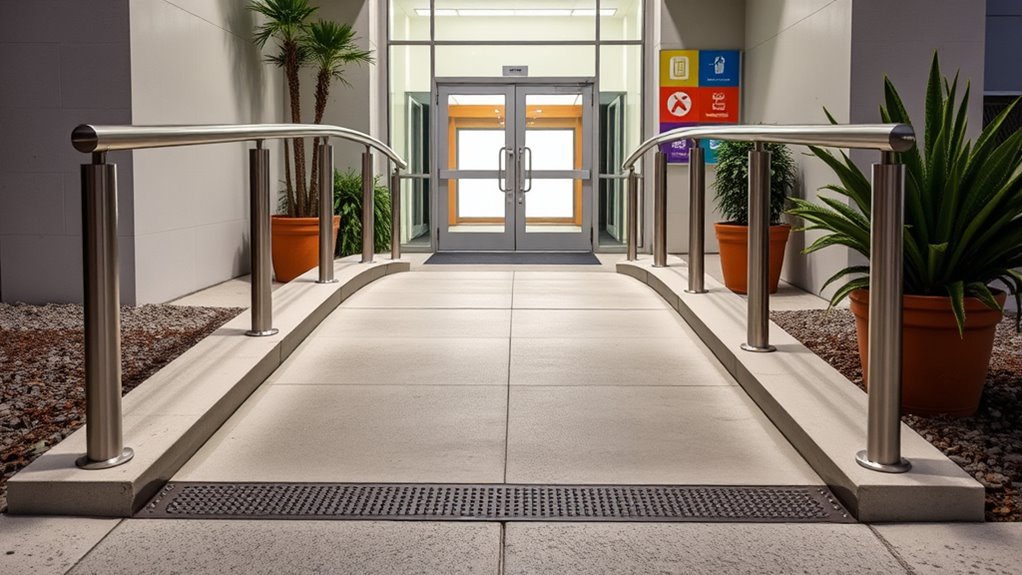
Have you ever considered how prepared your space or event is for all users, regardless of their abilities? Accessibility prep isn’t just about compliance; it’s about making certain everyone can participate comfortably and safely. By planning ahead, you reduce obstacles that could prevent someone from engaging fully. Start by evaluating your environment from the perspective of someone with mobility, visual, or auditory challenges. Walk through the space yourself or ask someone with different needs to give feedback. This firsthand experience can reveal overlooked barriers.
Next, consider the physical layout. Make sure pathways are wide enough for wheelchairs or mobility scooters, typically at least 36 inches wide. Remove trip hazards like loose cables, uneven flooring, or clutter that could cause falls. Install ramps where stairs exist, and verify they meet accessibility standards for slope and handrails. Doors should be easy to open, ideally with lever handles instead of knobs, which are more difficult for some users. Also, check that seating options include accessible spots, such as spaces reserved for wheelchairs, with appropriate armrests and clear sightlines.
Lighting plays a critical role in accessibility. Ensure your space is well-lit without harsh shadows or glare, which can be problematic for individuals with visual impairments. Use high-contrast signs and markings to guide visitors around your space, and keep signage clear, simple, and easy to read, ideally with both text and symbols. Incorporate tactile or braille signage where appropriate, so those with visual impairments can navigate independently. Audio cues, like announcements or sound signals, can assist visitors who rely on hearing, but always include visual alternatives to guarantee inclusivity.
Technology and communication methods also matter. If you’re hosting an event, provide captioning or sign language interpreters if possible. Make sure your websites or digital materials are compatible with screen readers. When dealing with emergency protocols, plan visual and audible alerts so everyone receives essential information promptly. Staff training is essential—educate your team about respectful interactions and how to assist without overstepping boundaries. They should be aware of accessibility features and comfortable guiding or supporting individuals when needed.
Finally, ask for feedback actively. After your event or once your space is in use, check in with attendees about their experience. Their insights can highlight areas for improvement you might not have considered. Accessibility prep isn’t a one-time effort; it’s an ongoing process of evaluation and adaptation. When you prioritize it, you create an environment where everyone feels welcome, valued, and able to participate fully. That’s the true mark of a thoughtfully prepared space or event.
Frequently Asked Questions
How Early Should Accessibility Planning Begin?
You should start accessibility planning as early as possible, ideally months before your event or project. This allows you to identify potential barriers and implement solutions without last-minute stress. Early planning guarantees you can coordinate with vendors, gather necessary resources, and communicate effectively with all participants. The sooner you begin, the smoother the access will be, creating an inclusive environment that accommodates everyone’s needs seamlessly.
What Are Common Overlooked Accessibility Features?
Ever feel like you’re stuck in a time warp when considering accessibility? Common overlooked features include tactile paving, which guides visually impaired guests, and automatic door openers for those with mobility challenges. You might forget to check signage clarity or verify that audio cues are effective. By paying attention to these details early, you prevent surprises later, making your space truly inclusive and welcoming for everyone.
Who Should Be Involved in Accessibility Planning?
You should involve a diverse team in accessibility planning, including disability advocates, users with different needs, designers, developers, and stakeholders. Their insights help identify potential barriers and create inclusive solutions. Engage early and often to guarantee everyone’s perspectives are considered. Collaborate openly, listen actively, and test your plans with real users to make sure access is smooth for all. Your proactive approach leads to more effective and inclusive outcomes.
How to Handle Last-Minute Accessibility Issues?
Did you know that 70% of accessibility issues can be resolved quickly if addressed early? When last-minute issues arise, stay calm and act swiftly. Immediately assess the problem, communicate with your team, and prioritize solutions that are quick to implement. Keep a checklist handy for common issues, and always have backup plans in place. Staying flexible and responsive helps assure everyone can access your event seamlessly, despite unexpected challenges.
Are There Legal Requirements for Accessibility?
Yes, there are legal requirements for accessibility that you need to follow. These laws, like the Americans with Disabilities Act (ADA) in the US, mandate that public spaces and events are accessible to everyone, including those with disabilities. You’re responsible for ensuring compliance by providing necessary accommodations, removing barriers, and offering alternative options. Failing to meet these requirements could result in legal issues, fines, or damage to your reputation.
Conclusion
By planning ahead for accessibility, you create an inclusive environment that welcomes everyone. Remember, over 80% of disabilities are invisible, meaning many might need accommodations without obvious cues. When you prioritize accessible design, you’re not just complying with standards—you’re making a meaningful difference in people’s lives. So, take the time to prepare thoroughly; it guarantees smooth access and shows your commitment to equity. Your efforts can truly transform experiences for all.