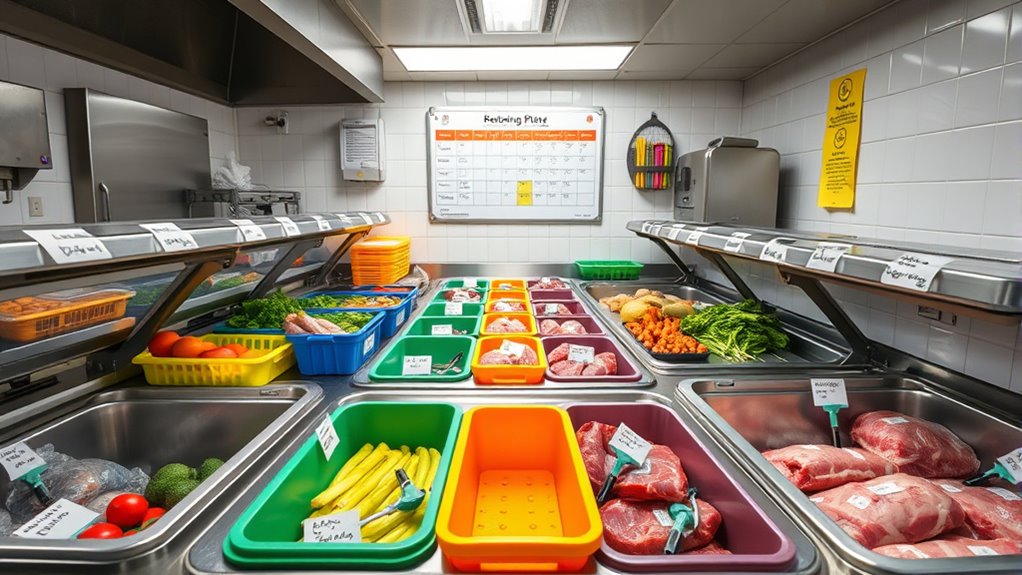

To guarantee food safety, keep your coolers at or below 40°F and regularly check temperatures with a reliable thermometer, documenting all readings. Clearly label all food items with ingredients and allergens, updating labels whenever you reuse containers. Implement a rotation plan that prioritizes high-risk foods first, and store allergen-free separately to prevent cross-contamination. Staying organized and vigilant helps prevent spoilage and protects consumers—continue to discover more tips for maintaining safe, effective food prep practices.
Key Takeaways
- Regularly monitor cooler temperatures at multiple points and keep logs to ensure they stay at or below 40°F (4°C).
- Use clear, updated labels for all food items, indicating ingredients and allergens, and re-label when containers are reused or changed.
- Implement a systematic rotation plan, handling high-risk allergen foods first and segregating allergen-free items to prevent cross-contact.
- Store allergen-containing foods separately from allergen-free items to prevent cross-contamination, using designated storage areas and utensils.
- Stay informed on food safety standards, combining temperature checks with proper labeling and rotation for comprehensive protection.
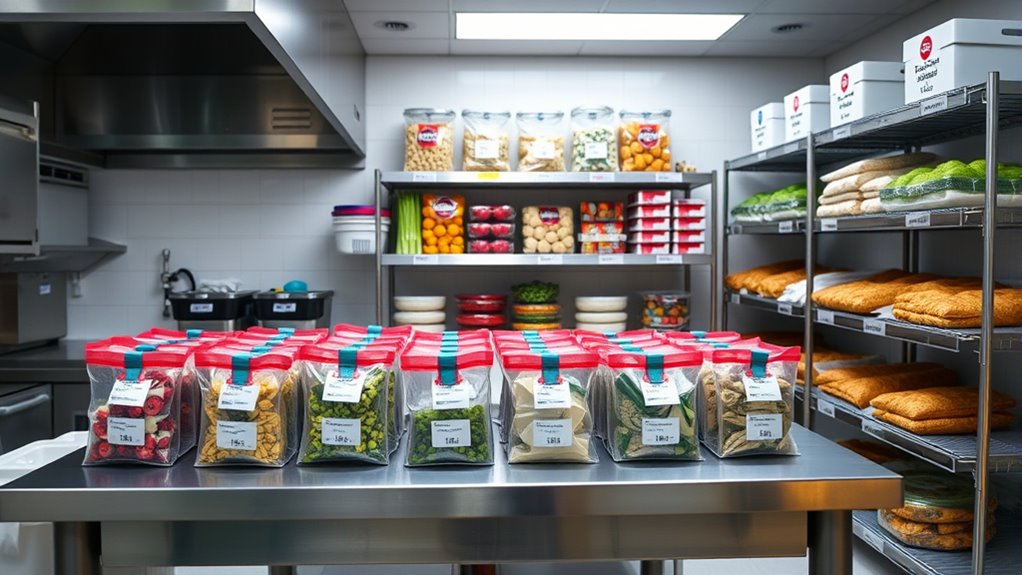
Are you confident your food prep practices keep you and your family safe? Ensuring proper food safety starts with diligent attention to how you handle, store, and prepare food. Two essential aspects often overlooked are temperature monitoring and allergen management. By focusing on these, you can markedly reduce the risk of foodborne illnesses and allergic reactions.
Temperature monitoring is your first line of defense in maintaining safe food storage. Regularly checking the temperatures of your coolers and refrigerators ensures perishable items stay within safe ranges. Use a reliable thermometer to verify that your coolers are maintained at or below 40°F (4°C), which inhibits bacterial growth. Don’t rely solely on the built-in thermometers; instead, check multiple points inside the cooler to confirm consistent temperatures. Implement a routine schedule for temperature checks and keep detailed logs. This practice not only helps you catch cooling issues early but also provides documentation in case of inspections or audits. Proper temperature control is indispensable for preventing spoilage and contamination, safeguarding both your health and that of your family.
Regularly check cooler temperatures with a reliable thermometer to prevent spoilage and ensure food safety.
Allergen management is equally critical, especially if you prepare food for multiple people with varying dietary restrictions. Clear labeling of all food items helps prevent accidental exposure to allergens. Use labels that specify ingredients and potential allergens, and be meticulous in updating them whenever you change or reuse containers. Separate storage areas or designated containers for allergen-free foods minimize cross-contact. When planning rotations, be mindful of allergen exposure; always prioritize the highest risk items first, and then move on to other foods. This systematic approach reduces the chance of cross-contamination, which can cause severe allergic reactions. Educate everyone involved in food prep about allergen risks and the importance of strict separation and labeling. Good allergen management not only protects individuals with food allergies but also demonstrates your commitment to safe practices.
Additionally, staying informed about food safety regulations and emerging health guidelines helps you adapt your practices to new challenges and standards. Combining diligent temperature monitoring with robust allergen management creates a safer environment for food preparation. Regularly checking temperatures and keeping detailed logs ensure your food stays safe from spoilage and bacterial growth. Meanwhile, clear labeling and proper separation of allergen-containing items prevent dangerous cross-contact. Together, these practices form a strong foundation for extensive food safety. Remember, consistent attention to these details reduces risks and promotes confidence in your food prep routines. When you prioritize these safety measures, you’re actively protecting your loved ones from preventable health hazards. Every step, from monitoring temperatures to managing allergens, plays an essential role in maintaining a safe and reliable food prep environment. Stay vigilant, stay organized, and keep safety at the forefront of your food handling practices.
Frequently Asked Questions
How Often Should Cooler Temperatures Be Checked and Calibrated?
You should check cooler temperatures daily to guarantee proper temperature monitoring and keep food safe. Calibration schedules depend on your equipment, but it’s recommended to calibrate thermometers at least once a month or whenever you notice discrepancies. Regular calibration helps maintain accuracy, preventing food from falling into unsafe temperature zones. Keep a log of calibration dates and temperature checks to stay compliant and ensure consistent food safety standards.
What Are the Best Materials for Durable, Food-Safe Labels?
Your labels should be made from durable, food-safe materials that can withstand the chaos of a busy kitchen. Opt for waterproof adhesives and eco-friendly labels—they’re like superheroes for your labels, resisting water, oil, and tears. Vinyl or laminated paper with food-safe ink are your best bets. These materials guarantee your labels stay intact, legible, and safe, even in the harshest conditions, keeping your food safe and your operation running smoothly.
How Can I Train Staff on Proper Rotation and Labeling Procedures?
To train your staff on proper rotation and labeling procedures, start with clear, hands-on staff training sessions emphasizing label accuracy and the importance of proper rotation. Use visual aids and real-world examples to reinforce best practices. Regularly review procedures, provide feedback, and encourage questions. Consistent training guarantees your team understands the importance of accurate labels and proper rotation, reducing waste and maintaining food safety standards.
What Are Common Mistakes to Avoid in Food Rotation Plans?
To avoid common mistakes in food rotation plans, you should be vigilant about mislabeling errors and improper stock rotation. Always double-check labels for accuracy, and follow the FIFO (First-In, First-Out) method strictly. Don’t ignore expired or near-expiry items, and ensure staff understands the importance of proper rotation. Regularly review and update your procedures to prevent these mistakes, keeping your food safe and compliant.
How Do Seasonal Changes Affect Food Storage and Safety Protocols?
Seasonal temperature fluctuations impact your food storage and safety protocols considerably. You should adjust your cooler and freezer settings as outdoor temperatures rise or fall, ensuring foods stay within safe zones. Indoor storage offers more consistent conditions, but outdoor storage requires more vigilance during seasonal changes. Always monitor temperatures regularly, use appropriate coolers, and label foods clearly to prevent spoilage and contamination, especially during unpredictable weather shifts.
Conclusion
By following proper cooler use, labeling, and rotation plans, you greatly reduce the risk of foodborne illnesses. Did you know that improper storage contributes to nearly 40% of food recalls? Staying vigilant with these safety practices not only protects your customers but also boosts your reputation. Remember, a well-organized prep area and clear labels can prevent costly mistakes and ensure every bite is safe. Stay proactive, and always prioritize food safety for peace of mind.