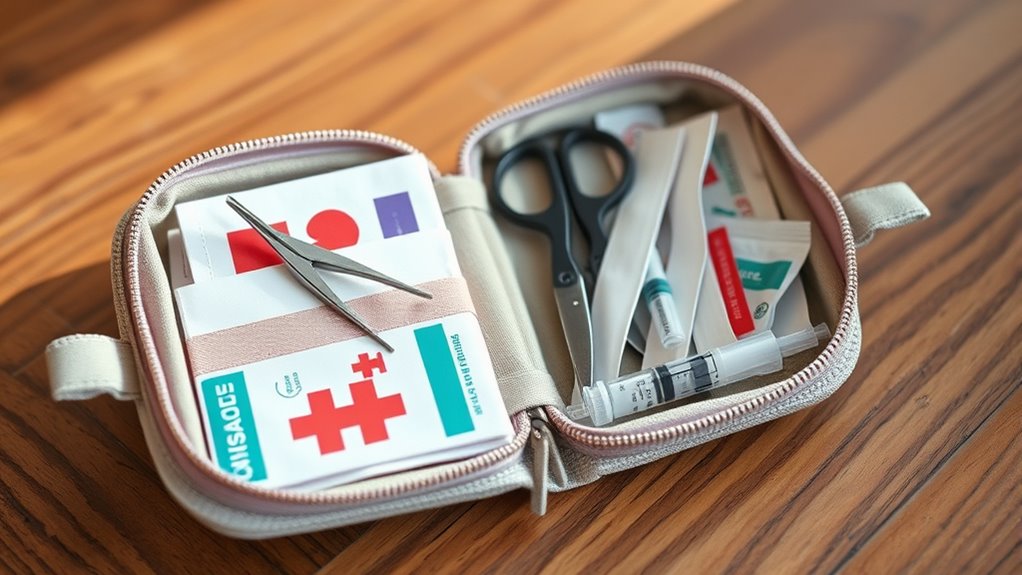

A pocket first aid kit is a compact, ready-to-go set of essential supplies you can carry during outdoor activities or daily errands. It helps you respond quickly to minor injuries like cuts, scrapes, or burns, preventing them from worsening. Regularly check and restock your kit to guarantee all items are fresh and accessible. Knowing how to use its contents confidently can make a real difference—keep exploring to learn more about staying prepared.
Key Takeaways
- A pocket first aid kit is compact, essential for quick response during outdoor activities or emergencies.
- Regularly inspect and replace items to ensure the kit remains effective and ready for use.
- Key contents include bandages, antiseptic wipes, sterile gauze, cold packs, and burn ointments.
- Properly use the kit by cleaning wounds, controlling bleeding, and covering injuries to prevent infection.
- Train all users on kit contents and emergency procedures to maximize readiness and safety.

Have you ever wondered what to do if someone gets injured when help isn’t immediately available? In those moments, knowing how to use a pocket first aid kit can make all the difference. A well-stocked pocket first aid kit is compact but powerful, designed to provide quick relief and prevent minor injuries from becoming major problems. It’s essential to familiarize yourself with its contents and understand how to use each item effectively. Whether you’re hiking, camping, or just out and about, carrying one ensures you’re prepared for unexpected emergencies.
First, check the kit’s contents regularly and replace any used or expired items. Most kits include adhesive bandages of various sizes, antiseptic wipes, and sterile gauze. These are your go-to tools for treating cuts and scrapes. When someone is injured, clean the wound with an antiseptic wipe to remove dirt and bacteria, reducing the risk of infection. Then, apply sterile gauze to control bleeding, pressing firmly but gently. Cover the wound with a bandage to keep it protected from dirt and bacteria. If bleeding is heavy or doesn’t stop after applying pressure for several minutes, it may be necessary to seek professional medical help immediately.
Regularly check your first aid kit and replace used or expired supplies for readiness.
In addition to managing bleeding, your pocket first aid kit often contains items for other common injuries. For sprains or strains, you can use cold packs or ice packs to reduce swelling. Many kits include small packets of instant cold packs that activate when squeezed. For burns, having burn ointment or sterile dressings can prevent infection and soothe pain. Pain relievers like ibuprofen or acetaminophen, if included, can help manage discomfort, but always follow dosage instructions carefully. Remember, if someone shows signs of shock—pale skin, weakness, rapid breathing—keep them lying down, elevate their legs if possible, and keep them warm until professional help arrives.
Learning how to use each tool in your pocket first aid kit is straightforward but critical. Practice applying bandages, using antiseptic wipes, and understanding when to escalate the situation. Your quick response can reduce pain, prevent infection, and even save lives. Always keep your kit in an accessible place, and ensure everyone in your group knows where it is and how to use it. While a pocket first aid kit isn’t a substitute for professional medical care, it’s a essential resource that empowers you to act confidently in emergencies. Being prepared with the right knowledge and tools can turn a potentially tragic situation into a manageable one.
Frequently Asked Questions
How Often Should I Update My Pocket First Aid Kit?
You should update your pocket first aid kit at least every six months to guarantee all supplies are current and in good condition. Check for expired medications, bandages, and ointments, and replace any used or damaged items. Additionally, after any emergency use, review and restock your kit promptly. Regular maintenance keeps your kit reliable and ready whenever you need it, giving you peace of mind in emergencies.
Can I Use Household Items as First Aid Substitutes?
Think of your first aid kit as a toolbox for emergencies. You can use household items as substitutes in a pinch—like using a clean cloth for a bandage or baking soda to neutralize bites. However, they’re no replacements for proper supplies. Always make certain your kit is stocked with actual first aid items, and remember, household remedies are only temporary fixes until professional help arrives.
What Are Common Mistakes Beginners Make With First Aid?
You often make mistakes like delaying calling emergency services or trying to treat severe injuries yourself. You might also overconfidence lead you to use inappropriate methods or delay professional help. Additionally, forgetting to stay calm or not protecting yourself from infection can worsen the situation. To avoid these errors, stay calm, assess the situation quickly, provide basic aid if safe, and always seek professional medical assistance for serious injuries.
Is First Aid Training Necessary for Using a Pocket Kit?
No, you don’t need formal training to use a pocket kit, right? But in reality, having first aid training makes a huge difference. It helps you understand how to use the supplies correctly and confidently, especially in emergencies. Without training, you might not know what to do or could worsen the situation. So, even if it’s just a pocket kit, taking a course guarantees you’re prepared to act effectively when it counts.
How Do I Handle a Poisoning Emergency With a Pocket Kit?
If you suspect poisoning, call emergency services immediately. If the person is conscious, try to identify the poison and remove it from their mouth if safe. Do not induce vomiting unless instructed by a professional. Use your pocket first aid kit to provide basic care, like keeping the person calm and comfortable. Stay with them until help arrives, and share all relevant information with responders.
Conclusion
Having a pocket first aid kit means you’re always ready to handle emergencies quickly. Remember, nearly 70% of injuries happen within 10 minutes of an incident, so quick access is essential. By carrying a compact kit, you can provide immediate care, potentially saving lives or preventing complications. Stay prepared, stay safe, and keep your kit stocked. Being ready might just make all the difference when it counts most.