
When you start feeling overwhelmed in a crowd, focus on controlled breathing by inhaling slowly through your nose for four seconds, holding for four, then exhaling gently for six or eight. Use grounding techniques like the 5-4-3-2-1 method to reconnect with your senses—notice sights, sounds, touches, smells, and tastes around you. Practicing these methods regularly can help you stay calm and confident in crowded settings. Keep exploring ways to manage anxiety effectively at your own pace.
Key Takeaways
- Practice breathing exercises, like slow, deep inhales and extended exhales, to calm anxiety during crowded situations.
- Use grounding techniques such as the 5-4-3-2-1 method to reconnect with the environment and reduce panic.
- Prepare and rehearse coping skills beforehand to respond effectively when panic symptoms arise in crowds.
- Incorporate tactile objects or sensory focus to divert attention from panic triggers and stay present.
- Seek ongoing support and utilize resources like soundscapes or professional strategies to enhance confidence in crowded settings.
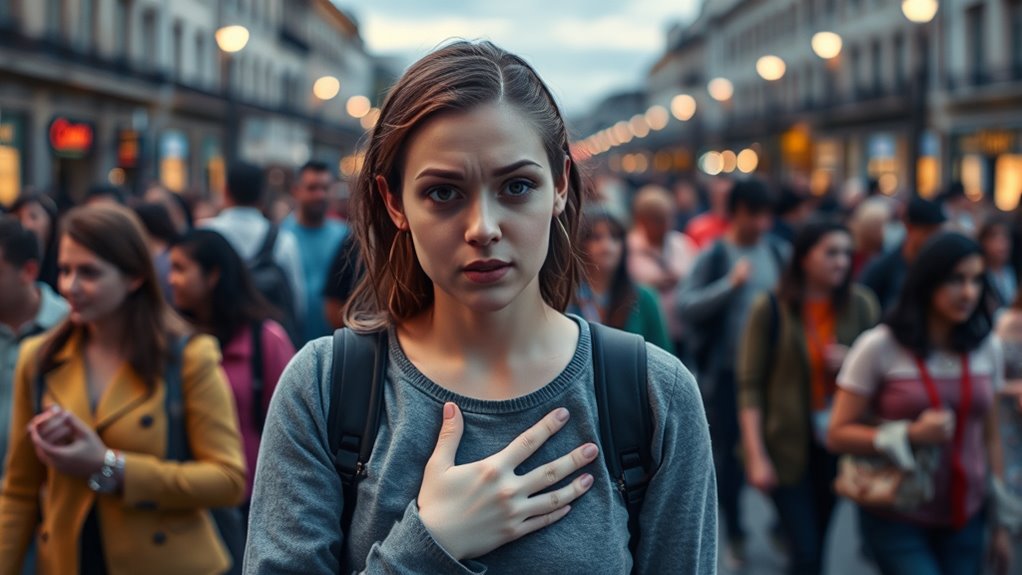
Panic attacks can be overwhelming, but understanding how to manage them can make a significant difference in your daily life. When you’re in a crowded place, the feeling of being trapped or overwhelmed can intensify your panic. However, there are practical strategies you can use to regain control and reduce your anxiety. Two effective methods are breathing exercises and grounding techniques. These tools help you stay present, calm your mind, and prevent panic from spiraling out of control.
Start with breathing exercises. When panic hits, your breathing often becomes rapid and shallow, which only fuels your anxiety. Instead, focus on slowing your breath down. Try inhaling deeply through your nose for a count of four, feeling your abdomen rise as you breathe in. Then, hold that breath for a count of four, and slowly exhale through your mouth for a count of six or eight. This controlled breathing helps lower your heart rate and calms your nervous system. The key is consistency—practice these breathing exercises regularly so they become automatic when you need them most. In crowded environments, taking a moment to breathe deeply can be your anchor, grounding you amidst chaos. Using professional voice techniques and engaging soundscapes can also enhance your ability to stay calm and centered during stressful moments.
Deep, slow breaths can calm your nervous system and anchor you during panic in crowded places.
Alongside breathing exercises, grounding techniques can be incredibly effective. These methods help you reconnect with the present moment and distract your mind from distressing thoughts. One simple grounding technique is the 5-4-3-2-1 method. Look around and identify five things you can see, four you can touch, three you can hear, two you can smell, and one you can taste. This sensory focus shifts your attention away from your panic and back into the here and now. Another approach is to hold onto an object—a piece of jewelry, a small stone, or even your phone—and focus on its texture, weight, and temperature. These physical sensations serve as anchors, pulling you out of the panic cycle and into reality.
It’s important to remember that managing panic attacks in crowds isn’t about avoiding these situations altogether, but about empowering yourself with techniques that work in real time. Practice these strategies beforehand, so they become second nature when you’re in the thick of it. Over time, you’ll notice that your ability to stay calm improves, and panic attacks become less intense or frequent. By combining breathing exercises and grounding techniques, you give yourself effective tools to navigate crowded environments with greater confidence and less fear. Additionally, being aware of industry trends and available resources can provide further support in managing anxiety effectively.
Frequently Asked Questions
How Can I Prevent Panic Attacks in Crowded Places?
To prevent panic attacks in crowded places, focus on grounding techniques and breathing exercises. When you start feeling overwhelmed, try to anchor yourself by noticing five things you see, four you touch, three you hear, two you smell, and one you taste. Practice deep, slow breaths to calm your nervous system. These strategies help you stay present and reduce anxiety, making crowded environments more manageable.
Are There Medications That Help Manage Panic Attacks During Events?
Yes, there are medication options that can help manage panic attacks during events. Panic attack medications, such as selective serotonin reuptake inhibitors (SSRIs) and benzodiazepines, are often prescribed to reduce the frequency and severity of attacks. You should talk to your doctor about these options to determine what’s best for your situation. Remember, medication works best when combined with therapy and coping strategies tailored to your needs.
What Should I Do if Someone Nearby Is Having a Panic Attack?
Imagine you’re the lighthouse guiding someone through a storm. When you see someone having a panic attack nearby, gently encourage calming techniques like deep breathing or grounding exercises. Offer supportive responses with kind words and steady presence. Stay calm yourself, and avoid rushing or dismissing their feelings. Your calmness and reassurance can be the beacon that helps them find their way back to safety amid the chaos.
How Can Event Organizers Create Panic Attack-Friendly Environments?
You can create panic attack-friendly environments by designating quiet zones where attendees can retreat if needed. Guarantee staff are well-trained to recognize signs of distress and respond calmly and effectively. Clearly communicate the availability of these quiet zones and staff support through signs and announcements. By proactively offering safe spaces and trained personnel, you help attendees feel more secure and supported, reducing anxiety and potential panic attacks during events.
Are There Specific Coping Techniques for Different Types of Crowds?
Yes, you can use specific coping techniques tailored to different crowds. For high crowd density, encourage individuals to find quieter spots and practice deep breathing to reduce anxiety. In noisy environments, suggest using earplugs or noise-canceling headphones to minimize sensory overload. You can also promote mindfulness exercises and maintaining a safe distance from overwhelming stimuli, helping attendees manage panic symptoms more effectively in various crowd situations.
Conclusion
Remember, when panic starts to rise like a storm in your chest, breathe deeply and focus on your surroundings. Feel the cool air on your skin, hear the distant hum of voices, and ground yourself in the present moment. Picture yourself as a steady lighthouse amid churning waves, unwavering and calm. With each breath, you regain control, turning chaos into calm. You’ve got the strength to navigate crowds and find peace within yourself.