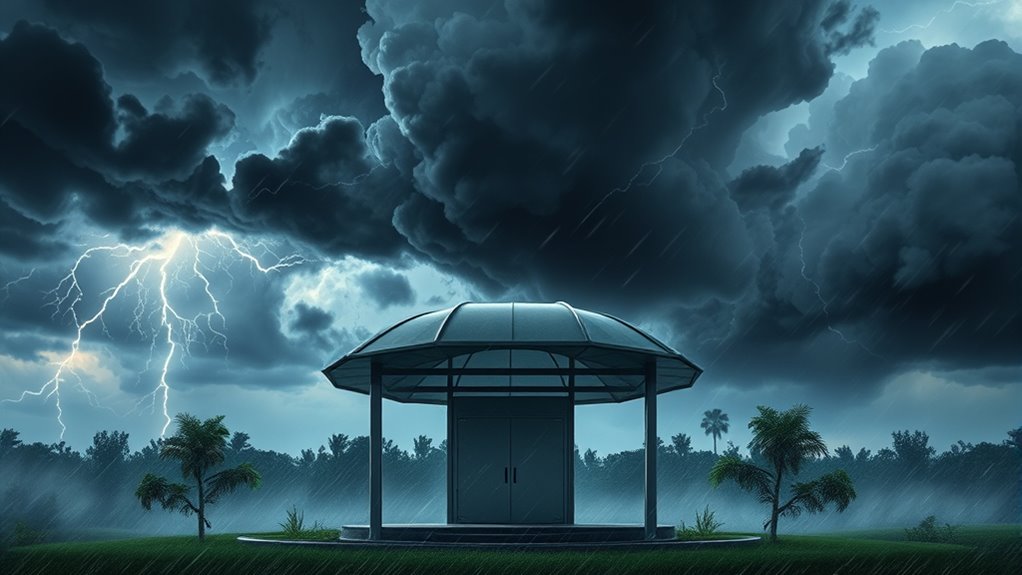

During severe weather, you should head to a safe shelter like a basement, interior room, or designated community storm center away from windows and exterior walls. These locations protect you from high winds, flying debris, and other dangers. Knowing your safest spot inside your home or nearby community shelter can save your life and prevent injuries. Staying informed about local alerts and preparing your shelter in advance makes a vital difference—continue to learn how to stay safe during storms.
Key Takeaways
- Know the location of local community storm shelters and how to access them quickly.
- Use your home’s interior, ideally a basement or interior room away from windows, as a safe shelter inside.
- Prepare your shelter area with emergency supplies, including water, food, flashlight, and first aid kit.
- Fully charge cell phones and carry portable power sources to stay connected during emergencies.
- Develop and practice a clear storm response plan with your family to ensure quick, safe actions during severe weather.
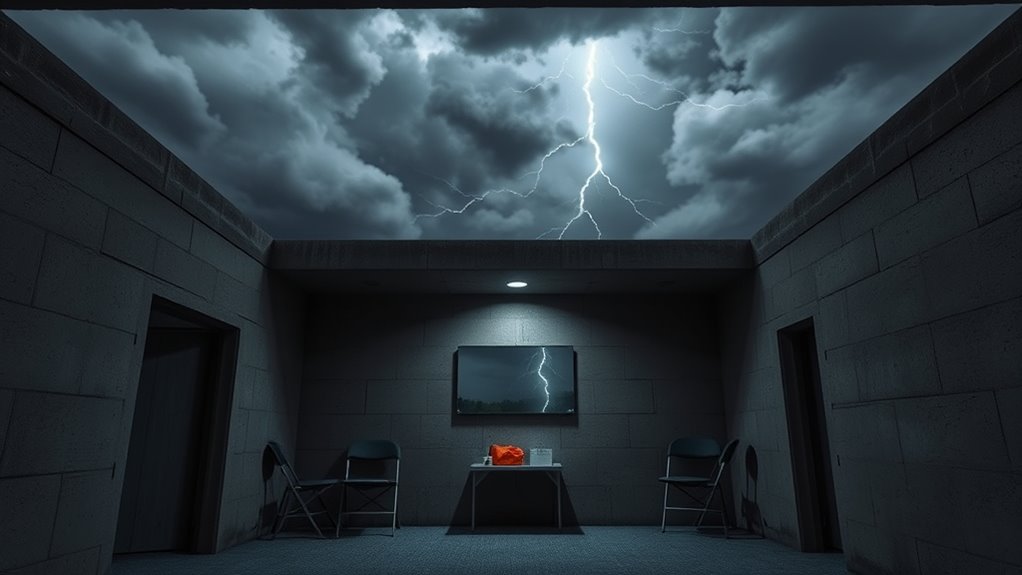
During severe weather events, having a designated shelter can be lifesaving. When storms, tornadoes, or hurricanes threaten your area, knowing exactly where to go can make all the difference. The key to staying safe is proper storm preparedness, which includes identifying a safe location beforehand and ensuring you have the necessary emergency supplies on hand. By planning ahead, you reduce panic and confusion when severe weather strikes, giving you peace of mind that you’re ready to respond quickly and effectively.
First, it’s essential to understand the types of shelters available in your community. Many neighborhoods have designated storm shelters or community centers built to withstand extreme weather. If your area has a storm shelter program, find out where these shelters are located, how to access them, and whether they are open to residents during an emergency. In some cases, your home itself can serve as a shelter—particularly if it’s a basement or a small, interior room away from windows. Knowing your safest spot inside your house is just as vital as having a community shelter nearby.
Identify local shelters and know your safest spot inside your home for quick, effective storm protection.
Once you’ve identified your shelter, focus on storm preparedness. Make sure your shelter area is free of clutter and easily accessible. Keep emergency supplies close at hand, including bottled water, non-perishable food, a flashlight, batteries, a first aid kit, and any necessary medications. It’s also wise to have a battery-powered weather radio tuned to local alerts so you can stay updated on storm progress and official instructions. Remember, severe weather can develop quickly, so having these supplies ready can prevent last-minute scrambling and guarantee your safety.
If you have pets, don’t forget them in your storm preparedness plan. Keep pet supplies and identification in your shelter area, and ensure your pets are comfortable and secure. Your plan should also include communication methods—charge your cell phone fully and consider having a portable charger or power bank on hand to stay connected with family members or emergency services.
In addition to personal supplies, familiarize yourself with emergency procedures. Know the warning signs of approaching severe weather and listen for alerts from local authorities. Practice your plan with your family regularly so everyone understands where to go and what to do. Having a designated shelter that is well-stocked with emergency supplies and that everyone knows how to reach can greatly increase your safety and reduce stress during a crisis. Being prepared isn’t just about stockpiling supplies; it’s about having a clear, practiced plan to keep you and your loved ones safe when nature’s fiercest storms arrive. Additionally, understanding the importance of proper storm shelter design can enhance your safety and ensure your shelter withstands extreme weather conditions.

Midland – WR120B – NOAA Emergency Weather Alert Radio – Localized Programming, Trilingual Display, 60+ Emergency Alerts, Alarm, Selectable Alert Tone
NOAA Weather Scan & Alert – This emergency weather alert radio features S.A.M.E localized programming and alert you…
As an affiliate, we earn on qualifying purchases.
As an affiliate, we earn on qualifying purchases.
Frequently Asked Questions
How Early Should I Seek Shelter Before Severe Weather Arrives?
You should seek shelter as soon as you receive alerts or notice signs of severe weather, ideally 15 to 30 minutes before the predicted arrival. Timing considerations are essential; don’t wait until the storm is imminent. Acting early guarantees you have enough time to reach your shelter safely, avoiding dangerous conditions. Remember, shelter timing can be the difference between safety and being caught unprepared, so stay alert and act promptly.
Are There Specific Shelter Requirements for People With Disabilities?
Think of shelters as safe harbors in a storm. They should have disability accessibility and specialized accommodations tailored to your needs, ensuring everyone feels protected. Shelters must comply with accessibility standards, offering ramps, wide doorways, and quiet spaces. If you have specific needs, check ahead to confirm these accommodations are in place. Your safety depends on a shelter that understands and respects your circumstances, providing a true refuge during severe weather.
Can Pets Be Safely Brought Into Severe Weather Shelters?
Pets can often be brought into severe weather shelters, but it depends on the shelter’s policies. To guarantee pets’ safety, look for shelters that provide animal accommodations and follow guidelines for pet safety. Always bring necessary supplies like water, food, and a leash. Call ahead if possible, so you’re prepared and know if your pet’s needs will be met. Your pet’s safety during severe weather is a top priority.
What Should I Pack When Heading to a Shelter?
Imagine grabbing a sturdy backpack filled with hope as you head to safety. Pack your emergency kit with essential supplies like water, non-perishable food, medications, and a flashlight. Include personal items such as toiletries, a first aid kit, and important documents. Don’t forget warm clothing and blankets. These items guarantee you’re prepared for the storm’s aftermath, keeping you safe, comfortable, and ready to face whatever comes next.
How Do Shelters Handle Power Outages During Storms?
Shelters handle power outages during storms by implementing power backup procedures, such as generators, to guarantee storm shelter safety. These backups keep essential lighting, communication systems, and climate control running smoothly. When you arrive, follow staff instructions about power outages and stay calm. Knowing that shelters are prepared with backup systems helps you feel secure, so you can focus on staying safe until the storm passes.

MARBERO Portable Power Station 88Wh Camping Lithium Battery Solar Generator Fast Charging with AC Outlet 120W Peak Power Bank(Solar Panel Optional) for Home Backup Outdoor Emergency RV Van Hunting
EFFICIENT CHARGING: Use the adapter included in the package to charge the power station from 0 to 80%…
As an affiliate, we earn on qualifying purchases.
As an affiliate, we earn on qualifying purchases.
Conclusion
So, next time severe weather strikes, remember that your safest bet might be closer than you think—sometimes, the best shelter is right around the corner, just where you least expect it. It’s a coincidence how nearby community centers or even local businesses can become lifesaving havens in a pinch. Stay alert, plan ahead, and you might find that safety isn’t as far away as you once believed. Preparedness could be the coincidence that keeps you safe.

Sustain Supply 2-Person Premium 72-Hour Emergency Survival Kit – Complete Disaster Preparedness Bag w/Food, Water, First Aid, Tools & Survival Gear for Earthquake, Hurricane, Fire & Evacuation
COMPLETE 72-HOUR SURVIVAL KIT FOR 2 PEOPLE – Designed to sustain two adults for three full days with…
As an affiliate, we earn on qualifying purchases.
As an affiliate, we earn on qualifying purchases.

Victoper LED Flashlight 2 Pack, Bright Tactical Torch High Lumens with 5 Modes, Waterproof Zoomable Flash Light, Valentine's Day Gifts for Men, Hunting Camping Essentials Gear
[ Ultra-Powerful Brightness ] Illuminate your path with this flash light boasting high lumens of brightness, capable of…
As an affiliate, we earn on qualifying purchases.
As an affiliate, we earn on qualifying purchases.