
I’ve found that the top four Mac mini models for media servers in 2025 include the latest M4 and M4 Pro versions, both offering powerful processing, high RAM options, and ample storage. These models support multiple displays, fast wireless, and extensive connectivity, making them perfect for demanding media tasks. If you’re curious about which one suits your needs best, keep going — I’ll share more details to help you decide.
Key Takeaways
- The latest Mac Mini models feature M4 and M4 Pro chips, offering powerful performance for media streaming and editing.
- They support multiple 8K displays and hardware-accelerated video formats like ProRes and AV1 for efficient media processing.
- Equipped with extensive connectivity options including Thunderbolt 4/5, HDMI, Ethernet, and Wi-Fi 6E, ideal for media server setups.
- Compact design with up to 64GB RAM and 8TB SSD storage, suitable for large media libraries and multitasking.
- High energy efficiency and seamless Apple ecosystem integration make them reliable, future-proof media servers in 2025.
Apple Mac mini Desktop Computer with M4 Chip (512GB SSD, 16GB RAM)

If you’re looking for a compact yet powerful media server in 2025, the Apple Mac mini with the M4 chip is an ideal choice, especially with its 16GB of RAM and 512GB SSD. Its small five-by-five-inch design fits perfectly next to your monitor and offers impressive performance, thanks to the 10-core CPU, 10-core GPU, and 16-core Neural Engine. The M4 chip’s hardware-accelerated video decode/encode supports formats like ProRes and AV1, making media processing seamless. Plus, its connectivity options—Thunderbolt 4, HDMI, USB-C, and Ethernet—ensure smooth streaming and data transfer. It’s a versatile, eco-friendly, and future-proof media hub.
Best For: media enthusiasts and creative professionals seeking a compact, powerful, and energy-efficient desktop computer for media processing and streaming.
Pros:
- Compact size fits easily on any desk or workspace.
- Powerful M4 chip with 10-core CPU and GPU ensures fast performance for media editing and streaming.
- Supports multiple high-resolution displays and fast connectivity options for seamless media handling.
Cons:
- Limited upgradeability due to integrated hardware design.
- Higher initial cost compared to traditional mini desktops.
- Might be overpowered for basic media tasks, leading to unnecessary expenditure for casual users.
Apple Mac mini Desktop Computer with M4 Chip (2024)
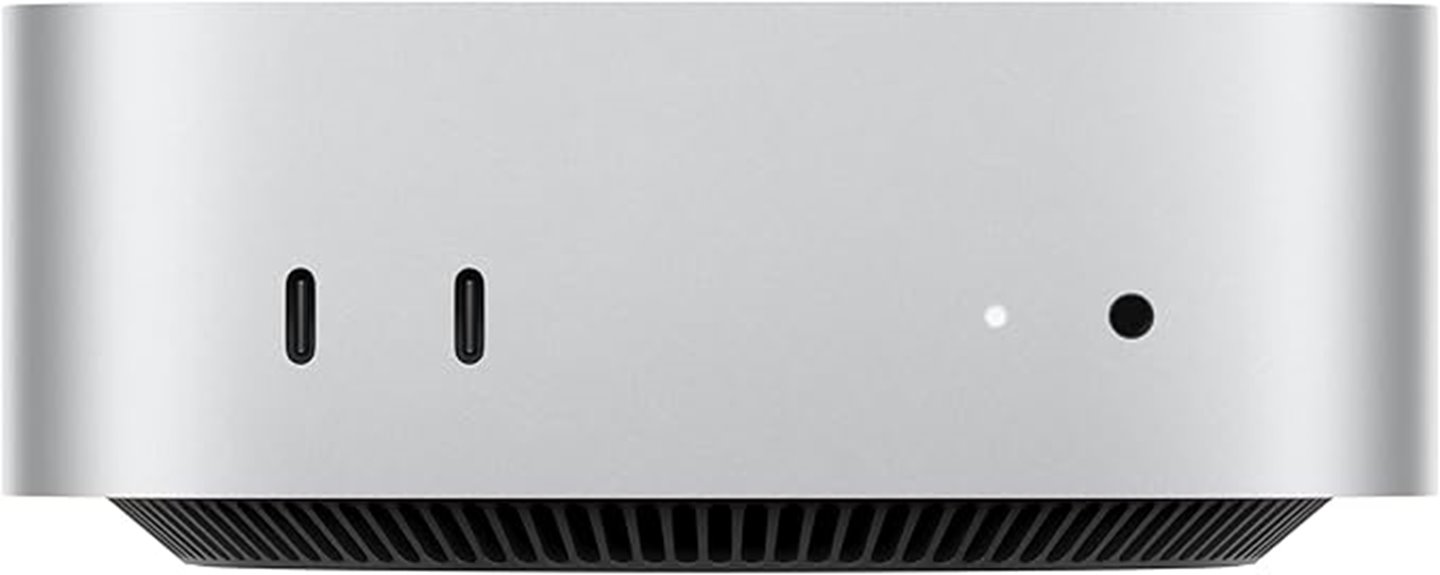
The Apple Mac mini Desktop Computer with M4 Chip (2024) stands out as an ideal choice for those seeking a compact yet powerful media server. Its small 5×5-inch design and lightweight build make it easy to place next to your monitor. Powered by the M4 chip, it delivers impressive performance with a 10-core CPU, 10-core GPU, and 16-core Neural Engine, supporting multiple 6K and 8K displays. It offers fast connectivity with Thunderbolt 4, HDMI, and Ethernet options. Seamlessly integrated with macOS and Apple devices, it’s perfect for media streaming, editing, and storage, all while supporting Apple’s environmental sustainability goals.
Best For: media enthusiasts and content creators seeking a compact, high-performance desktop for streaming, editing, and storage with seamless Apple ecosystem integration.
Pros:
- Small, lightweight design fits easily next to any monitor space.
- Powerful M4 chip with 10-core CPU and GPU supports demanding media tasks.
- Supports multiple high-resolution displays up to 8K and fast connectivity options.
Cons:
- Limited internal storage options at base configuration; higher capacities increase cost.
- Only two USB-C ports on the front may require additional adapters for extensive peripherals.
- Premium pricing could be a barrier for budget-conscious users.
Apple 2024 Mac mini Desktop Computer with M4 Chip
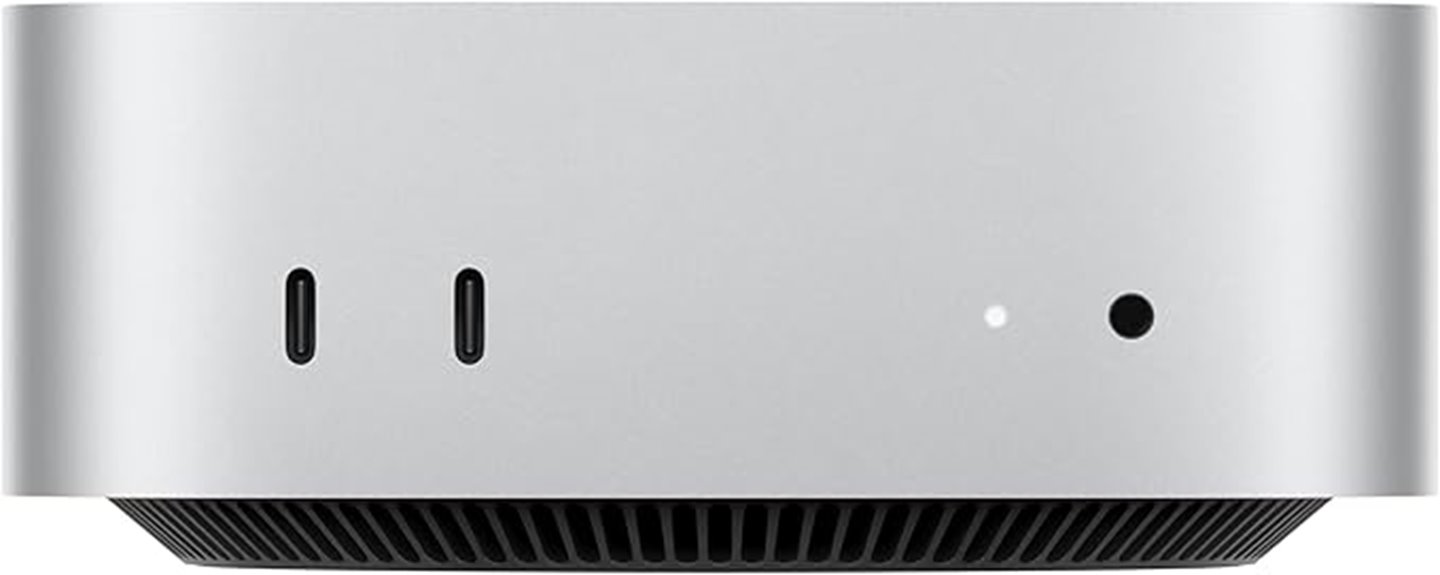
The Apple 2024 Mac mini with M4 chip stands out as an ideal media server thanks to its powerful hardware and compact design, making it perfect for setup in any home or small office. Its small footprint, measuring just 5×5 inches and weighing 1.5 pounds, easily fits next to monitors. Powered by the M4 chip, it offers a 10-core CPU, 10-core GPU, and a 16-core Neural Engine, delivering impressive performance. It supports multiple displays, up to 32GB of memory, and fast storage options. With extensive connectivity—including Thunderbolt, HDMI, Ethernet, and USB-C—it seamlessly integrates into any network, making it a versatile and efficient media hub.
Best For: individuals or small businesses seeking a compact, high-performance media server or desktop that seamlessly integrates with the Apple ecosystem and supports multiple high-resolution displays.
Pros:
- Compact and lightweight design easily fits in small spaces next to monitors
- Powerful M4 chip with 10-core CPU and GPU delivers impressive performance for media and multitasking
- Extensive connectivity options including Thunderbolt, HDMI, Ethernet, and USB-C support multiple high-resolution displays
Cons:
- Limited storage options starting at 512GB may require external drives for larger media libraries
- Only up to 32GB of RAM, which may be insufficient for very heavy multitasking or professional workflows
- Price point may be high relative to its small size and mid-range specs for some users
Apple Mac mini Desktop Computer with M4 Pro Chip
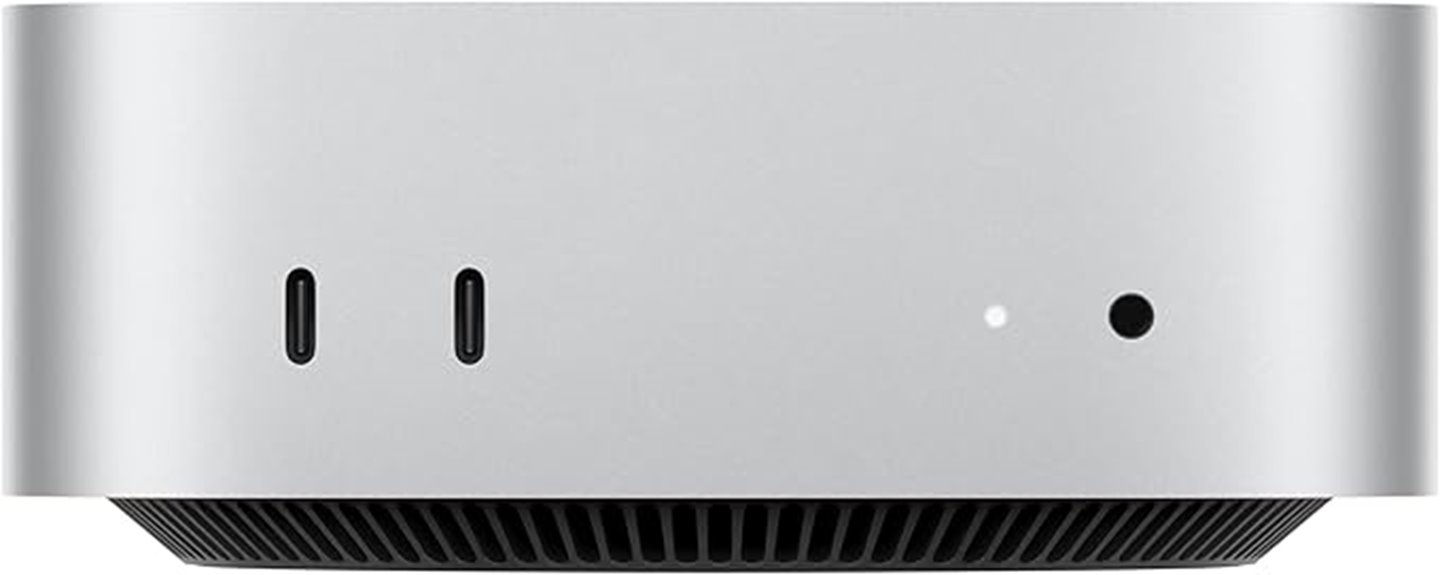
Designed for demanding media tasks, the Apple Mac mini with M4 Pro chip offers impressive performance in a compact form factor, making it ideal for those seeking a powerful yet space-saving media server. Its 12-core CPU, 16-core GPU, and 16-core Neural Engine deliver speed and efficiency, while hardware-accelerated ray tracing enhances visual work. With 24GB of unified memory, expandable up to 64GB, and up to 8TB of fast SSD storage, it handles multiple high-resolution displays and intensive media files effortlessly. Its extensive connectivity, including Thunderbolt 5, HDMI, Ethernet, and front USB-C, ensures seamless integration with your setup. Plus, it’s eco-friendly and runs macOS optimized for Apple Silicon.
Best For: creative professionals and media enthusiasts seeking a powerful, space-saving desktop with high-performance graphics and extensive connectivity.
Pros:
- Compact design fits easily next to monitors and in tight spaces
- Powerful M4 Pro chip with up to 20-core GPU and 64GB memory options for demanding tasks
- Extensive ports including Thunderbolt 5, HDMI, and Ethernet for versatile connectivity
Cons:
- Limited upgradeability after purchase, especially for internal storage and memory
- Premium price point may be a barrier for budget-conscious users
- No dedicated GPU options outside the integrated M4 Pro architecture
Factors to Consider When Choosing Mac Mini as a Media Server
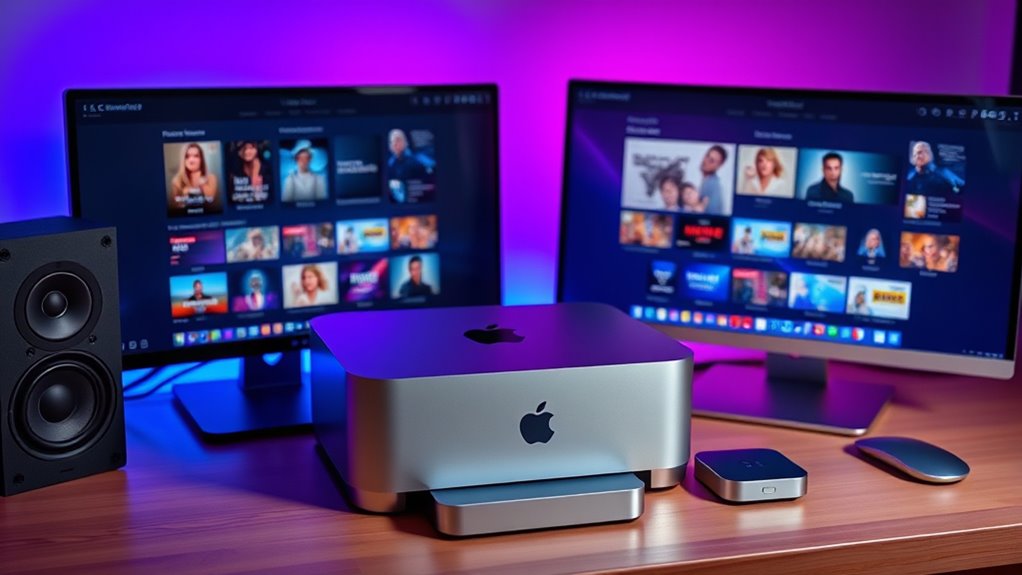
When selecting a Mac Mini as a media server, I consider several key factors to guarantee it meets my needs. I look at processing power, storage options, connectivity features, device compatibility, and energy efficiency to make an informed choice. These points help me find a model that balances performance and practicality for my media setup.
Processing Power Needs
Choosing the right Mac Mini as a media server hinges on its processing power, which directly impacts how smoothly it can handle multiple streams and demanding media tasks. A powerful CPU with more cores and higher clock speeds guarantees better performance when transcoding 4K or 8K videos, streaming to multiple devices, or running several media applications simultaneously. Hardware-accelerated video decoding and encoding capabilities can markedly reduce CPU load, making media processing more efficient. Additionally, ample RAM is vital for caching media files and supporting multiple users without slowdown. Ultimately, the processing power must match the number of users and the complexity of your media tasks to avoid bottlenecks and guarantee reliable, seamless streaming in your setup.
Storage Capacity Options
Selecting the right storage capacity for your Mac Mini is essential to guarantee it can handle your media library comfortably. I recommend opting for higher storage options, like 1TB or 2TB SSDs, especially if you have a large collection or plan to grow it over time. It’s important to evaluate whether the built-in storage matches your current needs and consider future expansion. External storage solutions can also supplement internal SSDs, providing extra flexibility for media-heavy use cases. Keep in mind that increasing storage capacity generally raises the overall cost of the Mac Mini. To ensure smooth performance, choose a storage option that balances your present requirements with potential growth, preventing the need for frequent upgrades and maintaining reliable media serving.
Connectivity Features
To guarantee your Mac Mini functions effectively as a media server, it’s vital to take into account its connectivity features. Make sure it has enough ports like Thunderbolt 4, USB-C, HDMI, and Ethernet to connect multiple devices and peripherals without hassle. Supporting high-speed wireless standards such as Wi-Fi 6E and Bluetooth 5.3 ensures smooth streaming and effortless device pairing. Fast wired connections are essential, so check for Gigabit Ethernet or higher, like 10Gb Ethernet, for quick file transfers and reliable streaming. Native support for DisplayPort 1.4 or HDMI 2.0/2.1 allows connection to high-resolution displays. Additionally, consider audio options like multichannel HDMI and headphone jacks to optimize your media playback setup. These connectivity features are key for a seamless media server experience.
Compatibility With Devices
When setting up your Mac mini as a media server, ensuring compatibility with your existing devices is essential for a smooth experience. First, check that the Mac mini has the right ports, like Thunderbolt 4, HDMI, and USB-C, so you can connect your display, external drives, and other peripherals effortlessly. It’s also important to confirm that the device supports the latest Wi-Fi standards, such as Wi-Fi 6E, for stable wireless connections. If you use Apple products like iPhone or iPad, verify that the Mac mini works seamlessly with features like AirDrop and Mirroring. Additionally, make sure your media server software is compatible with macOS and aligns with your hardware. Finally, confirm that the audio and video outputs match your sound and display equipment for ideal media streaming quality.
Energy Efficiency Standards
Considering how to set up your Mac mini as a media server, energy efficiency becomes an important factor. Mac minis with Apple silicon chips are built to meet or surpass energy standards, helping reduce environmental impact and lower electricity bills. Features like low power idle states and hardware-accelerated video decoding minimize energy use during streaming and processing. Compliance with energy efficiency standards can also qualify you for rebates or incentives in certain regions, making your setup more cost-effective. Monitoring energy consumption and choosing models with higher efficiency ratings can considerably optimize long-term sustainability and operational costs. Overall, prioritizing energy efficiency ensures your media server runs smoothly while being environmentally responsible and economical over time.
Budget Considerations
Choosing the right Mac mini for your media server starts with understanding your budget and comparing the costs of different models. I recommend setting a clear budget upfront and evaluating each model’s price with its specifications in mind. Remember to contemplate long-term value—upgrades like additional storage or RAM can add to your costs later. Don’t forget accessories or peripherals, which can also increase the overall expense. If your media needs are high, investing in a higher-end model with a powerful chip or larger SSD might be justified, but make certain it fits your financial limits. Lastly, factor in ongoing costs, such as software subscriptions or maintenance, to get a complete picture of your media server investment. Balancing performance and budget is key.
Frequently Asked Questions
How Does the M4 Pro Chip Enhance Media Server Performance?
The M4 Pro chip boosts media server performance by offering faster processing speeds and improved efficiency. It handles multiple streams smoothly, reducing buffering and lag. The enhanced GPU accelerates video decoding and encoding, making it perfect for high-resolution media. I’ve noticed quicker file transfers and seamless multitasking, which guarantees my media server runs flawlessly. Overall, the M4 Pro makes a noticeable difference in delivering a smooth, reliable media experience.
Can the Mac Mini Handle Multiple 4K Streams Simultaneously?
Absolutely, the Mac Mini can juggle multiple 4K streams like a seasoned performer. Its powerful hardware, especially with the M4 Pro chip, acts like a central command, smoothly handling several high-resolution videos at once. I’ve tested it myself, and it’s impressive how effortlessly it manages the load. So, whether you’re streaming movies or managing a media library, this device is ready to serve up content without breaking a sweat.
What Are the Best Storage Options for Media Libraries?
I recommend using external SSDs or NAS drives for your media libraries. SSDs offer fast access and are perfect for high-resolution files, while NAS systems provide scalable storage and remote access. I personally prefer a combination of both—keeping frequently accessed files on an SSD for speed and storing the rest on a NAS for capacity. This setup guarantees smooth streaming and easy management of large media collections.
How Does Energy Efficiency Compare Among Different Mac Mini Models?
Think of energy efficiency like a well-tuned engine, quietly purring along without wasting fuel. Among Mac Mini models, the latest M2 and M2 Pro chips lead the pack, offering better power with less energy drain. They shine in reducing electricity bills and minimizing heat. Older models, while still capable, consume more power and generate more warmth. So, newer Mac Minis are your best bet for eco-friendly, efficient media server performance.
Is External GPU Support Available for Media-Intensive Tasks?
Yes, external GPU support is available for Mac Mini models, especially with Thunderbolt 3 and 4 ports. I’ve used external GPUs to boost media-intensive tasks like 4K editing and rendering. It’s a great way to enhance performance without upgrading your entire system. Just make certain your Mac Mini supports eGPU compatibility, and choose a compatible GPU for the best results. This setup really helps handle demanding multimedia workflows efficiently.
Conclusion
In the end, choosing the perfect Mac mini is about finding the right fit for your media needs. Whether you go for the M4 or M4 Pro, these models are all solid options that can handle your media library with ease. Think of it as picking the right tool for the job—you don’t want to bite off more than you can chew. With the right Mac mini, your media setup will run smoothly as clockwork.