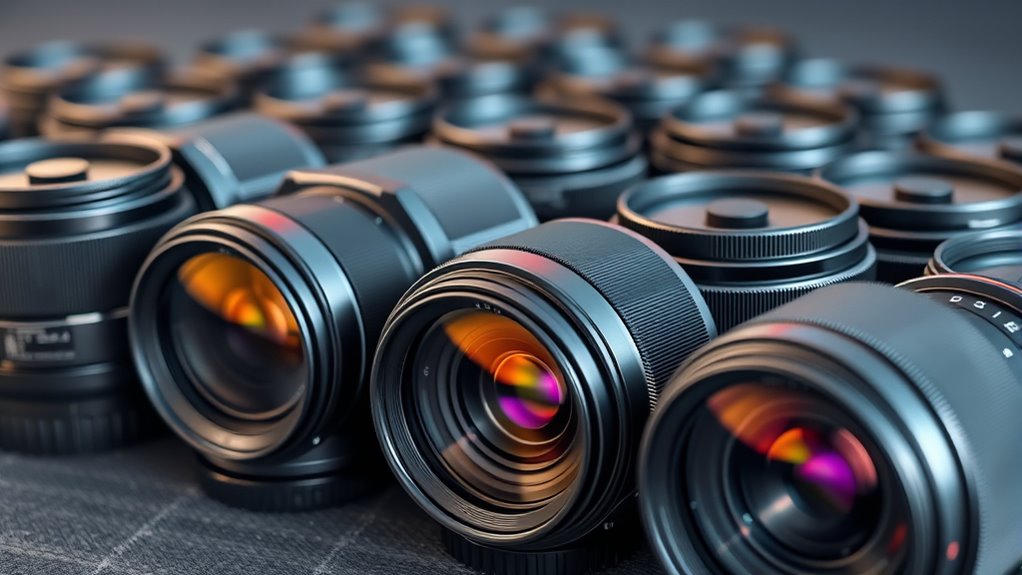

Choosing premium professional DSLR lenses involves balancing absolute image quality, durability, and versatility. The Canon EF 70-200mm f/2.8L IS III USM stands out as the best overall for its sharpness and reliable build, while the Sigma 70-200mm F2.8 Sports DG OS HSM offers a compelling alternative for those seeking value without sacrificing performance. Many photographers face tough tradeoffs: investing in the most advanced optics versus prioritizing versatility or budget. Continue reading to explore the detailed comparisons and find the perfect lens for your needs.

Get movie nights delivered free with Prime
- Fast, free delivery on millions of items
- Prime Video, Amazon Music and more included
- Member-only deals all year
Key Takeaways
- The top-ranked lenses excel in optical clarity, with the Canon EF 70-200mm f/2.8L IS III USM leading in sharpness and color accuracy.
- Build quality and weather sealing are critical for durability in professional environments, which is why Canon‘s L-series lenses dominate the top tiers.
- Price remains a significant factor; the Sigma 70-200mm F2.8 Sports offers high performance at a more accessible cost, appealing to budget-conscious pros.
- Versatility often comes down to zoom range and aperture, with the 70-200mm focal length being a recurring favorite for its adaptability.
- Premium lenses tend to have specialized features like optical stabilization and fast autofocus, which can greatly improve shooting experience in demanding conditions.
| Canon EF 75-300mm f/4-5.6 III Telephoto Zoom Lens for Canon SLR Cameras |  | Best Budget Telephoto Zoom | Focal Length: 75-300mm | Maximum Aperture: f/4-5.6 | Diameter: 2.8 inches | VIEW ON AMAZON | See Our Full Breakdown |
| Canon EF 70-200mm f/2.8L IS III USM Lens for Canon Digital SLR Cameras (Renewed) |  | Best Professional-Grade Telephoto Zoom | Mount: EF | Type: Telephoto zoom lens | Focal Length: 70-200mm | VIEW ON AMAZON | See Our Full Breakdown |
| Canon EF 75-300mm f/4-5.6 III Telephoto Zoom Lens |  | Best Compact Versatile Telephoto | Focal Length: 75-300mm | Maximum Aperture: f/4-5.6 | Lens Construction: 13 elements in 9 groups | VIEW ON AMAZON | See Our Full Breakdown |
| Canon EF 70-200mm f/2.8L USM Telephoto Zoom Lens for Canon SLR Cameras |  | Best Classic Professional Telephoto | Mount: EF | Type: Telephoto zoom lens | Focal Length: 70-200mm | VIEW ON AMAZON | See Our Full Breakdown |
| Canon EF 50mm f/1.8 STM Lens for Canon EOS DSLR Cameras |  | Best Versatile Prime for Low-Light and Portraits | Focal Length: 50mm | Maximum Aperture: f/1.8 | Lens Construction: 6 elements in 5 groups | VIEW ON AMAZON | See Our Full Breakdown |
| Canon EF-S 18-55mm f/3.5-5.6 IS II Lens |  | Best Value Standard Kit Lens | Focal Length: 18-55mm | Maximum Aperture: f/3.5-5.6 | Lens Construction: 16 elements in 12 groups | VIEW ON AMAZON | See Our Full Breakdown |
| Canon EF 70-200mm f/2.8L IS III USM Telephoto Lens |  | Best for Professional Telephoto Work | Focal Length: 70-200mm | Maximum Aperture: f/2.8 | Lens Mount: Canon EF | VIEW ON AMAZON | See Our Full Breakdown |
| Canon EF 70-200mm f/2.8L IS USM Telephoto Zoom Lens for Canon SLR Cameras |  | Best for Professional Use with Included Accessories | Focal Length: 70-200mm | Maximum Aperture: f/2.8 | Mount: EF | VIEW ON AMAZON | See Our Full Breakdown |
| Canon EF 75-300mm f/4-5.6 III Telephoto Zoom Lens for Canon SLR Cameras |  | Best Budget Telephoto Zoom for Beginners | Focal Length: 75-300mm | Maximum Aperture: f/4-5.6 | Minimum Focus Distance: 4.9 feet | VIEW ON AMAZON | See Our Full Breakdown |
| Canon EF 70-200mm f/2.8L IS II USM Telephoto Zoom Lens for Canon SLR Cameras (Renewed) |  | Best Renewed Professional Telephoto Lens | Focal Length: 70-200mm | Maximum Aperture: f/2.8 | Lens Elements: 23 in 19 groups | VIEW ON AMAZON | See Our Full Breakdown |
| Sigma 70-200mm F2.8 Sports DG OS HSM for Canon Mount |  | Best Overall Telephoto Zoom for Professional Outdoor Use | Lens Type: Telephoto zoom | Focal Length: 70-200mm | Maximum Aperture: F2.8 | VIEW ON AMAZON | See Our Full Breakdown |
| Canon EF 100-400mm f/4.5-5.6L IS II USM Lens |  | Best for Wildlife and Sports Photography | Focal Length: 100-400mm | Maximum Aperture: f/4.5-5.6 | Closest Focusing Distance: 3.2 feet / 0.98 meter | VIEW ON AMAZON | See Our Full Breakdown |
| Rokinon 135mm F2.0 ED UMC Telephoto Lens for Canon EF |  | Best for Portrait and Astrophotography on a Budget | Compatibility: Canon EF full-frame and APS-C | Focal Length: 135mm | Maximum Aperture: f/2.0 | VIEW ON AMAZON | See Our Full Breakdown |
| Canon EF 70-200mm f/2.8L IS USM Telephoto Zoom Lens for Canon SLR Cameras |  | Best Classic Professional Telephoto Zoom | Mount: EF | Focal Length: 70-200mm | Maximum Aperture: f/2.8 | VIEW ON AMAZON | See Our Full Breakdown |
| premium professional dslr lense | Focal Length | Maximum Aperture |
|---|---|---|
| Canon EF 75-300mm f/4-5.6 III | 75-300mm | f/4-5.6 |
| Canon EF 70-200mm f/2.8L IS II | 70-200mm | f/2.8 |
| Canon EF 75-300mm f/4-5.6 III | 75-300mm | f/4-5.6 |
| Canon EF 70-200mm f/2.8L USM T | 70-200mm | f/2.8 |
| Canon EF 50mm f/1.8 STM Lens f | 50mm | f/1.8 |
| Canon EF-S 18-55mm f/3.5-5.6 I | 18-55mm | f/3.5-5.6 |
| Canon EF 70-200mm f/2.8L IS II | 70-200mm | f/2.8 |
| Canon EF 70-200mm f/2.8L IS US | 70-200mm | f/2.8 |
| Canon EF 75-300mm f/4-5.6 III | 75-300mm | f/4-5.6 |
| Canon EF 70-200mm f/2.8L IS II | 70-200mm | f/2.8 |
| Sigma 70-200mm F2.8 Sports DG | 70-200mm | F2.8 |
| Canon EF 100-400mm f/4.5-5.6L | 100-400mm | f/4.5-5.6 |
| Rokinon 135mm F2.0 ED UMC Tele | 135mm | f/2.0 |
| Canon EF 70-200mm f/2.8L IS US | 70-200mm | f/2.8 |
More Details on Our Top Picks
Canon EF 75-300mm f/4-5.6 III Telephoto Zoom Lens for Canon SLR Cameras
This lens stands out for offering an affordable entry point into telephoto photography for Canon SLR users, with a useful focal range of 75-300mm. Compared to the more professional Canon EF 70-200mm f/2.8L IS III USM, it sacrifices constant aperture and image stabilization, leading to more limited low-light and handheld performance. Its smooth zoom mechanism and decent close focusing make it suitable for hobbyists or those experimenting with distant subjects. However, the lack of image stabilization and a narrower aperture can hinder sharpness in challenging conditions. This pick makes the most sense for amateur photographers on a tight budget who want a versatile telephoto without high costs. For users needing reliable stabilization or better low-light capability, it may fall short.
Pros:- Affordable price point for Canon SLR users
- Smooth zoom mechanism enhances usability
- Decent close focusing distance for creative framing
Cons:- No image stabilization, limiting handheld sharpness
- Limited maximum aperture reduces low-light versatility
Best for: Beginner photographers seeking affordable telephoto reach for casual wildlife or sports shots
Not ideal for: Professional photographers or enthusiasts requiring stabilization and superior low-light performance
- Focal Length:75-300mm
- Maximum Aperture:f/4-5.6
- Diameter:2.8 inches
- Length:4.8 inches
- Weight:16.8 ounces
- Closest Focusing Distance:4.9 feet
Our verdict“A solid choice for budget-conscious beginners wanting telephoto capability without advanced features.”
Canon EF 70-200mm f/2.8L IS III USM Lens for Canon Digital SLR Cameras (Renewed)
This lens makes a compelling case for professionals or serious enthusiasts with its constant f/2.8 aperture and advanced coatings, ensuring sharp images in varied lighting. Compared to the older Canon EF 70-200mm f/2.8L USM, the III version introduces improved stabilization and coatings, reducing ghosting and fingerprints. Its optical image stabilization (up to 3.5 stops) allows for handheld use in low-light scenarios, a key advantage over less equipped models like the Canon EF 75-300mm f/4-5.6 III. The main tradeoff is weight—this lens is bulky and heavy, which can tire out handheld shooters. It’s best suited for professionals or dedicated hobbyists who need reliable, sharp images across a wide aperture range, despite its higher cost and weight. If portability is a priority, lighter options might be preferable.
Pros:- Constant f/2.8 aperture ensures consistent exposure and depth of field
- Effective image stabilization enhances handheld shooting
- Advanced coatings reduce ghosting and fingerprints
Cons:- Heavy and bulky for extended handheld use
- Premium price point may be a barrier for some
Best for: Professional photographers or advanced hobbyists working in variable lighting conditions
Not ideal for: Travelers or casual photographers needing lightweight, compact gear
- Mount:EF
- Type:Telephoto zoom lens
- Focal Length:70-200mm
- Maximum Aperture:f/2.8
- Image Stabilization:Yes, up to 3.5 stops
- Coatings:Air Sphere Coating (ASC), Fluorine Coating
Our verdict“This lens is ideal for professionals seeking top-tier image quality and stabilization, accepting its weight and cost.”
Canon EF 75-300mm f/4-5.6 III Telephoto Zoom Lens
This lens offers a practical focal range for capturing distant subjects at a budget, with a notably compact and lightweight design. Compared to the more advanced Canon EF 70-200mm f/2.8L USM, it lacks constant aperture and stabilization, which limits its effectiveness in low-light or handheld situations. Its variable aperture of f/4-5.6 can restrict sharpness in dim conditions, and slower focus can hinder quick action shots. However, its affordable price and small size make it appealing for travel or casual use. It’s best suited for photographers who want a lightweight telephoto option for occasional use, not for professional or fast-paced environments. For serious low-light or fast action work, higher-end lenses are recommended.
Pros:- Compact and lightweight for easy portability
- Affordable price for Canon compatible telephoto zooms
- Decent image quality for distant subjects
Cons:- Variable aperture limits low-light performance
- Focus can be slow in certain conditions
Best for: Travelers or hobbyists seeking an affordable, lightweight telephoto lens for occasional outdoor photography
Not ideal for: Event or sports photographers needing fast focus and stabilization
- Focal Length:75-300mm
- Maximum Aperture:f/4-5.6
- Lens Construction:13 elements in 9 groups
- Closest Focusing Distance:1.5m
- Diagonal Angle of View:32° 11′ – 8° 15′
- Focus Adjustment:Front group rotating extension system with Micromotor
Our verdict“A practical, lightweight choice for casual photographers wanting telephoto reach without high costs.”
Canon EF 70-200mm f/2.8L USM Telephoto Zoom Lens for Canon SLR Cameras
This lens has been a staple for professionals, offering a versatile 70-200mm zoom with a fast f/2.8 aperture, suitable for portraits, sports, and event photography. It provides excellent image quality with Ultra-low Dispersion glass to minimize chromatic aberration—comparable to the newer Canon EF 70-200mm f/2.8L IS III USM, but without the latest stabilization improvements. Its full-time manual focus and rugged build make it reliable in demanding environments. The main drawback is its weight and size, which can make handheld shooting tiring over long sessions. It’s best suited for professionals who value proven performance and are comfortable with its bulk. For those prioritizing lighter gear or newer stabilization tech, newer models might be more appropriate.
Pros:- Excellent optical quality with Ultra-low Dispersion glass
- Full-time manual focus for precise control
- Reliable build quality for demanding shoots
Cons:- Heavy and bulky for extended handheld shooting
- Older stabilization technology compared to newer models
Best for: Professional photographers needing a rugged, reliable telephoto zoom with excellent optics
Not ideal for: Travel or casual shooters who prefer lighter, more portable lenses
- Mount:EF
- Type:Telephoto zoom lens
- Focal Length:70-200mm
- Maximum Aperture:f/2.8
- Closest Focusing Distance:4.9 feet
- Focus Type:Inner focusing, full-time manual focus
Our verdict“An enduring choice for professionals who prioritize optical performance and durability over weight.”
Canon EF 50mm f/1.8 STM Lens for Canon EOS DSLR Cameras
This lens makes the list for its combination of a bright f/1.8 aperture and near-silent STM autofocus, making it ideal for portraits and low-light scenarios. Unlike the telephoto zooms, it provides a fixed focal length that excels in creating a pleasing background blur and working in dim environments. Compared to the zoom lenses like the Canon EF 75-300mm f/4-5.6 III, it sacrifices versatility but offers superior image quality and depth of field control. Its compact size and metal mount add to its appeal for everyday carry. The main tradeoff is its limited focal length, which reduces flexibility for wide-angle or distant shots. It’s best for photographers who want a dedicated, high-quality portrait lens or a portable low-light option.
Pros:- Bright f/1.8 aperture for excellent low-light performance
- Near-silent STM autofocus for smooth video and quick focusing
- Compact, lightweight design for everyday use
Cons:- Limited to 50mm focal length, reducing versatility
- No image stabilization, which may impact handheld sharpness
Best for: Portrait and low-light photographers who need a lightweight, dedicated prime lens
Not ideal for: Wide-angle or landscape shooters needing a broader field of view
- Focal Length:50mm
- Maximum Aperture:f/1.8
- Lens Construction:6 elements in 5 groups
- Diagonal Angle of View:46°
- Closest Focusing Distance:1.15 ft / 0.35 m
- Weight:5.6 oz / 159 g
Our verdict“An excellent all-around prime for portraiture and low-light shooting, with a focus on quality over flexibility.”
Canon EF-S 18-55mm f/3.5-5.6 IS II Lens
This lens earns its place as the best entry-level option for photographers seeking a versatile, affordable zoom. Compared to more specialized lenses like the Canon EF 70-200mm f/2.8L, it offers a much narrower aperture and less advanced build quality, but its compact size and image stabilization make it suitable for everyday shooting. The main tradeoff is its limited low-light performance due to a maximum aperture of f/3.5-5.6, which can lead to softer images in dim conditions. Autofocus can also lag in low light, but for casual or beginner use, this lens delivers sharp images at a very accessible price point. It’s perfect for those starting out or for casual photographers who prioritize portability and cost over ultimate optical performance.
Pros:- Compact and lightweight for easy handling
- Optical image stabilization for sharper handheld shots
- Versatile focal length range for various styles
Cons:- Limited maximum aperture reduces low-light capability
- Basic build quality lacks weather sealing
- Autofocus can be slow in challenging lighting conditions
Best for: Beginner photographers who want a versatile, lightweight lens for everyday snapshots.
Not ideal for: Low-light shooters or professionals needing fast apertures and rugged build quality.
- Focal Length:18-55mm
- Maximum Aperture:f/3.5-5.6
- Lens Construction:16 elements in 12 groups
- Image Stabilization:Yes
- Filter Size:58 mm
- Mount:Canon EF-S
- Weight:7.4 oz
- Water Resistance:Not Water Resistant
Our verdict“A solid choice for beginners seeking an affordable, portable lens for casual photography.”
Canon EF 70-200mm f/2.8L IS III USM Telephoto Lens
This lens stands out for consistent f/2.8 aperture across the zoom range, making it ideal for high-end portrait and event photography. Compared with the older EF 70-200mm f/2.8L IS USM, the III version incorporates improved optics and fluorine coating, which reduces smears and fingerprints, ensuring cleaner images and easier maintenance. However, this model is notably heavier and bulkier, which can be tiring during extended handheld shoots. The price reflects its professional-grade construction and optical quality, but it might be overkill for hobbyists or those who rarely shoot at this focal length. This lens is best suited for professionals or serious enthusiasts who want reliable performance in a variety of settings, especially in low light or fast-paced environments.
Pros:- Constant f/2.8 aperture ensures excellent low-light performance
- Optical image stabilization for sharper images
- Fluorine coating reduces smears and fingerprints
Cons:- Heavy and large for extended handheld use
- Premium price point may be prohibitive for some
Best for: Professional photographers needing a robust, high-performance telephoto zoom for portraits, sports, or wildlife.
Not ideal for: Travel photographers seeking lightweight gear, or amateurs on a tight budget who won’t use the lens frequently.
- Focal Length:70-200mm
- Maximum Aperture:f/2.8
- Lens Mount:Canon EF
- Image Stabilization:Yes
- Focus Type:Auto Focus
- Lens Coating:Fluorine
- Weight:3.3 lbs
Our verdict“This lens is a top-tier choice for professionals prioritizing optical quality and low-light capabilities over portability.”
Canon EF 70-200mm f/2.8L IS USM Telephoto Zoom Lens for Canon SLR Cameras
This lens offers exceptional image quality with a constant f/2.8 aperture and includes accessories like a lens hood and carrying case, making it ideal for professionals who need a complete package. Compared to the newer EF 70-200mm f/2.8L IS III USM, it may lack some of the latest optical improvements but remains highly capable, especially given its bundled accessories. The main tradeoff is its bulk and weight, which can be cumbersome for all-day shooting. It’s a reliable choice for those who want a proven lens with a solid build, although newer versions might provide slight optical advantages. This lens is especially suitable for professionals who value a full kit with accessories and don’t mind the weight for high-stakes shoots.
Pros:- High-quality image stabilization
- Constant f/2.8 aperture for low-light and depth control
- Includes lens hood and carrying case for protection
Cons:- Bulkier and heavier than modern alternatives
- Bulk packaging may lack retail appeal
Best for: Professional studio or event photographers who prefer a ready-to-use kit with accessories included.
Not ideal for: Travelers or casual shooters who need lightweight gear for portability.
- Focal Length:70-200mm
- Maximum Aperture:f/2.8
- Mount:EF
- Image Stabilization:Yes
- Focus Type:Inner focusing, full-time manual focus
- Included Accessories:Lens hood, case
Our verdict“Ideal for professionals who want a durable, ready-to-shoot telephoto lens with comprehensive accessories.”
Canon EF 75-300mm f/4-5.6 III Telephoto Zoom Lens for Canon SLR Cameras
This refurbished lens offers a broad focal range at an affordable price, making it suitable for beginners or casual users. While it doesn’t match the optical performance of professional lenses like the Canon EF 70-200mm f/2.8, it provides decent zoom capabilities with a minimum focus distance of 4.9 feet. Compared to the more modern and faster lenses, this model’s aperture of f/4-5.6 limits its low-light performance and depth of field control, but the zoom range remains versatile for various outdoor and wildlife shots. Autofocus may be slower, and the build quality is less robust, but its cost-effectiveness makes it a practical choice for those starting out or on a budget. It’s best for casual or hobbyist photographers who don’t need professional-grade optics.
Pros:- Affordable refurbished price
- Smooth zoom mechanism
- Versatile focal length range
Cons:- Limited aperture for low-light conditions
- Heavier and bulkier than modern lenses
- Slower autofocus in challenging environments
Best for: Beginners or hobbyists looking for an affordable telephoto zoom for occasional outdoor use.
Not ideal for: Low-light or fast-action photography where aperture speed and autofocus are critical.
- Focal Length:75-300mm
- Maximum Aperture:f/4-5.6
- Minimum Focus Distance:4.9 feet
- Filter Thread:58mm
- Weight:16.8 oz
- Mount:EF
Our verdict“A practical, budget-friendly zoom for hobbyists who want decent reach without high expense.”
Canon EF 70-200mm f/2.8L IS II USM Telephoto Zoom Lens for Canon SLR Cameras (Renewed)
This refurbished lens provides exceptional optical quality with advanced elements including fluorite and UD glass, rivaling newer editions like the EF 70-200mm f/2.8L IS III. Its f/2.8 constant aperture combined with USM autofocus ensures superb low-light performance and fast, quiet focusing. Compared to the original version, the II model offers improvements in sharpness and stability, making it appealing for professionals on a budget willing to consider a renewed product. The main drawback is its heavier weight and bulk, which may challenge handheld shooting over long periods. For those comfortable with refurbished gear, this lens offers near-top-tier performance at a lower cost, ideal for studio, event, or wildlife photography where image quality is paramount.
Pros:- High-quality image sharpness and clarity
- Constant f/2.8 aperture for excellent low-light shots
- Fast, quiet autofocus with USM
Cons:- Refurbished condition may vary in reliability
- Relatively heavy and bulky for handheld use
Best for: Professionals or advanced amateurs seeking high-quality optics at a reduced cost with refurbished options.
Not ideal for: Travel photographers or those requiring ultra-lightweight gear for portability.
- Focal Length:70-200mm
- Maximum Aperture:f/2.8
- Lens Elements:23 in 19 groups
- Filter Size:77 mm
- Focus System:Inner focusing, USM
- Condition:Refurbished
Our verdict“A dependable, high-performance lens suitable for professionals prioritizing optical excellence over portability.”
Sigma 70-200mm F2.8 Sports DG OS HSM for Canon Mount
This Sigma lens stands out for its combination of exceptional image quality and durability. Its low-dispersion glass elements deliver sharp, high-contrast images across the zoom range, rivaling Canon’s own L-series options while often at a more accessible price point. The weatherproofing and magnesium alloy build make it an excellent choice for outdoor, demanding shoots where exposure to dust and splashes is unavoidable. Compared to the Canon EF 70-200mm f/2.8L USM, this Sigma offers comparable optical performance but adds weather resistance, making it more reliable in challenging conditions. Its bulk and weight, however, mean it’s less suited for extended handheld shooting or travel. Tradeoffs include its heft and price, which can be a hurdle for casual users or those prioritizing portability.
Pros:- High-quality low-dispersion glass elements for sharp images
- Weather-resistant construction suitable for outdoor use
- Smooth bokeh with 11-blade rounded diaphragm
- Durable magnesium alloy build
Cons:- Heavy and bulky for portable use
- Premium price may be high for casual photographers
Best for: Professional photographers who frequently shoot outdoors and need rugged, high-performance gear.
Not ideal for: Travel or event photographers requiring lightweight, compact lenses for extended carry.
- Lens Type:Telephoto zoom
- Focal Length:70-200mm
- Maximum Aperture:F2.8
- Glass Elements:9 FLD, 1 SLD
- Weatherproofing:Dust- and splash-proof
- Diaphragm Blades:11 rounded blades
- Material:Magnesium alloy
- Tripod Mount:Yes, with 90 click stops and Arca Swiss clamp
Our verdict“This lens is ideal for outdoor professionals who need durability and top-tier image quality, accepting added weight and cost.”
Canon EF 100-400mm f/4.5-5.6L IS II USM Lens
Compared with the Sigma 70-200mm, this Canon lens provides a longer zoom range, making it more suitable for wildlife and sports where distance varies significantly. Its high-quality L-series construction and advanced coatings effectively reduce flare and ghosting, ensuring clear images in bright outdoor conditions. The rotation zoom ring offers precise control, essential when tracking fast-moving subjects. However, the lens’s weight and size make it less practical for handheld use over long periods, especially when compared to more compact options. Its price reflects its robust performance and weather sealing, which may be overkill for casual or occasional shooters. Tradeoffs include its bulk and higher cost, making it a specialized tool rather than a versatile everyday lens.
Pros:- Excellent optical quality with durable L-series build
- Effective flare and ghosting reduction with coatings
- Long zoom range ideal for distant subjects
- Weather-resistant for harsh outdoor conditions
Cons:- Relatively heavy and bulky for handheld shooting
- Higher price compared to non-L series lenses
Best for: Wildlife and sports photographers who need reach and weather resistance in outdoor conditions.
Not ideal for: Event or travel shooters seeking lightweight, portable solutions for everyday use.
- Focal Length:100-400mm
- Maximum Aperture:f/4.5-5.6
- Closest Focusing Distance:3.2 feet / 0.98 meter
- Coating:Air Sphere Coating (ASC)
- Weather Resistance:Yes
- Weight:3.4 lbs (1.55 kg)
Our verdict“This lens suits professionals capturing distant subjects outdoors, where its range and durability outweigh portability concerns.”
Rokinon 135mm F2.0 ED UMC Telephoto Lens for Canon EF
This Rokinon lens excels in delivering high-contrast, sharp images with minimal chromatic aberration thanks to its ED element and UMC coatings, making it a strong choice for portrait and astrophotography. Its fast f/2.0 aperture allows excellent low-light performance, comparable to more expensive primes like Canon’s 135mm F2L, but at a fraction of the cost. The manual focus operation, however, can be a drawback for photographers who prefer autofocus for speed and convenience. Its compatibility limited to Canon EF mounts means it’s less flexible for those with newer mirrorless systems. Despite the manual focus, the included accessories and solid build make it suitable for dedicated enthusiasts willing to focus manually. Tradeoff involves manual focus control and limited mount compatibility.
Pros:- Excellent image quality with reduced chromatic aberrations
- Fast f/2.0 aperture for low-light shooting
- Includes useful accessories like lens hood and pouch
- Compatible with full-frame and APS-C Canon EF cameras
Cons:- Manual focus may be challenging for some users
- No autofocus feature
- Limited to Canon EF mount cameras
Best for: Portrait, landscape, and astrophotographers who prioritize image quality and low-light capabilities, and are comfortable with manual focus.
Not ideal for: Event or fast-paced photographers needing autofocus or a more versatile lens for quick shots.
- Compatibility:Canon EF full-frame and APS-C
- Focal Length:135mm
- Maximum Aperture:f/2.0
- Minimum Focus Distance:2.6 ft
- Number of Diaphragm Blades:9
- Lens Elements:Includes one ED element
- Coatings:Ultra Multi-Coated (UMC)
- Focus Type:Manual focus
Our verdict“This prime lens offers superb optical performance for low-light shooting but demands manual focus and mount compatibility, suited for dedicated portrait or astrophotographers.”
Canon EF 70-200mm f/2.8L IS USM Telephoto Zoom Lens for Canon SLR Cameras
This Canon EF 70-200mm f/2.8L IS USM remains a staple for professionals needing reliable, high-quality telephoto zoom performance. Its constant f/2.8 aperture ensures excellent low-light capability and background separation, making it ideal for portraits, sports, and events. The lens’s advanced image stabilization helps achieve sharp images even at slower shutter speeds, a feature that sets it apart from non-stabilized alternatives like the Canon EF 75-300mm. While it shares a similar focal range with the Sigma 70-200mm, its lighter weight and more refined autofocus make it more adaptable for handheld shooting. However, its bulk and high price point may deter casual users or those needing lighter gear. Tradeoffs involve weight and cost, but its proven performance remains unmatched for professional use.
Pros:- Excellent image stabilization for sharp handheld shots
- Constant f/2.8 for consistent exposure and background blur
- High-quality L-series optics for professional results
- Reliable autofocus and build quality
Cons:- Heavier and bulkier than some alternatives
- Premium price may be prohibitive for casual users
Best for: Event, portrait, and sports photographers seeking a reliable, high-performance telephoto zoom.
Not ideal for: Travel photographers needing a compact or lightweight lens for extended carry.
- Mount:EF
- Focal Length:70-200mm
- Maximum Aperture:f/2.8
- Image Stabilization:Yes
- Focus Type:Inner focusing, full-time manual focus
- Components:EF 70-200mm f/2.8L IS USM, ET-86 Lens Hood
- Packaging:White box (bulk)
Our verdict“Ideal for professionals requiring dependable performance and stabilization in a versatile telephoto zoom, accepting added weight and cost.”

How We Picked
These lenses were evaluated based on key criteria that matter most to professional photographers: optical performance, build quality, durability, ease of use, and value for money. Performance was assessed through image sharpness, color fidelity, and autofocus speed, while durability focused on weather sealing and construction materials. Value was considered in terms of features relative to price, especially when comparing high-end options. The ranking reflects a balance of these factors, prioritizing lenses that deliver consistent, high-quality results in real-world professional settings. We also considered user reviews and expert opinions to ensure the selections meet the demands of serious photographers.Factors to Consider When Choosing Premium Professional Dslr Lenses
When selecting a premium DSLR lens, it’s vital to understand the specific needs of your photography style and environment. Factors like focal length, aperture, and build quality can significantly influence your shooting experience and results. Avoid common pitfalls such as choosing a lens based solely on brand prestige without considering compatibility or whether the lens suits your typical subjects. Budgeting appropriately for features like optical stabilization and weather sealing can prevent costly upgrades later. This guide will break down the core considerations to help you make an informed choice, ensuring your investment enhances your creative potential.Focal Length and Versatility
Choosing the right focal length is crucial, especially in a professional context. The 70-200mm zoom range is popular because it covers a wide array of subjects, from portraits to event photography. However, if your work involves landscape or macro work, you might need different focal lengths or prime lenses. Opt for lenses that offer a good balance between reach and speed, keeping in mind that longer zooms tend to be heavier and bulkier, which can affect handling during long shoots. Consider your typical subjects and shooting style to avoid ending up with a lens that doesn’t suit your needs.
Aperture and Low-Light Performance
A wide maximum aperture (f/2.8 or wider) is a hallmark of premium lenses, enabling better low-light performance and depth of field control. However, lenses with larger apertures often come with higher price tags and increased weight. For studio or landscape work, a slightly narrower aperture might suffice, saving cost and weight. Be aware that some manufacturers offer variable apertures that can change during zooming, which can be frustrating. Prioritize lenses with consistent, wide apertures if you often shoot in challenging lighting conditions or need a shallow depth of field.
Build Quality and Weather Sealing
Pro lenses must withstand demanding environments, making weather sealing and robust construction non-negotiable. Canon’s L-series lenses are renowned for their durability and sealing against dust and moisture, which is vital for outdoor or on-location shoots. Cheaper or less well-built lenses may be more prone to damage or fogging, leading to costly repairs or replacements. However, high build quality usually results in increased weight, which can impact portability and handling. Determine whether your typical shooting conditions justify the investment in rugged, weatherproof lenses.
Autofocus Speed and Precision
Fast, accurate autofocus is essential for capturing fleeting moments, especially in events, sports, or wildlife photography. Premium lenses incorporate advanced autofocus motors that minimize hunting and maximize tracking accuracy. While this feature is often standard among high-end lenses, some models may perform better in low-light or with moving subjects. Keep in mind that faster autofocus can also increase the price, but it’s a worthwhile investment for critical applications. Test the autofocus system in real-world conditions if possible, to verify it meets your speed and precision expectations.
Value and Long-Term Investment
While premium lenses command high prices, they often deliver longer-term value through superior performance and durability. Consider how frequently you’ll use the lens and whether it complements your existing kit. Sometimes, investing in a slightly more expensive but higher-quality lens can prevent the need for future upgrades. On the other hand, some photographers may benefit from more affordable options that still meet their professional standards, especially when budget constraints are tight. Balance your immediate needs with potential future requirements to make a sustainable investment.
Frequently Asked Questions
Should I buy a zoom or prime lens for professional work?
Choosing between zoom and prime lenses depends on your workflow and shooting style. Zoom lenses, like the 70-200mm, offer versatility, allowing you to adapt quickly to changing scenes without changing optics. Prime lenses typically provide sharper images and wider apertures, which are advantageous for low-light conditions or creating a shallow depth of field. For general versatility, a high-quality zoom like the Canon EF 70-200mm f/2.8L IS III USM is ideal. However, if your work involves a specific focal length, a prime might deliver superior optical performance.
Is weather sealing necessary for a professional lens?
Weather sealing can be a critical feature if you frequently shoot outdoors or in challenging conditions. It helps protect the lens from dust, moisture, and minor impacts, reducing the risk of damage and downtime. For studio or controlled environments, weather sealing might be less important, allowing you to prioritize other features like aperture or autofocus. Keep in mind that sealed lenses tend to be heavier and more expensive, so consider your typical shooting environment before making this investment.
How important is autofocus speed for professional photographers?
Autofocus speed and accuracy are vital when capturing fast-moving subjects or fleeting moments, especially in sports or wildlife photography. A responsive autofocus system ensures you don’t miss critical shots due to lag or hunting. High-end lenses often feature advanced motors that deliver quick, silent focusing, which can be a game-changer during important shoots. While autofocus performance is generally reliable in premium lenses, testing it in real-world scenarios will confirm if it meets your needs, especially in low-light conditions.
Are more expensive lenses worth the extra cost?
Higher-priced lenses usually offer better optical quality, build, and features like weather sealing or faster autofocus, making them a worthwhile investment for demanding professional work. They tend to produce sharper images with less chromatic aberration and have longer lifespans. However, it’s important to evaluate whether those extra features align with your specific needs; if you primarily shoot in controlled environments or have a limited budget, an excellent mid-range lens might suffice. Consider your workflow and the level of quality you require before paying a premium.
Can I use third-party lenses for professional work?
Many third-party manufacturers like Sigma produce lenses that rival OEM options in quality and performance, often at a lower price point. These lenses can be a smart choice if they meet your technical requirements and are compatible with your camera system. However, some third-party lenses may lack certain features like weather sealing or have autofocus systems that aren’t as fast or reliable. Always check reviews and test compatibility with your camera body to ensure they meet your professional standards before making a purchase.
Conclusion
The best overall choice for most professionals remains the Canon EF 70-200mm f/2.8L IS III USM, thanks to its combination of sharpness, durability, and versatility. For those seeking the best value without sacrificing quality, the Sigma 70-200mm F2.8 Sports DG OS HSM offers an attractive balance. Beginners or hobbyists might consider slightly more affordable options, while specialists in wildlife or sports should prioritize lenses with fast autofocus and weather sealing. Ultimately, your choice should align with your shooting style, environment, and long-term goals, ensuring your investment elevates your work.