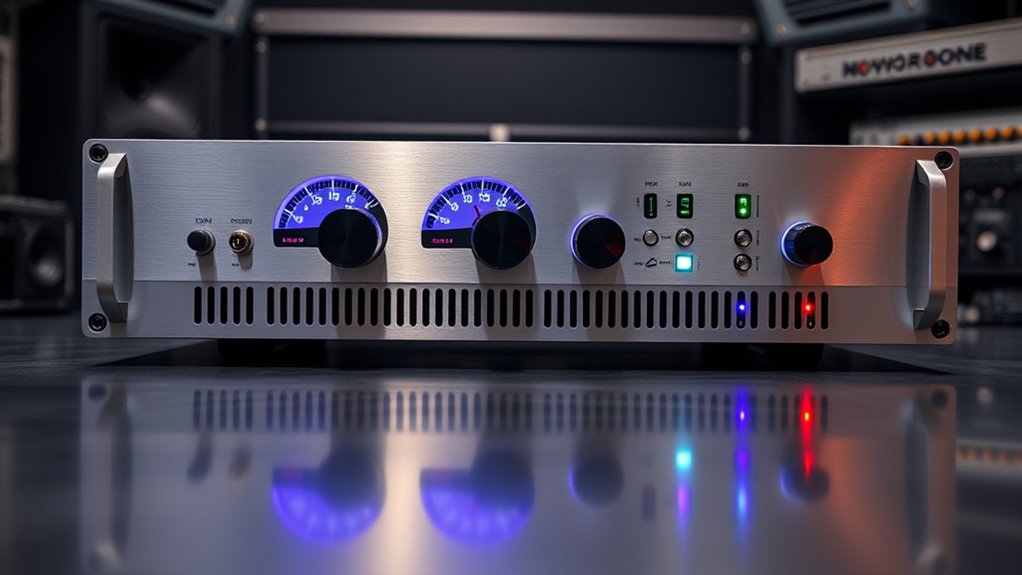

When selecting rackmount power amplifiers for passive speakers, the key considerations are power output, build quality, and flexibility. The Rockville RPA12 stands out as the best overall choice with its balanced power and durability. For those seeking high wattage, the Behringer NX6000 offers impressive lightweight performance, while beginners might find the Pyle 2-Channel Bluetooth Amp more approachable with its added features and ease of setup. The main challenge lies in balancing power, size, and budget—more wattage often means higher costs and larger units, but less power might compromise loudness and headroom. Continue reading to see a detailed breakdown of these options and what suits your specific needs.

Get movie nights delivered free with Prime
- Fast, free delivery on millions of items
- Prime Video, Amazon Music and more included
- Member-only deals all year
Key Takeaways
- High wattage does not always equate to better sound quality; consider headroom and protection features.
- Build quality and cooling systems are critical for longevity, especially for continuous use in live settings.
- Versatility in inputs and outputs can simplify setup and future-proof your investment.
- Lighter models like the Behringer NX6000 are easier to install but may sacrifice some robustness.
- Price often correlates with features and power, but the best choice depends on matching specs to your use case.
| Rockville RPA12 2-Channel Professional DJ Rack Mount Power Amplifier |  | Best Overall for High-Power Large Venue Installations | Peak Power: 5000W | RMS Power: 1400W | Channels: 2 | VIEW ON AMAZON | See Our Full Breakdown |
| EMB Professional PA4400 Rack Mount Power Amplifier – 2200W Peak Class A/B PA Amp |  | Best Value for Versatile, Mid-Range Power Applications | Output Power: 2200 watts | Channels: 2 | Circuitry: Class A/B | VIEW ON AMAZON | See Our Full Breakdown |
| Rockville RPA9 2-Channel Professional DJ Rack Mount Power Amplifier |  | Best for Heavy-Duty Professional Use in Large Venues | Power Output: 3000W peak / 800W RMS | Channels: 2 | Inputs: XLR, 1/4-inch, RCA | VIEW ON AMAZON | See Our Full Breakdown |
| Sound Town NIX-A8PRO 2-Channel 1800W Rack Mountable Power Amplifier with Low Pass Filter |  | Best for Focused Bass and Touring Applications | Output Power: 1800W per channel at 4 ohms | Channels: 2 | Low Pass Filter: 20Hz-150Hz | VIEW ON AMAZON | See Our Full Breakdown |
| Rockville DS10 2 Channel Power Amplifier, 1000W RMS, 4000W Peak, 1U Rack |  | Best Compact Choice for Versatile, High-Power Applications | Power Output: 1000W RMS @ 8Ω | Peak Power: 4000W | Frequency Response: 10Hz–40kHz | VIEW ON AMAZON | See Our Full Breakdown |
| Yamaha PX3 Dual Channel 2x500W Lightweight Power Amplifier with DSP |  | Best Compact Powerhouse for Versatile Installations | Compatible Devices: Guitar, Keyboard, Violin, Cello, etc. | Output Wattage: 1000 watts | Number of Bands: 3 | VIEW ON AMAZON | See Our Full Breakdown |
| Pyle 2 Channel Rack Mount Power Amplifier with Bluetooth, 2000W Bridgeable, USB MP3 Player, Speakon Outputs |  | Best for High-Power, Wireless-Enabled Large Setups | Power Output: 2000W in bridge mode, 1000W per channel | Inputs: 2 x 1/4” TRS, 2 x XLR, USB A, Bluetooth | Outputs: 3 x Speakon, speaker terminals | VIEW ON AMAZON | See Our Full Breakdown |
| Pyle 2-Channel Rack Mount Power Amplifier with Bluetooth – 2000W Bridgeable, USB MP3, Speakon Outputs, LCD Display, Cooling Fan |  | Best for Versatile High-Power Professional Use | Power Output: 2000W peak | Amplifier Type: 2-Channel | Power per Channel: 1000W @ 4 Ohm | VIEW ON AMAZON | See Our Full Breakdown |
| Rockville RPA16 2-Channel Professional/DJ Rack Mount Power Amplifier |  | Best for Large Venues and DJ Setups | Power Output: 2 x 1000W @ 8Ω, 2 x 1500W @ 4Ω, bridged 3000W | Peak Power: up to 10,000W | Frequency Response: 10Hz-30kHz | VIEW ON AMAZON | See Our Full Breakdown |
| Peavey IPR2 2000 Power Amplifier |  | Best Lightweight Power for Professional Use | Mounting Type: Surface Mount | Number of Channels: 2 | Output Power: 2000 watts | VIEW ON AMAZON | See Our Full Breakdown |
| Behringer NX6000 Ultra-Lightweight 6000 Watt Class-D Power Amplifier |  | Best Overall for High-Power Large Venues | Output Wattage: 6000 watts | Number of Bands: 2 | Power Source: Corded Electric | VIEW ON AMAZON | See Our Full Breakdown |
| Rockville D12 2-Channel Class D Pro/DJ Rack Mount Power Amplifier |  | Best for Versatile DJ and Live Event Use | Power Output: 5000W peak, 1400W RMS at 4 ohms | Channels: 2 | Weight: 9.7 lbs | VIEW ON AMAZON | See Our Full Breakdown |
| Peavey IPR2 3000 Lightweight Power Amplifier |  | Best for Professional Sound with Sound Quality Focus | Channels: 2 | Crossovers: Fourth-order Linkwitz-Riley | Technology: DDT | VIEW ON AMAZON | See Our Full Breakdown |
| Rockville RPA5 2-Channel Professional/DJ Rack Mount Power Amplifier |  | Best Budget-Friendly for Demanding DJ Setups | Power Output: 200W RMS per channel @ 4 ohms | Peak Power: up to 1000W | Cooling: Dual quiet cooling fans | VIEW ON AMAZON | See Our Full Breakdown |
| rackmount power amplifiers for passive speaker | Channels | Power Output |
|---|---|---|
| Rockville RPA12 2-Channel Prof | 2 | — |
| EMB Professional PA4400 Rack M | 2 | — |
| Rockville RPA9 2-Channel Profe | 2 | 3000W peak / 800W RMS |
| Sound Town NIX-A8PRO 2-Channel | 2 | — |
| Rockville DS10 2 Channel Power | 2 | 1000W RMS @ 8Ω |
| Yamaha PX3 Dual Channel 2x500W | — | — |
| Pyle 2 Channel Rack Mount Powe | — | 2000W in bridge mode, 1000W per channel |
| Pyle 2-Channel Rack Mount Powe | — | 2000W peak |
| Rockville RPA16 2-Channel Prof | — | 2 x 1000W @ 8Ω, 2 x 1500W @ 4Ω, bridged 3000W |
| Peavey IPR2 2000 Power Amplifi | — | — |
| Behringer NX6000 Ultra-Lightwe | — | — |
| Rockville D12 2-Channel Class | 2 | 5000W peak, 1400W RMS at 4 ohms |
| Peavey IPR2 3000 Lightweight P | 2 | — |
| Rockville RPA5 2-Channel Profe | — | 200W RMS per channel @ 4 ohms |
More Details on Our Top Picks
Rockville RPA12 2-Channel Professional DJ Rack Mount Power Amplifier
The Rockville RPA12 stands out for its exceptional peak power of 5000W and 1400W RMS, making it ideal for large venues and demanding sound reinforcement. Compared to the Rockville RPA9, which offers 3000W peak, the RPA12 provides more headroom for very large setups, but its weight and size could be a concern for mobility. Its versatile connectivity, including dual XLR, 1/4″ inputs, and speakON outputs, ensures compatibility with most professional systems. The steel chassis with cooling fans supports continuous operation, yet the absence of a quick-access interface may slow adjustments during live events. Best for sound engineers who need high power and flexibility in large-scale environments. However, its bulk and complex features might overwhelm casual users or smaller setups. Pros: High power output suitable for large venues; Versatile connectivity options; Durable steel construction; Multiple operating modes.
Cons: Heavy and difficult to transport; Complex controls may require technical knowledge; No intuitive user interface.
Verdict: This amplifier is perfect for professionals needing serious power and flexibility, but less suited for portable or beginner setups.Pros:- High power output suitable for large venues
- Versatile connectivity options
- Durable steel chassis with cooling fans
- Multiple operating modes for flexible setups
Cons:- Heavy and difficult to transport
- Complex controls may require technical expertise
- Lacks a quick-adjust user interface
Best for: Sound engineers and event organizers managing large-scale live sound reinforcement
Not ideal for: Small venue setups or users seeking lightweight, portable amplifiers
- Peak Power:5000W
- RMS Power:1400W
- Channels:2
- Inputs:Dual XLR and 1/4″
- Outputs:Binding post and speakON
- Protection Features:Limiter and protection circuitry
- Build:Steel chassis with cooling fans
- Operating Modes:Stereo, Parallel, Bridged
Our verdict“This model excels in delivering massive power for large-scale sound systems, but its size and complexity make it less ideal for portable or entry-level use.”
EMB Professional PA4400 Rack Mount Power Amplifier – 2200W Peak Class A/B PA Amp
The EMB PA4400 offers 2200W peak power in a compact rack-mount form, making it a strong contender for those needing reliable sound for DJ, karaoke, or band setups. Unlike the Rockville RPA12, which emphasizes extreme power, the PA4400 balances power and portability, but it may lack the raw headroom required for very large venues. Its XLR and 1/4″ inputs, coupled with Speakon and banana outputs, provide flexible connectivity for various audio sources. The rugged black chassis ensures durability, yet the absence of detailed user controls or cooling specifics could limit its usability under continuous heavy use. Best for small to medium venues or mobile entertainers who need dependable performance without excessive bulk. This model isn’t ideal for those requiring the highest power levels or advanced features. Pros: Good peak power for versatile applications; Flexible input/output options; Durable construction; Rack-mountable design.
Cons: Heavy for frequent transport; Lack of advanced control features; No detailed cooling or fan info.
Verdict: An excellent choice for users needing a solid, mid-range amplifier that balances power and portability, but not for extreme large-scale setups.Pros:- High peak power suitable for various setups
- Flexible input/output options
- Rugged, durable chassis
- Rack-mountable for organized installations
Cons:- Heavy and less portable
- Limited control features for fine-tuning
- Unspecified cooling system details
Best for: Mobile DJs, karaoke setups, and small to medium live sound environments
Not ideal for: Large venues requiring very high power or complex control features
- Output Power:2200 watts
- Channels:2
- Circuitry:Class A/B
- Inputs:XLR, 6.35mm Jack
- Outputs:Speakon, Banana
- Dimensions:11.42″ D x 18.9″ W x 11.42″ H
- Weight:14.2 pounds
Our verdict“This amplifier offers a reliable, versatile solution for mid-sized sound needs, though it may fall short for very large or complex systems.”
Rockville RPA9 2-Channel Professional DJ Rack Mount Power Amplifier
The Rockville RPA9 provides 3000W peak and 800W RMS, making it suitable for large venues and demanding DJ setups. Compared to the EMB PA4400, which offers a similar peak but slightly higher RMS, the RPA9 emphasizes robust build quality with dual fans and heat sinks for effective cooling. Its durable metal chassis ensures longevity in tough environments, while versatile inputs including XLR, 1/4-inch, and RCA expand compatibility. Despite its high power and rugged design, its weight and bulk could be limiting for mobile applications. The controls, while functional, could benefit from more user-friendly features for quick adjustments. Best for professional users who need a reliable, high-power amplifier for large venues or permanent installations. Less suitable for casual or portable use due to its size. Pros: High power for large venues; Rugged metal construction; Effective cooling system; Versatile connectivity.
Cons: Heavy and bulky; Complex controls may require technical skills; No advanced user interface.
Verdict: An excellent choice for demanding, fixed installations that prioritize durability and power over portability.Pros:- High peak and RMS power for large venues
- Rugged metal chassis with dual fans
- Versatile input options
- Reliable cooling for continuous operation
Cons:- Heavy and less portable
- Controls may be complex for novices
- No advanced monitoring features
Best for: Venue sound technicians and permanent installation projects in large spaces
Not ideal for: Traveling performers or users with limited space for heavy equipment
- Power Output:3000W peak / 800W RMS
- Channels:2
- Inputs:XLR, 1/4-inch, RCA
- Outputs:speakON, banana
- Construction:Rugged metal chassis
- Cooling System:Dual fans and heat sink
Our verdict“This amplifier excels in demanding, fixed installations where power and durability outweigh portability concerns.”
Sound Town NIX-A8PRO 2-Channel 1800W Rack Mountable Power Amplifier with Low Pass Filter
The Sound Town NIX-A8PRO delivers 1800W per channel at 4 ohms and includes a built-in low pass filter, making it especially suited for subwoofer-focused setups and touring scenarios. Unlike the EMB PA4400, which provides higher total power, the NIX-A8PRO emphasizes bass clarity and control with its adjustable low pass filter, ideal for dedicated subwoofer channels. Its LCD display simplifies monitoring, and its rugged construction ensures durability in demanding environments. However, the complex setup process and heavy build could be barriers for users seeking quick, portable solutions. Its focus on bass makes it less versatile for full-range sound systems. Best for sound engineers needing precise bass control in touring or installation setups. Not ideal for general-purpose power amplification where full-range sound is required. Pros: High power at 4 ohms per channel; Built-in low pass filter for focused bass; LCD display for easy monitoring; Heavy-duty, touring-ready build.
Cons: Setup can be complex; Heavy and less portable; Limited to bass-focused applications.
Verdict: Perfect for users prioritizing bass clarity and control in mobile or touring settings, but less suitable for all-around sound amplification.Pros:- High power output at 4 ohms per channel
- Built-in low pass filter for targeted bass
- LCD display for monitoring
- Heavy-duty construction for touring
Cons:- Complex setup process
- Heavy and less portable
- Limited to bass applications
Best for: Sound engineers and touring professionals needing precise subwoofer control
Not ideal for: Users seeking a simple, all-purpose power amplifier for full-range sound
- Output Power:1800W per channel at 4 ohms
- Channels:2
- Low Pass Filter:20Hz-150Hz
- Input Connectors:XLR, SpeakOn, binding post
- Protection Features:Limiter, DC and thermal overload
- Construction:Heavy-duty metal chassis
Our verdict“This amplifier excels in bass-focused applications requiring precise control, though it’s less adaptable for broader sound setups.”
Rockville DS10 2 Channel Power Amplifier, 1000W RMS, 4000W Peak, 1U Rack
The Rockville DS10 packs 1000W RMS per channel into a slim 1U chassis, making it ideal for environments where space is limited but reliable power is essential. Unlike the Rockville RPA12 or Rockville RPA9, which focus on higher peak power for large venues, the DS10’s clean output and built-in crossover make it suitable for versatile applications, including studio monitoring, small live venues, or multi-zone setups. Its multiple operation modes and protections support flexible configurations, yet the absence of a detailed display or advanced controls could hinder quick adjustments during live use. The compact size and quiet cooling fans are advantageous, but it requires proper ventilation. Best for small to medium venues or multi-zone installations where space efficiency matters. It may not be adequate for very high-power, large-scale systems. Pros: Compact 1U design; High RMS power with clean sound; Built-in crossover; Multiple operation modes.
Cons: No advanced display for fine-tuning; Requires good ventilation; Limited control features.
Verdict: An excellent, space-saving amplifier for versatile, mid-range applications, though not for very large or complex systems.Pros:- Compact 1U rack-mountable size
- High RMS power with clean output
- Built-in crossover for flexibility
- Quiet cooling fans
Cons:- Lacks a detailed user interface
- Requires proper ventilation due to heat
- Limited advanced control options
Best for: Small to medium live venues, studios, and multi-zone installations
Not ideal for: Large-scale concert sound systems or users needing extensive control interfaces
- Power Output:1000W RMS @ 8Ω
- Peak Power:4000W
- Frequency Response:10Hz–40kHz
- Channels:2
- Crossover:110Hz
- Signal-to-Noise Ratio:90dB
- THD+N:<0.07%
Our verdict“This amplifier offers space-efficient, versatile power suitable for smaller venues and installations where size and flexibility are priorities.”
Yamaha PX3 Dual Channel 2x500W Lightweight Power Amplifier with DSP
The Yamaha PX3 stands out for its combination of lightweight design and solid performance, making it ideal for installations where space and portability matter. Compared with larger models like the Rockville RPA16, the PX3 offers high power output (2x 500W at 4Ω) in a significantly lighter package, though it lacks detailed connectivity options and advanced user interface features. The onboard DSP, including D-Contour, provides useful sound shaping for different passive speaker setups. While it doesn’t match the raw power of the Pyle 2000W models, its durability and portability make it a better choice for mobile or space-constrained environments. However, limited info on its control interface and connectivity might frustrate more advanced users who want extensive customization. Overall, this amp makes the most sense for those needing reliable, lightweight amplification with onboard processing in installation or mobile PA contexts.
Pros:- Lightweight and durable stainless steel enclosure
- High power output suitable for various applications
- Includes onboard signal processing like D-Contour
Cons:- Limited details on user interface and connectivity options
- No comprehensive control features for fine-tuning
Best for: Installers and mobile entertainers who prioritize portability without sacrificing power
Not ideal for: Users needing detailed control interfaces or extensive connectivity options in a studio setting
- Compatible Devices:Guitar, Keyboard, Violin, Cello, etc.
- Output Wattage:1000 watts
- Number of Bands:3
- Output Channel Quantity:2
- Amplifier Type:Solid State
- Enclosure Material:Stainless Steel
- Item Weight:19.6 pounds
Our verdict“This amplifier suits professionals who need a portable, reliable power source with onboard DSP for diverse passive speaker setups.”
Pyle 2 Channel Rack Mount Power Amplifier with Bluetooth, 2000W Bridgeable, USB MP3 Player, Speakon Outputs
The Pyle 2000W amplifier excels in delivering substantial power (up to 2000W in bridged mode), making it highly suitable for large venues and outdoor setups. Its Bluetooth streaming and multiple input options, including USB MP3, provide easy connectivity, distinguishing it from more basic models like the Peavey IPR2 2000, which lacks wireless features. The built-in cooling fan ensures operational reliability during extended use, but its size and weight—over 17 pounds—limit portability. Setup complexity may challenge users unfamiliar with rack-mounted gear, and detailed control features are limited. Compared to the Pyle PTA1000BT, this model’s higher power output and Bluetooth make it ideal for those wanting wireless convenience combined with high wattage. It’s a solid choice for users who prioritize raw power and wireless streaming over ultra-compact form factors.
Pros:- High power output suitable for large venues
- Wireless Bluetooth streaming for convenience
- Multiple input/output options including Speakon
Cons:- Heavy and bulky for portable applications
- Setup can be complex for beginners
Best for: Sound engineers and event organizers needing high power with wireless streaming capabilities
Not ideal for: Portable performers or small setups where mobility and simplicity are preferred
- Power Output:2000W in bridge mode, 1000W per channel
- Inputs:2 x 1/4” TRS, 2 x XLR, USB A, Bluetooth
- Outputs:3 x Speakon, speaker terminals
- Dimensions:11.02 x 19.02 x 3.54 inches
- Weight:17 pounds
- Cooling:Built-in cooling fan
Our verdict“This amp is best suited for professionals requiring high wattage, wireless connectivity, and robust build quality for large-scale audio tasks.”
Pyle 2-Channel Rack Mount Power Amplifier with Bluetooth – 2000W Bridgeable, USB MP3, Speakon Outputs, LCD Display, Cooling Fan
The Pyle PTA1000BT offers impressive peak power (up to 2000W) and versatility with Bluetooth, USB, and multiple input options. Its LCD display simplifies setup and monitoring, making it suitable for users who want high wattage combined with straightforward operation. Unlike the Rockville RPA16, which emphasizes advanced signal processing and monitoring, this model prioritizes ease of use and wireless connectivity in a high-power package. The built-in cooling fan helps maintain performance during extended use, but its size and weight—over 19 inches deep—can hinder portability. The limited detailed user reviews suggest a need for cautious evaluation before purchase. Overall, this amplifier is ideal for users seeking a high-powered, wireless-capable unit that balances ease of setup with robust performance, especially in fixed or semi-permanent installations.
Pros:- High peak power suitable for demanding environments
- Wireless Bluetooth and USB MP3 support
- LCD display for easy control and monitoring
Cons:- Heavy, less portable for mobile use
- Limited detailed user feedback available
Best for: Sound technicians and venues requiring high wattage with wireless features and simple controls
Not ideal for: Performers or small setups that need portable, lightweight gear
- Power Output:2000W peak
- Amplifier Type:2-Channel
- Power per Channel:1000W @ 4 Ohm
- Distortion:<1.0%
- Frequency Response:20Hz – 20kHz
- Dimensions:19.09 x 9.84 x 3.54 inches
Our verdict“This amplifier fits professionals needing high power with wireless connectivity and straightforward operation in fixed installations.”
Rockville RPA16 2-Channel Professional/DJ Rack Mount Power Amplifier
The Rockville RPA16 is engineered for high-demand environments, offering up to 1500W per channel or 3000W bridged, with a focus on flexibility and control. Its comprehensive connectivity, including XLR, Speakon, and binding posts, allows seamless integration into complex sound systems. The advanced signal processing, real-time LCD display, and built-in crossover make it a top choice for DJs, live sound engineers, and installations that require precise control. Compared to the Peavey IPR2 2000, the RPA16’s higher power and versatile features come with increased complexity and size, which might challenge less experienced users. Its 2U rackmount steel chassis and quiet cooling fans ensure durability and reliability. Overall, this amp excels in demanding, large-scale setups where power and control are paramount.
Pros:- High power output for large venues
- Flexible connectivity including XLR, Speakon, and binding posts
- Real-time LCD display with integrated crossover and limiter
Cons:- Complex setup may overwhelm beginners
- Heavy and bulky for portable applications
Best for: Professional sound engineers and DJs managing large venues or complex systems
Not ideal for: Small or portable setups where space and simplicity are priorities
- Power Output:2 x 1000W @ 8Ω, 2 x 1500W @ 4Ω, bridged 3000W
- Peak Power:up to 10,000W
- Frequency Response:10Hz-30kHz
- THD+N:<0.04%
- Input Sensitivity:0.7V
- Cooling:High-velocity quiet fans
Our verdict“This amplifier is best for seasoned professionals needing high power, extensive controls, and durability in demanding environments.”
Peavey IPR2 2000 Power Amplifier
The Peavey IPR2 2000 delivers solid power (2,000W) with a lightweight design, making it appealing for users who need high performance without the bulk. Its IPR class D topology ensures efficiency and reliability, comparable to models like the Yamaha PX3 in terms of power but with a focus on portability. The independent crossovers add control flexibility, though the lack of detailed user interface or connectivity options may limit fine-tuning. Its stainless steel chassis indicates durability, but its size—over 21 inches deep—might restrict placement options. This amp is a good match for those needing reliable, high-power amplification in a portable form factor, especially when weight is a critical factor. However, the limited user feedback suggests potential variability in user experience.
Pros:- Lightweight and durable stainless steel chassis
- High output power suitable for professional environments
- Independent crossovers for enhanced control
Cons:- Limited information on connectivity and user interface
- Relatively large size for some portable setups
Best for: Mobile sound technicians and small-to-medium venues needing high power in a lightweight package
Not ideal for: Large-scale permanent installations requiring extensive control features or detailed UI
- Mounting Type:Surface Mount
- Number of Channels:2
- Output Power:2000 watts
- Maximum Output Power:2000 watts
- Item Dimensions:21 x 21 x 6 inches
- Material Type:Stainless Steel
Our verdict“This amplifier offers high power in a portable, durable package, ideal for professionals who prioritize mobility without sacrificing performance.”
Behringer NX6000 Ultra-Lightweight 6000 Watt Class-D Power Amplifier
The Behringer NX6000 stands out for delivering an impressive 6000 watts into 4 ohms, making it ideal for large-scale venues that demand serious power. Its lightweight design—under 6 kg—sets it apart from heavier, traditional amplifiers like the Peavey IPR2 3000, which, despite its robust build, is bulkier and less portable. The NX6000’s Class-D technology ensures cool, efficient operation, but its lack of detailed user controls or protections could be a concern for less experienced technicians. It excels in providing high output and portability but sacrifices built-in safeguards and display features, requiring careful setup. Compared to the Rockville RPA5, which offers more connectivity options at a lower power level, the NX6000 is better suited for large, demanding environments where power is the priority.
Pros:- Exceptional 6000-watt output suitable for large venues
- Lightweight and portable for easy transport
- Efficient Class-D circuitry for low heat output
Cons:- Lacks detailed user interface or display features
- No explicit mention of built-in protections or cooling specifics
- Requires professional setup for optimal performance
Best for: Professional sound engineers and large venue setups needing high wattage with portability
Not ideal for: Small venues or home audio users who don’t require such intense power and prefer more integrated controls
- Output Wattage:6000 watts
- Number of Bands:2
- Power Source:Corded Electric
- Amplifier Type:Solid State
- Connector Type:6.35mm Jack, XLR
- Item Weight:5.9 kg
Our verdict“A top choice for large-scale, high-power applications where portability and efficiency matter most.”
Rockville D12 2-Channel Class D Pro/DJ Rack Mount Power Amplifier
The Rockville D12 excels in delivering up to 5000W peak and 1400W RMS at 4 ohms, making it a flexible choice for DJs, mobile entertainers, and small to medium live events. Its advanced LCD monitoring and switchable crossover give precise control that surpasses the basic features of the Rockville RPA5, though it’s slightly larger at nearly 10 pounds, which might be a consideration for transport. Compared to the Peavey IPR2 3000, which emphasizes sound quality and professional reliability, the D12 offers more versatile connectivity and user control but at the expense of slightly higher complexity in setup. Its high power and portability make it ideal for dynamic environments but perhaps overkill for smaller, fixed installations with simpler needs.
Pros:- High power output suitable for professional shows
- Advanced LCD for real-time monitoring and control
- Lightweight and rack-mountable for portability
- Supports multiple speaker configurations with crossover options
Cons:- May be too powerful for small or home audio systems
- Requires rack space and some technical knowledge for setup
Best for: DJ performers and live sound providers seeking adaptable, high-powered amplification
Not ideal for: Home users or small venues with minimal setup, as its features may be more complex than needed
- Power Output:5000W peak, 1400W RMS at 4 ohms
- Channels:2
- Weight:9.7 lbs
- Rack Mountable:Yes
- Cooling:Dual quiet cooling fans
- Crossover Switch:Bypass, 80Hz, 160Hz
Our verdict“This amplifier is well-suited for versatile, high-energy live performances and DJ applications needing reliable power and control.”
Peavey IPR2 3000 Lightweight Power Amplifier
The Peavey IPR2 3000 brings a balance of power and portability, with a 2-channel design and lightweight build that’s ideal for professional audio setups. Its independent fourth-order Linkwitz-Riley crossovers and DDT technology provide sound clarity and reliability, rivaling the feature set of the Rockville D12 but with a simpler interface that appeals to users prioritizing straightforward operation. Compared to the Behringer NX6000’s raw power, the IPR2 emphasizes sound quality and ease of use, but it offers less wattage for large venues. Its limited detailed specifications may concern users needing more granular control, but it remains a solid choice for those wanting dependable, portable amplification.
Pros:- Lightweight and highly portable
- High-quality audio performance
- Versatile input options with combi XLR / 1/4″
Cons:- Limited detailed specs may not satisfy advanced users
- No pricing info makes comparison difficult
Best for: Sound professionals and mobile performers who value sound quality and ease of transport
Not ideal for: Large venues or applications needing extremely high wattage, where more power is required
- Channels:2
- Crossovers:Fourth-order Linkwitz-Riley
- Technology:DDT
- Inputs:Combi XLR / 1/4″
- Outputs:Speakon
Our verdict“A practical choice for professionals who need reliable, quality amplification in a portable form, though less suited for very large spaces.”
Rockville RPA5 2-Channel Professional/DJ Rack Mount Power Amplifier
The Rockville RPA5 offers a solid 200W RMS per channel, making it suitable for smaller PA systems or DJ booths. Its flexible connectivity options—including XLR, 1/4″, and RCA inputs—are a plus for versatile setups, and the dual cooling fans help maintain performance stability. While it doesn’t deliver the high wattage of larger amplifiers like the Behringer NX6000 or Rockville D12, its rugged, 2U rack-mount design keeps it manageable for mobile use. Compared to the Peavey IPR2 3000, the RPA5’s lower power output limits its use to smaller venues, but its straightforward setup and durable build make it an accessible entry point for less complex needs.
Pros:- Decent power for small to medium setups
- Flexible input options
- Rugged rack-mountable construction
- Easy to transport
Cons:- Limited power for larger or high-demand applications
- Complex setup may be challenging for beginners
Best for: DJs and small event setups needing reliable, affordable amplification
Not ideal for: Large venues or installations requiring high power or advanced control features
- Power Output:200W RMS per channel @ 4 ohms
- Peak Power:up to 1000W
- Cooling:Dual quiet cooling fans
- Protection:IC-controlled circuitry
- Inputs:Combo XLR/1/4″ and RCA
- Rack Compatibility:2U
Our verdict“A practical, budget-friendly amplifier suitable for smaller venues or DJ setups with moderate power needs.”

How We Picked
The products were evaluated based on their power output, build quality, versatility, and ease of integration with passive speakers. We prioritized models with reliable performance in live environments and those known for durability. Cost-effectiveness was also considered, ensuring that each option offers good value relative to its features. The ranking reflects a balance between raw power, usability, and long-term reliability, making it easier for buyers to find a model suited to their specific needs and budget.Factors to Consider When Choosing Rackmount Power Amplifiers For Passive Speakers
Choosing the right rackmount power amplifier involves understanding several key factors that impact performance and usability. It’s essential to match the amplifier’s power output with your passive speakers to avoid damage or insufficient volume. Additionally, build quality and cooling systems determine how well the amplifier will perform over time, especially in demanding environments. Compatibility with your existing setup, such as input/output options, also plays a crucial role. Considering these factors carefully can help you avoid common pitfalls and select a model that offers both performance and longevity.Power Output and Headroom
Matching your amplifier’s wattage to your speakers is vital. Too little power results in insufficient volume and increased distortion, while too much can damage passive speakers. Look for an amplifier with at least 20-30% more wattage than your speakers’ rated power for clean headroom. This ensures you can play loudly without clipping, especially during peaks. Remember, higher wattage models tend to be larger and more expensive, so balance your needs against available space and budget.Build Quality and Cooling
A durable build and effective cooling system are essential for long-term reliability. Rackmount amplifiers often run in continuous duty, generating heat that can degrade components if not managed properly. Models with high-quality heatsinks, fans, or even fanless designs with efficient thermal management tend to last longer. Investing in a well-constructed unit reduces maintenance costs and minimizes downtime, especially in professional environments where consistent performance is critical.Input/Output Flexibility
Versatile input and output options simplify setup and expand your system’s capabilities. XLR and 1/4-inch inputs are standard and compatible with most mixers, while Speakon outputs provide secure, high-current connections to passive speakers. Some models include additional features like Bluetooth or USB inputs, offering convenience for specific applications. Ensuring your amplifier has the right connectors and features can save you from costly adapters or upgrades later on.Size, Weight, and Portability
While rackmount amplifiers are designed for fixed installations, their size and weight can influence ease of setup and transport. Lightweight models like the Behringer NX6000 are ideal for mobile setups or installations with limited space. Larger, more powerful units might require reinforced racks or additional support. Consider your environment and whether portability or space constraints are priorities when selecting an amplifier.Price and Value
Higher-priced models often feature advanced circuitry, better components, and extra functionalities, but not always necessary for every setup. Evaluate what features truly add value for your specific use case. For instance, if you need heavy-duty performance and longevity, investing in a premium model makes sense. Conversely, for casual or temporary setups, a more affordable option might suffice. Striking the right balance ensures you’re not overpaying or under-specifying your amplifier.Frequently Asked Questions
How much power do I need for passive speakers?
The amount of power your passive speakers require depends on their wattage rating and intended use. For general PA duties, choose an amplifier with at least 20-30% more wattage than your speakers’ rated power to provide adequate headroom. Overmatching can risk damaging your speakers, while undermatching results in insufficient volume and potential distortion. Always check your speakers’ specifications and aim for a balanced match to ensure clear, loud sound without risking damage.Can I use a high-wattage amplifier with lower-rated speakers?
Using an amplifier with significantly higher wattage than your passive speakers’ rating can be risky if not managed properly. While it may provide more headroom and cleaner peaks at high volumes, it increases the chance of accidental damage if levels are set poorly. To mitigate this, always use proper limiting and set gain levels carefully. For most safe and effective operation, match your amplifier’s wattage closely with your speakers’ ratings, leaning slightly higher for headroom.Is a more expensive amplifier worth it?
Higher-priced amplifiers often include better build quality, more reliable components, and additional features like advanced thermal management or versatile inputs. If you plan to use your system heavily or in demanding environments, investing in a premium model can reduce maintenance and improve longevity. However, for casual or temporary setups, a mid-range or budget amplifier might provide sufficient performance without overextending your budget. Always weigh your specific needs against the added cost.How important is cooling in rackmount power amplifiers?
Cooling is vital for maintaining performance and extending the lifespan of your amplifier. Effective thermal management prevents overheating, which can cause shutdowns or damage components. Models with high-quality fans, heatsinks, or even fanless designs with efficient heat dissipation tend to be more reliable. Proper cooling is especially important in continuous-use scenarios, such as live performances or permanent installations, where thermal stress can be significant.Should I prioritize lightweight design over power?
Choosing between lightweight design and maximum power depends on your specific application. Lightweight amplifiers are easier to install and transport, making them suitable for mobile or temporary setups. However, they might feature smaller heatsinks or less robust components, potentially impacting durability. If your setup demands high power and continuous operation, prioritizing performance and build quality might be more important. Balance your need for portability against the demands of your environment.Conclusion
For most users seeking a reliable, all-around performer, the Rockville RPA12 offers a balanced mix of power, durability, and features, making it the best overall choice. Those on a tighter budget or needing a lightweight option may prefer the Pyle Bluetooth Amp for its ease of use and extra features. Professionals requiring serious wattage and rugged construction should consider the Behringer NX6000 or the Peavey IPR2 3000. Beginners or casual users might find the Pyle 2-Channel Bluetooth Amp more accessible, while those with specific needs for portability or advanced features should evaluate their priorities carefully. Ultimately, selecting the right amplifier depends on matching your setup’s power requirements, environment, and budget.Fall Picks
fall essentials
As an affiliate, we earn on qualifying purchases.