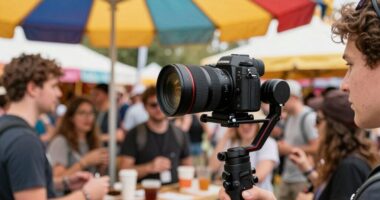
To conduct backstage interviews without disrupting operations, plan ahead by coordinating with staff and scheduling during low-activity periods. Keep questions brief, stay discreet with small microphones, and focus on quick, authentic responses. Be mindful of your environment, avoid clutter, and communicate clear boundaries to those around you. When managed carefully, you can capture compelling content seamlessly—discover more strategies to master backstage interviews smoothly.
Key Takeaways
- Schedule interviews during natural pauses or low-activity periods to minimize disruption.
- Coordinate with event staff to select discreet, designated interview locations.
- Keep questions brief and focused, using active listening to avoid lengthy conversations.
- Use discreet equipment like small microphones and stay unobtrusive in surroundings.
- Train team to be respectful, adaptable, and aware of venue dynamics to seamlessly blend in.
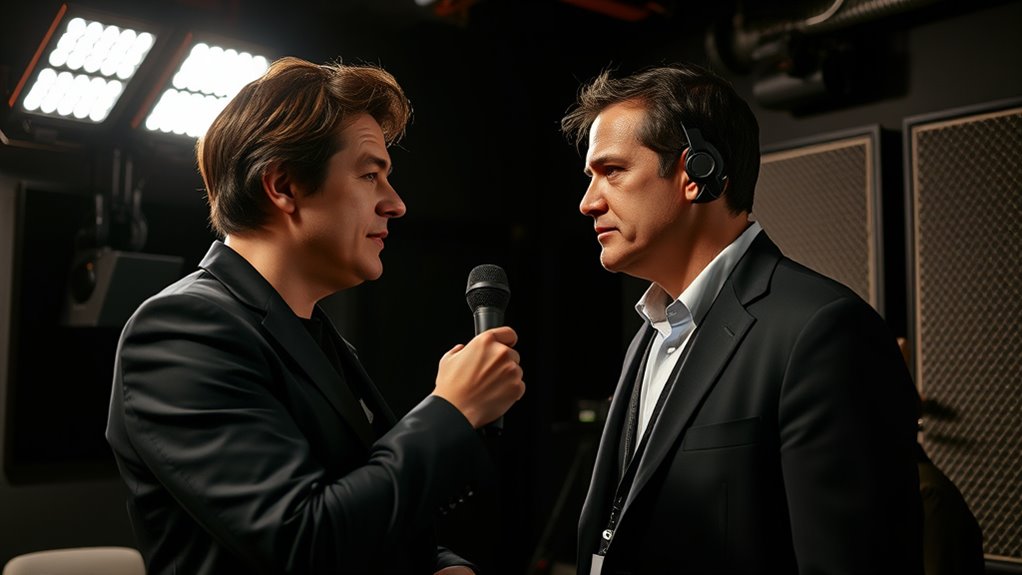
Conducting backstage interviews can be a valuable way to capture authentic moments and build excitement, but if not managed carefully, they can disrupt the event’s operations. To avoid this, you need to master interview techniques that are both effective and unobtrusive. First, plan your approach thoroughly. Know who you want to interview, what questions you’ll ask, and when the best time for interviews is — ideally during natural pauses or after performances. This preparation helps you stay efficient, minimizing disruption and ensuring interviews don’t interfere with scheduled activities.
When conducting interviews backstage, clarity and brevity are your friends. Keep your questions focused and concise to respect the interviewee’s time and to prevent lengthy conversations that could cause delays. Use active listening to pick up on cues and follow-up questions that are relevant and engaging. This not only makes the interview more genuine but also reduces the need for multiple takes or extended sessions. Remember, your goal is to capture authentic moments without pulling attention away from the event itself.
Disruption avoidance is essential, especially in busy backstage environments. To do this, establish clear boundaries and communicate expectations beforehand. Coordinate with event staff to identify ideal interview spots that won’t interfere with crew movements or performer preparations. Always be aware of your surroundings and keep noise levels down to avoid distracting performers or crew members. Using a small microphone or discreet recording device can help keep the audio clear without creating unnecessary clutter or attracting attention.
Timing is everything. Schedule interviews during downtime or when activity levels are lower. Avoid peak moments when teams are rushing or preparations are underway. If you need to conduct interviews during busy periods, do so quickly, always respecting the flow of operations. Additionally, be flexible; if something urgent arises, be ready to pause or postpone interviews without making a fuss. This shows professionalism and consideration for the event’s seamless execution.
Finally, train your team or assistants on proper interview techniques and disruption prevention strategies. They should understand the importance of staying unobtrusive and respecting the event’s rhythm. To further enhance your backstage approach, consider familiarizing yourself with the diverse venues and their unique operational needs. By combining well-planned interview techniques with proactive disruption prevention, you’ll be able to capture compelling backstage moments that add value to your coverage without compromising the event’s smooth operation. Remember, the key is to blend into the background while still getting the authentic content you need.

MAYBESTA Wireless Mini Microphone for iPhone, Android Phone – 2 Pack Lavalier Lapel Mic for Audio Video Recording – Clip on Content Creator Microphones for YouTube Tiktok Podcast Vlogging
- Wide Device Compatibility: Works with Android, iPhone, iPad, laptops
- Extended Receiver Design: Longer receiver for phone case compatibility
- Easy Automatic Pairing: No app or adapter needed, quick connection
As an affiliate, we earn on qualifying purchases.
As an affiliate, we earn on qualifying purchases.
Frequently Asked Questions
How Can I Ensure Interview Confidentiality Backstage?
You can guarantee interview confidentiality backstage by strictly following confidentiality protocols and emphasizing interview secrecy to your team. Keep interviews in designated, private areas away from public view, and limit access to authorized personnel only. Use secure communication channels for sharing sensitive information, and remind everyone involved of the importance of maintaining confidentiality. These measures help protect your interview content and respect the privacy of your interviewees.
What Equipment Is Best for Discreet Backstage Interviews?
Of course, you’ll want a camera setup that’s sleek and unobtrusive—think compact, lightweight models with excellent autofocus and low-light performance. Pair it with discreet audio equipment like lavalier mics or portable recorders to capture crystal-clear sound without drawing attention. Your goal: blend into the background so your interviewee forgets they’re on camera, leaving you free to gather insightful responses without causing a spectacle backstage.
How Do I Manage Interview Timing During Busy Events?
To manage interview timing during busy events, prioritize scheduling flexibility. Coordinate with event staff to find ideal moments that won’t disrupt operations, and keep interviews concise to maintain audience engagement. Use a detailed plan with buffer times in case delays occur, and communicate clearly with your interviewees about timing. This approach helps you stay organized, respects the event flow, and ensures your backstage interviews are smooth and engaging without causing disruptions.
What Are Common Backstage Interview Etiquette Tips?
You should always maintain proper eye contact to show confidence and respect, and dress in professional attire to make a good impression. Be polite and listen actively, avoiding interruptions. Keep your questions concise and relevant, respecting the interviewee’s time. Remember to thank them sincerely afterward, and stay discreet about backstage activities. These etiquette tips help you build rapport while minimizing disruptions during busy events.
How Can I Build Rapport Quickly With Interviewees Backstage?
Think of building rapport backstage like tuning a guitar—you want harmony quickly. Start by offering genuine compliments and maintaining eye contact to foster trust. Practice active listening, nodding and paraphrasing what they share, so they feel heard. Share a quick personal story to break the ice. This approach helps you connect instantly, establishing trust and openness, allowing for a smooth, authentic interview without disrupting backstage operations.

Tonfarb 136GB Digital Voice Recorder with Playback,9775 Hours Audio Record
- High-Quality PCM Recording: Supports 1536 kbps HD audio with noise reduction
- Large Storage Capacity: 136GB total storage with 9000 hours capacity
- Extended Battery Life: Up to 68 hours recording on a single charge
As an affiliate, we earn on qualifying purchases.
As an affiliate, we earn on qualifying purchases.
Conclusion
Remember, backstage interviews are like delicate threads woven into the fabric of the event—tightly spun but easily frayed if mishandled. When you approach with respect and awareness, you’re tending to that thread, ensuring it strengthens rather than tears. Your patience and discretion act as the unseen hands guiding the process, preserving the integrity of the whole. In doing so, you become the silent guardian of the event’s harmony—an essential part of the bigger picture.
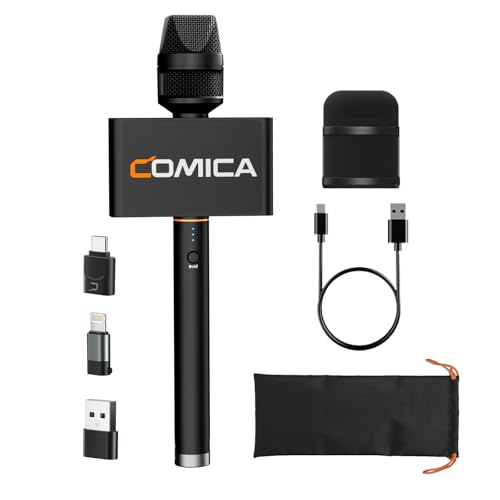
COMICA Revo S Wireless Handheld Microphone, Professional Handheld Interview Mic for iPhone16 15, Android Phones Laptops PC with USB-C Plug, Reporter Mic for Content Creators, Interviews, Reporting
- Wireless Digital Output: Seamless audio transmission to smartphones
- High-Quality Condenser Capsule: 14mm cardioid microphone for clear sound
- Professional Recording Quality: 48kHz/24bit audio with noise reduction
As an affiliate, we earn on qualifying purchases.
As an affiliate, we earn on qualifying purchases.