You design festival security zones by analyzing crowd size and the layout to place checkpoints, medical stations, and restricted areas strategically. You create clear pathways to guide visitors smoothly and use barriers and signage to mark zones effectively. Incorporate surveillance and communication tech to monitor activity and respond fast. Regular assessments and staff training help adapt zones as needed. Keep exploring to discover more ways to guarantee a safe, organized event experience.
Key Takeaways
- Analyze crowd size and festival layout to strategically position security, medical, and restricted zones.
- Use fencing, barriers, and signage to clearly demarcate zones and control access points.
- Incorporate surveillance and communication systems for real-time monitoring and coordination.
- Design pathways to guide visitor movement and prevent bottlenecks or overcrowding.
- Conduct regular staff training and ongoing assessments to adapt zones based on evolving crowd dynamics.
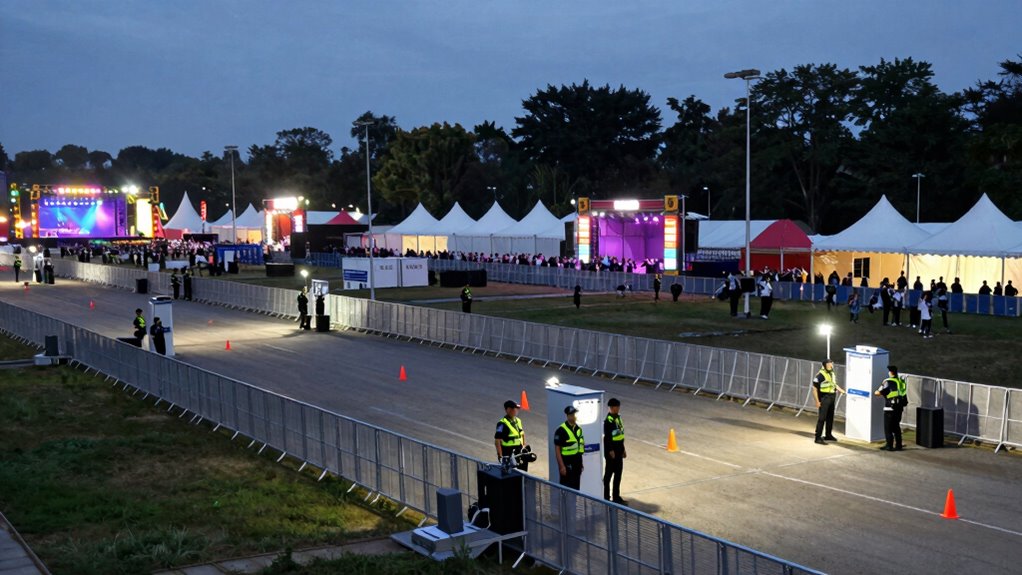
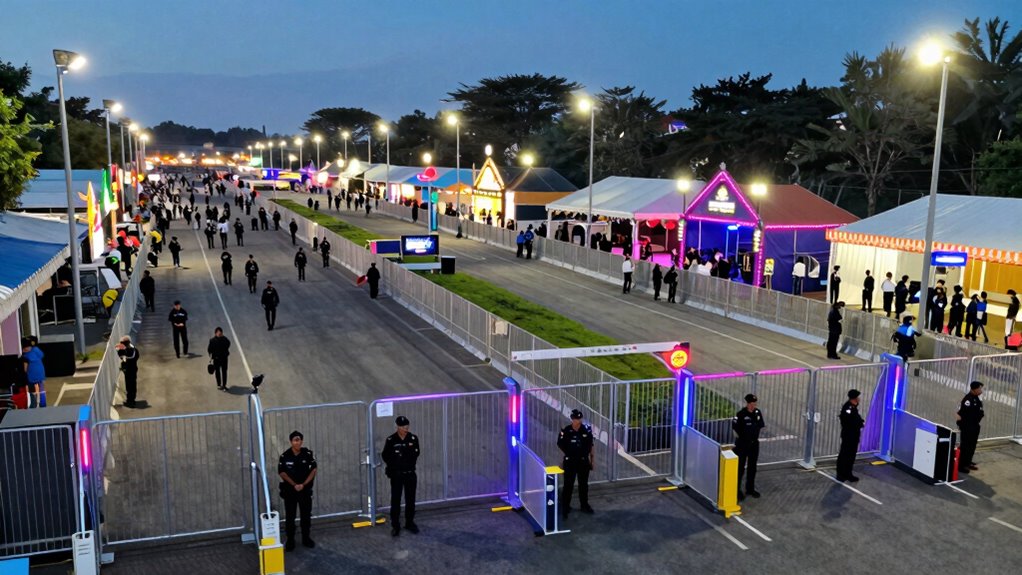
Designing effective security zones for festivals is vital to ensuring the safety of attendees, staff, and vendors. When you plan these zones, your goal is to create a layout that minimizes risks while facilitating smooth movement and quick response in emergencies. You start by analyzing the festival’s expected crowd size and layout, which helps determine where to position security checkpoints, medical stations, and restricted areas. Effective crowd control is at the core of this process; you want to prevent bottlenecks and overcrowding that could lead to accidents or panic. To do this, you map out entry and exit points carefully, ensuring they’re ample enough to handle peak flows without congestion. You also designate clear pathways that guide visitors naturally, reducing confusion and keeping crowd movement organized.
Effective security zones prevent bottlenecks, promote smooth crowd flow, and enhance safety during festivals.
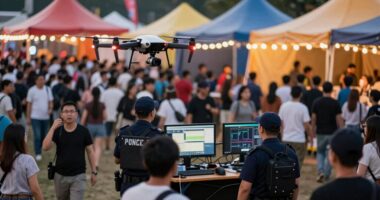
Emergency planning is another crucial element when designing security zones. You need to anticipate potential hazards, such as fires, medical emergencies, or security breaches, and plan zones accordingly. This involves setting up designated emergency access routes that are unobstructed and easily identifiable to staff and emergency responders. You position medical tents or aid stations close to high-traffic areas but away from vulnerable zones to ensure quick response times. Additionally, you establish secure zones where security personnel can monitor the crowd, conduct checks, and contain any disturbances. These zones act as control points, helping you manage access and maintain order. Incorporating security technologies like surveillance cameras and communication systems can significantly enhance real-time monitoring and response capabilities across all zones. Using crowd flow analysis can further optimize the placement of these zones by predicting how people will move throughout the event.
You also incorporate technological solutions into your design, like surveillance cameras and communication systems, to monitor activity across zones continuously. These tools enable you to identify issues swiftly and coordinate emergency responses effectively. When planning the layout, you consider the natural flow of people, making sure that security zones do not create unnecessary barriers while still maintaining control. You might use fencing, barriers, or signage to clearly demarcate restricted areas and guide the crowd, preventing unauthorized access and minimizing security risks. Moreover, understanding crowd behavior can help you anticipate how individuals might react in different situations, allowing for more dynamic and adaptable security planning. Recognizing how crowd dynamics change in real-time can help you respond more effectively to unforeseen situations, improving overall safety.
Finally, your approach involves ongoing assessment and flexibility. As the event unfolds, you stay alert to changing conditions, adjusting security zones if needed. Regular drills and staff training ensure everyone understands their roles, especially in emergency planning. By thoughtfully designing these zones, you create a safer environment where everyone can enjoy the festival while you’re prepared to respond quickly and efficiently to any situation.

3 Panels Safety Barricade,5.8FT Foldable Security Barrier Gate with Heavy Duty PVC Frame,High Visibility Black Color,Crowd Control Restricted Area Pedestrian Barricade Traffic Fence
【𝟱.𝟴𝗙𝗧 𝗶𝗻 𝗟𝗲𝗻𝗴𝘁𝗵 𝗮𝗻𝗱 𝟯.𝟮𝗙𝗧 𝗶𝗻 𝗛𝗲𝗶𝗴𝗵𝘁】Our safety barricade comes with 3 removable panels, each panel is 23…
As an affiliate, we earn on qualifying purchases.
As an affiliate, we earn on qualifying purchases.
Frequently Asked Questions
How Are Emergency Response Plans Integrated Into Security Zone Designs?
You integrate emergency response plans into security zone designs by conducting thorough risk assessments and implementing effective crowd control measures. You establish clear evacuation routes and guarantee access points are strategically placed for quick response. You also coordinate with emergency services, incorporating their input into your plans. Regular drills and communication systems keep everyone prepared, ensuring that in an emergency, response actions are swift, organized, and minimize risk to attendees.
What Technologies Are Used to Monitor Security Zones During Festivals?
You use a variety of technologies to monitor security zones during festivals, including surveillance cameras, drones, and real-time analytics. Crowd control tools like barriers and designated access points help manage movement and prevent overcrowding. You also deploy RFID or biometric systems at access points for secure entry, ensuring quick identification and response. These technologies work together to maintain safety, monitor activity, and facilitate swift action when needed.
How Do Security Zones Adapt for Different Festival Sizes and Types?
You adapt security zones based on festival size and type by adjusting perimeter control and managing crowd flow. For larger events, you expand the perimeter and use barriers, fencing, or natural boundaries to prevent unauthorized access. In smaller or specialized festivals, you focus on controlling entry points and directing crowd movement effectively. This flexibility guarantees safety, maintains order, and minimizes risks regardless of the festival’s scale or theme.
What Training Do Security Personnel Receive Specific to Zone Management?
You’ll receive specialized training on zone management, with a focus on crowd control and access restrictions. Studies show that properly trained security personnel can reduce incident rates by up to 30%. You’ll learn how to monitor crowd flow, enforce access restrictions, and respond swiftly to emergencies. This training guarantees you maintain safety within designated zones, effectively manage large crowds, and prevent unauthorized access, keeping everyone secure and the event running smoothly.
How Are VIP Areas Secured Within the Overall Festival Security Plan?
You secure VIP areas within the festival by implementing strict perimeter control, guaranteeing only authorized personnel and VIPs gain access. You use barriers, checkpoints, and wristbands to manage VIP access effectively. You also assign dedicated security staff to monitor entrances and exit points, maintaining a secure environment. This layered approach ensures VIP zones are protected, while still allowing smooth movement for authorized guests, enhancing overall safety and exclusivity.

ZUVELLO 2 Pack 8.5 Ft Steel Crowd Control Heavy Duty Interlocking Steel Safety Barriers Barricade Fence Frame Guard for Events Road Traffic Control, Black
Function: The safety barriers can effectively manage crowds and maintain order. They can also be used in large-scale…
As an affiliate, we earn on qualifying purchases.
As an affiliate, we earn on qualifying purchases.
Conclusion
By understanding how festival security zones are designed, you’ll appreciate the careful choreography that keeps everyone safe. These zones act like an invisible shield, seamlessly guiding attendees through the event while preventing chaos from spilling over. When you’re at a festival, remember that behind the scenes, a web of security measures is woven with precision—turning what could be a wild storm into a calm, orchestrated symphony. Safety isn’t just a plan; it’s the heartbeat of every great festival.

Security Cameras Wireless Outdoor, 2K Indoor Cameras for Home Security Battery Powered, AI Motion Detection, Color Night Vision, 2-Way Talk, Spotlight Siren Alarm, Cloud & SD Storage-Jet Black Camera
2K HD Live Video, Picture & Color Night Vision: The security cameras wireless outdoor provide a degree wide…
As an affiliate, we earn on qualifying purchases.
As an affiliate, we earn on qualifying purchases.
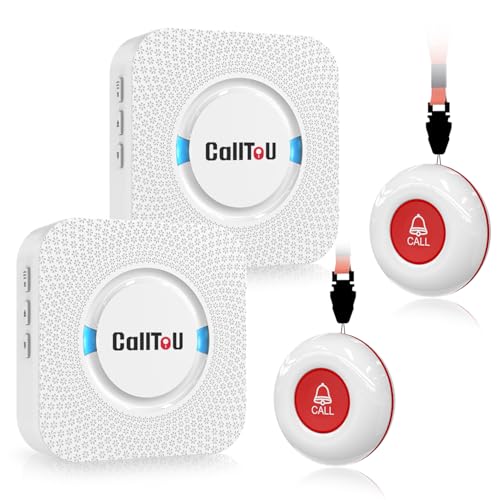
CallToU Wireless Caregiver Pager Smart Call System 2 SOS Call Buttons/Transmitters 2 Receivers Nurse Calling Alert Patient Help System for Home/Personal Attention Pager 500+Feet Plugin Receiver
[ Wireless Guard ] 2 Receiver 2 Call Button. Allow caregivers and residents to be free while ensuring…
As an affiliate, we earn on qualifying purchases.
As an affiliate, we earn on qualifying purchases.