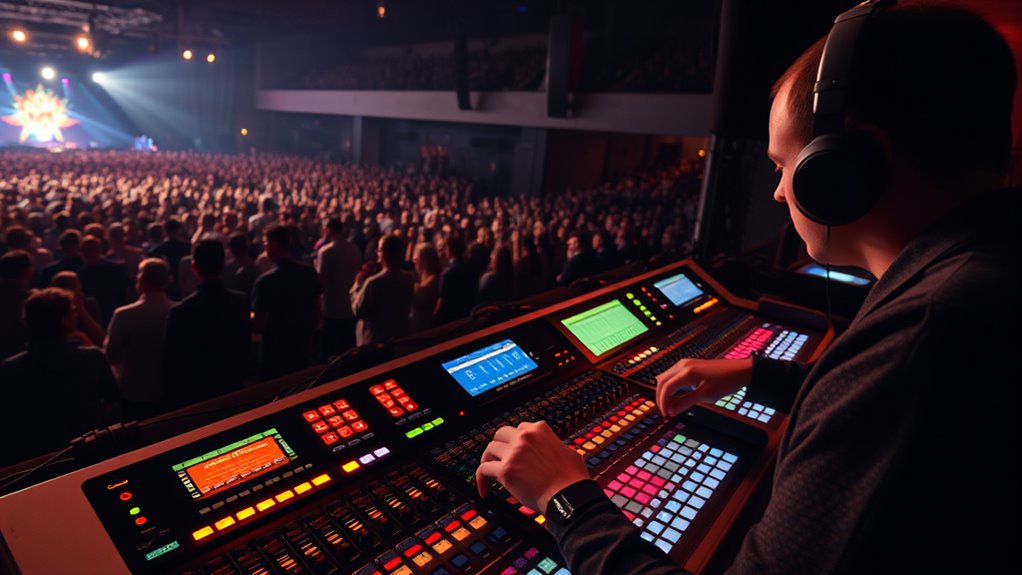

At FOH, you expertly balance and adjust audio signals using a mixing console to guarantee every instrument and vocal reaches the massive crowd with clarity. You select and position microphones, speakers, and equipment carefully, While constantly monitoring sound levels through stage monitors and front speakers. Your real-time adjustments compensate for acoustics and issues, creating a natural, immersive experience for the audience. If you’re curious about the detailed techniques, there’s more to discover in what follows.
Key Takeaways
- Sound engineers operate the mixing console to control levels, EQ, effects, and panning for a balanced audio experience.
- Microphones are strategically chosen and positioned to capture vocals and instruments clearly across large venues.
- Real-time adjustments are made to adapt to acoustics, crowd noise, and performance changes during the event.
- Feedback issues are managed by adjusting EQ settings or microphone placement to maintain sound clarity.
- Proper speaker placement and signal flow ensure even sound distribution throughout the venue for massive crowds.
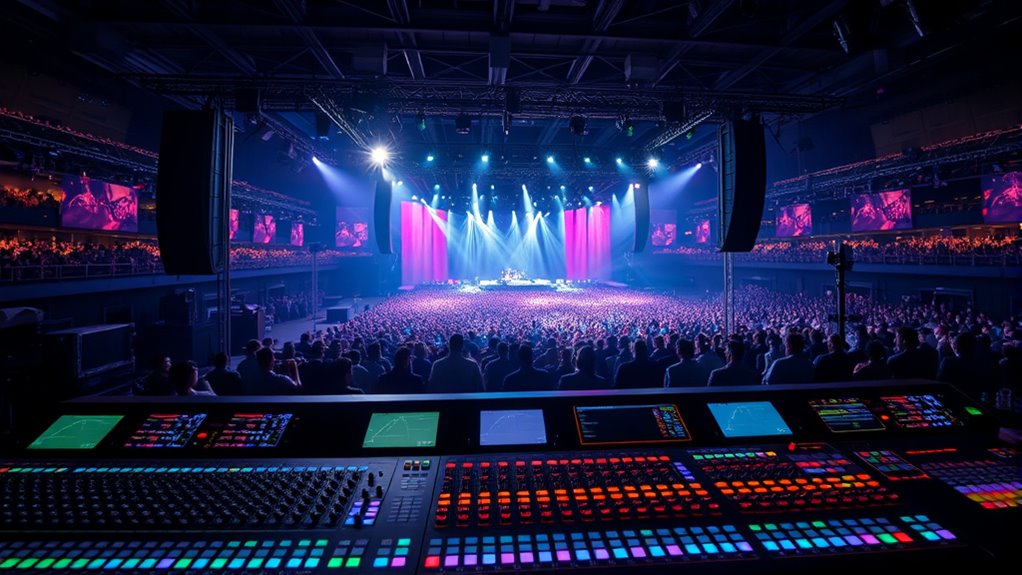
When you’re standing at the front of a massive concert, it’s easy to forget that behind the scenes, a team of skilled sound engineers is working tirelessly to deliver crystal-clear audio. These professionals rely on exceptional audio equipment to ensure every note, word, and beat reaches the audience with perfect clarity. The heart of this process is sound engineering, which involves adjusting and balancing various sound sources to produce a cohesive, immersive experience. Every speaker, microphone, and mixing console plays an essential role, and understanding how they come together is key to appreciating the complexity of live sound.
Behind the concert scenes, skilled sound engineers craft immersive, crystal-clear audio with precise equipment and expert adjustments.
The first step in creating that seamless sound is selecting the right audio equipment. Sound engineers carefully choose microphones suited for different instruments and vocals, ensuring each element is captured accurately. They also set up speakers strategically around the venue, considering acoustics and crowd size, to distribute sound evenly. High-quality amplifiers and digital processors are used to boost signals and manage feedback, keeping the sound clean and distortion-free. This setup forms the foundation for effective sound engineering, where subtle adjustments can make a significant difference. Additionally, a thorough understanding of audio signal flow is crucial to troubleshooting and optimizing the system during a live performance.
During the performance, the engineer operates a mixing console, which acts as the command center. With their hands on faders and knobs, they control levels, EQ, effects, and panning for each audio channel. This real-time manipulation allows them to adapt to the live environment, compensating for changes in the acoustics or unexpected issues. They constantly monitor the sound through stage monitors and front-of-house speakers, listening critically to guarantee the audience’s experience remains consistent and enjoyable. The engineer’s skill lies in balancing the various elements so that vocals cut through without overpowering the instruments, and the overall sound remains natural and full.
Sound engineering also involves meticulous troubleshooting. If feedback occurs or certain frequencies clash, the engineer swiftly adjusts the EQ settings or microphone placement to resolve these issues. They work closely with performers, adjusting on the fly to improve clarity or emphasize certain parts of a song. Throughout the event, the engineer’s role is to maintain a smooth, professional sound that elevates the live performance, making sure the audience feels connected to every musical nuance.
Ultimately, behind that impressive front-of-house sound lies a combination of precise equipment choices and expert sound engineering. It’s this blend that transforms raw audio signals into a powerful, immersive experience for thousands of people. Without their expertise, even the most talented performers would struggle to connect with the crowd as effectively. So the next time you’re swept away by the concert’s sound, remember the dedicated engineers and their indispensable role in making it happen.
Top picks for "inside sound massive"
Open Amazon search results for this keyword.
As an affiliate, we earn on qualifying purchases.
Frequently Asked Questions
How Do Sound Engineers Predict Crowd Noise Levels?
You predict crowd noise levels by using crowd noise analytics and acoustic modeling tools. These tools analyze past event data, crowd size, and venue acoustics to forecast noise levels accurately. You also consider factors like audience engagement and event type. By combining real-time analytics with acoustic modeling, you can anticipate how loud the crowd might get, allowing you to adjust sound levels and guarantee ideal audio quality throughout the event.
What Are the Most Common Challenges During Live Mixing?
Imagine juggling flaming torches—live mixing presents similar chaos. Your biggest challenges are maintaining audience engagement and ensuring equipment calibration. You constantly adapt to unpredictable crowd noise, balancing clarity and power. Technical issues like feedback or equipment failure can disrupt the flow. Staying alert and adjusting levels on the fly is essential. In this high-stakes dance, your skill transforms chaos into harmony, creating an unforgettable experience for every listener.
How Does Weather Affect Sound Quality at Outdoor Events?
Weather can be critically impact your sound quality at outdoor events. Rain interference may cause sound distortion or equipment issues, so you should use waterproof gear and cover your equipment. Wind adjustment is essential because wind can carry sound away or create unwanted noise, so you’ll need to adjust speaker placement and direction accordingly. Monitoring weather conditions constantly allows you to adapt quickly, ensuring clear, high-quality sound despite the elements.
What Equipment Is Essential for FOH Sound Mixing?
You need vital equipment like a high-quality mixing console, microphones, and monitors. Focus on proper audio calibration to guarantee clarity and balance, adjusting levels carefully. Speaker placement is essential—position speakers strategically to cover the crowd evenly and minimize feedback. Invest in reliable cables and power supplies. With this setup, you can control sound effectively, creating an immersive experience for large audiences and adapting quickly to changing conditions.
How Do Engineers Manage Multiple Microphone Feeds Simultaneously?
Like a conductor guiding an orchestra, you carefully manage multiple microphone feeds by monitoring each source through your stage setup and adjusting levels on the fly. Proper microphone placement helps isolate sound, reducing feedback and bleed. You use a mixing console’s auxiliary sends and routing options to control individual feeds, ensuring each instrument and vocal comes through clearly. This dynamic process keeps the overall sound balanced and engaging for the crowd.
Conclusion
So, next time you’re lost in a sea of cheers and bass drops, remember—there’s a wizard behind the curtain, secretly controlling your experience. They’re juggling a dozen mics, speakers, and everyone’s favorite—your neighbor’s terrible singing. It’s a miracle you hear anything at all without the sound guy pulling their hair out. So, give a nod to the silent hero making chaos sound perfect—because without them, it’d just be noise, not a concert.