
As a stage manager, you coordinate cues for lighting, sound, and set changes to guarantee smooth scene progressions. You oversee quick yet safe changeovers, supervising crew as they shift set pieces and reset cues with precise timing. Safety is top priority, so double-check for hazards and stay alert during live performances. Mastering these elements keeps the production on schedule and secure. Keep exploring to discover more tips that will help you excel in managing every show seamlessly.

Get movie nights delivered free with Prime
- Fast, free delivery on millions of items
- Prime Video, Amazon Music and more included
- Member-only deals all year
Key Takeaways
- Maintain a detailed prompt book with precise cues for lighting, sound, and scene transitions.
- Coordinate quick, secure scene changeovers while ensuring safety and clarity for crew.
- Communicate effectively with cast and crew to execute cues and transitions smoothly.
- Oversee props management to prevent hazards and ensure proper placement during scene changes.
- Monitor live performances for immediate adjustments, prioritizing safety and seamless execution.
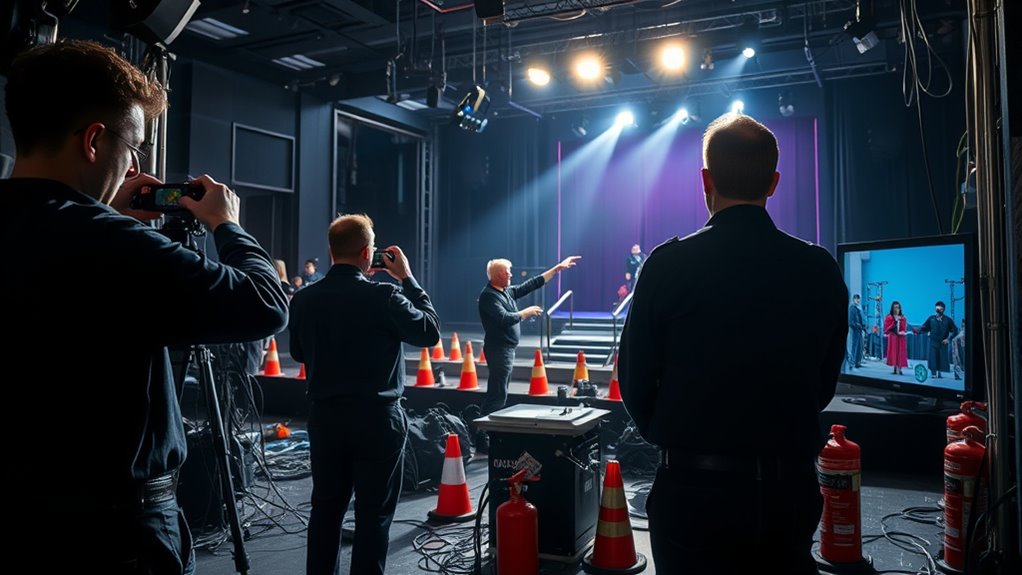
Ever wondered what goes into orchestrating a seamless production? As a stage manager, you’re the backbone of the entire show, ensuring everything runs smoothly from start to finish. One of your key responsibilities is props management, which involves organizing, tracking, and coordinating every object the actors use on stage. You’ll need to keep a detailed props list, noting who’s responsible for each item and when it’s needed. This meticulous process prevents chaos during performances, making sure props are in the right place at the right time. You’ll also need to supervise the setup and return of props during changeovers, so scenes transition smoothly without delays. Good props management demands constant communication with set designers, actors, and crew, guaranteeing everyone knows what they need and when. When it comes to rehearsal scheduling, your role becomes even more critical. You must coordinate rehearsal times that suit the cast, crew, and venue availability, all while fitting in technical rehearsals that involve cues and scene transitions. A well-planned rehearsal schedule helps actors internalize cues and timing, reducing mishaps during live performances. It also allows you to anticipate and troubleshoot potential issues before opening night, giving everyone confidence in their roles. As a stage manager, you act as the hub of communication, passing along cues, notes, and adjustments. You’ll keep a detailed prompt book, marking cues for lighting, sound, set changes, and actor entrances. During rehearsals, you observe closely, making sure everyone hits their marks and cues are executed perfectly. When it’s time for changeovers, you coordinate the swift and safe transition from one scene to the next, often working with crew members to shift set pieces, change costumes, and reset lighting and sound cues. Safety is always your top priority, so you double-check that all elements are secure and that actors and crew are aware of any hazards. Effective cues and changeovers rely on your precise timing and clear communication. You’ll need to stay alert, especially during live performances, to make immediate adjustments if something goes wrong. Additionally, understanding projector technology can be helpful if your production involves multimedia elements, ensuring seamless integration of visuals. This vigilance guarantees the show continues without a hitch. Essentially, your role is to keep the production organized, on schedule, and safe. Managing props and rehearsal schedules might seem like small pieces of the puzzle, but they’re crucial in creating a polished, professional performance. Your ability to juggle multiple tasks, stay calm under pressure, and communicate clearly makes all the difference in delivering a show that captivates and entertains, leaving the audience none the wiser about the complex coordination happening behind the scenes.
As an affiliate, we earn on qualifying purchases.
Frequently Asked Questions
How Do Stage Managers Handle Last-Minute Emergency Changes?
When last-minute emergencies happen, you quickly activate your emergency communication plan, alerting the cast and crew immediately. You rely on your contingency planning to adapt swiftly, making necessary adjustments without disrupting the show. You stay calm, assess the situation, and coordinate with your team to implement safety protocols. Your preparedness guarantees everyone stays safe, and you keep the audience informed, maintaining the show’s integrity despite unexpected changes.
What Equipment Is Essential for a Safe Cue System?
Ironically, the most essential equipment for a safe cue system isn’t flashy tech but your reliable toolkit. You need cue lighting controls to coordinate scenes seamlessly and safety protocols like fire extinguishers, first aid kits, and communication devices. A sturdy headset or intercom guarantees clear communication, preventing chaos. Remember, safety isn’t just about gadgets; it’s about preparation, vigilance, and knowing when to call for backup—because accidents don’t take breaks.
How Do You Coordinate With Multiple Departments During a Show?
You coordinate with multiple departments during a show by establishing clear communication protocols and maintaining open, real-time dialogue. You use headsets or walkie-talkies for immediate updates and make certain everyone understands their cues and timing. Departmental collaboration is key, so you hold pre-show meetings, clarify responsibilities, and stay attentive to any changes. This proactive approach helps keep the production running smoothly and safely.
What Are Common Safety Violations on Stage?
On stage, safety violations are like hidden mines waiting to explode. You must vigilantly watch for fire safety lapses, such as blocked exits or faulty electrical equipment, and guarantee everyone follows PPE compliance. Neglecting these hazards can turn a smooth show into chaos. Always double-check that fire extinguishers are accessible, exits are clear, and crew members wear proper gear—these simple acts keep the spotlight on safety and prevent disaster.
How Is Technology Integrated Into Modern Stage Management?
You integrate technology into modern stage management through digital integration and automation tools that streamline your workflow. These tools allow you to manage cues, schedules, and changeovers more efficiently, reducing errors and improving safety. By using digital platforms, you can communicate instantly with your team, monitor progress in real-time, and facilitate smooth handovers, making your overall stage management more precise and responsive to the demands of contemporary productions.
As an affiliate, we earn on qualifying purchases.
Conclusion
Remember, a smooth show relies on your attention to cues, changeovers, and safety. Stay alert, communicate clearly, and trust your team—because a well-managed stage is like a well-oiled machine. As the saying goes, “A chain is only as strong as its weakest link.” Keep your focus sharp, and you’ll guarantee every performance is memorable for all the right reasons. Your dedication makes the magic happen—never forget that.
As an affiliate, we earn on qualifying purchases.
As an affiliate, we earn on qualifying purchases.
Fall Picks
fall essentials
As an affiliate, we earn on qualifying purchases.