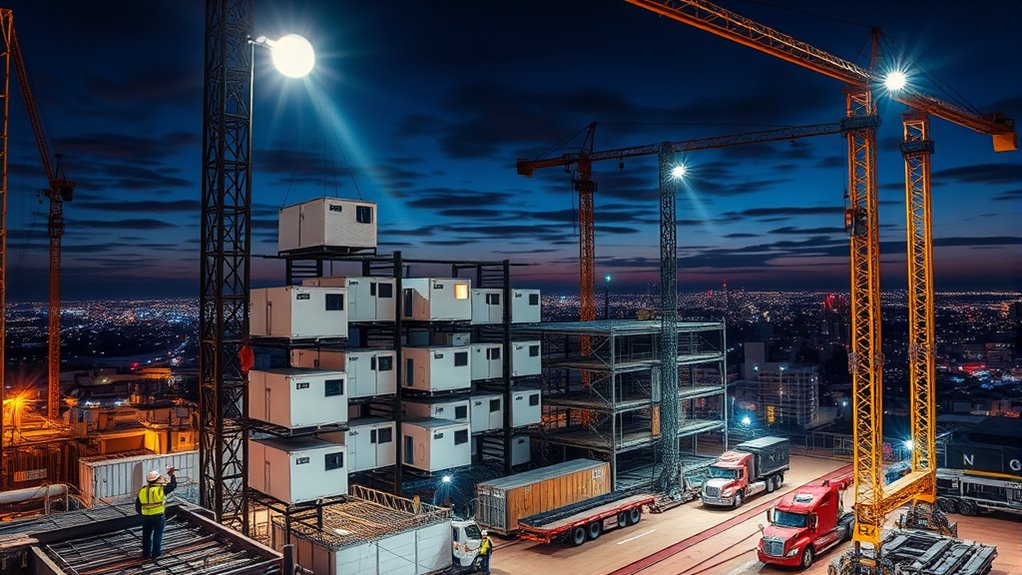

By coordinating fast load-in and load-out processes, you can quickly set up a city using temporary structures, modular units, and efficient logistics. Focus on seamless delivery, installation, and setup of prefabricated components to minimize on-site time and disruptions. Use flexible planning to make certain infrastructure like power and water is quickly connected. When you’re ready to shift, plan for sustainable dismantling or repurposing. Keep exploring to discover how these strategies come together for rapid urban development.
Key Takeaways
- Utilize modular, prefabricated components for rapid assembly and disassembly of structures.
- Coordinate logistics with suppliers for timely delivery and efficient installation of materials.
- Establish temporary infrastructure like power, water, and communication lines to support quick setup.
- Design structures for easy snap-together assembly, minimizing on-site construction time.
- Plan for sustainable load-out practices to disassemble and repurpose structures efficiently after use.
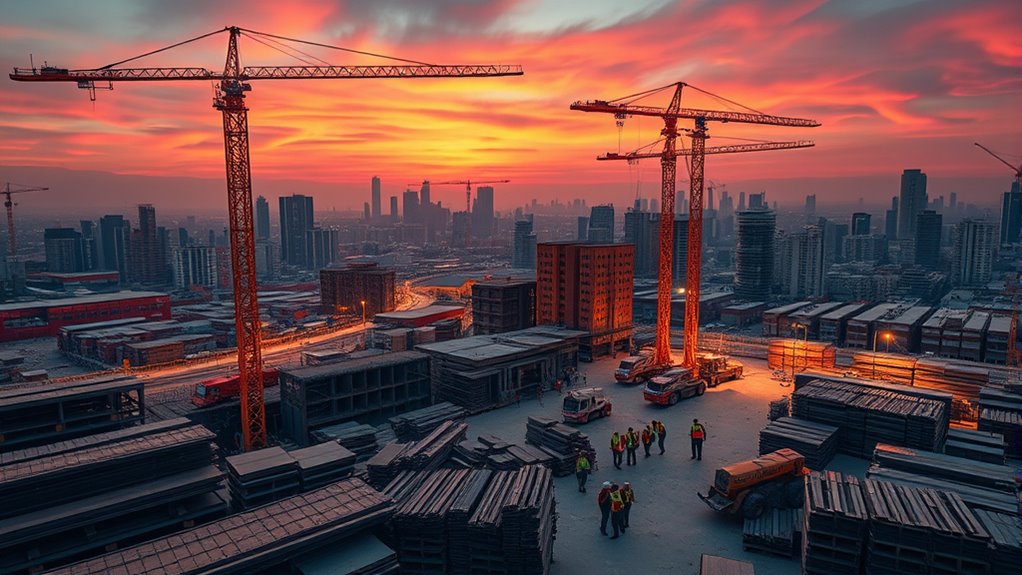
Imagine transforming an empty plot of land into a bustling city in just a few days. It’s an impressive feat made possible through meticulous urban planning and the strategic use of temporary structures. When you’re tasked with building a city so quickly, every decision counts. You start by envisioning the layout, guaranteeing that roads, utilities, and essential services are planned efficiently. Urban planning here isn’t just about aesthetics; it’s about creating a functional space that can support a large influx of people and activities within a short timeframe. To achieve this, you rely heavily on temporary structures that serve as the backbone of the rapid development process. These structures include modular units, pop-up buildings, and prefabricated components that can be assembled swiftly on-site. They provide immediate shelter, workspaces, and amenities, enabling the city to take shape almost overnight.
Rapid urban transformation relies on strategic planning and innovative temporary structures for swift city development.
Your first step is to coordinate the load-in process. This involves bringing in all the necessary materials, prefabricated sections, and equipment. Since time is of the essence, you work with suppliers who specialize in quick delivery and installation. Containers, scaffolding, and temporary flooring are set up rapidly, allowing construction crews to work efficiently. You prioritize establishing essential infrastructure—power, water, and communication lines—using temporary solutions that can be easily installed and later replaced or upgraded. The use of temporary structures here is vital; they allow for flexibility and speed, making it possible to adapt the city’s layout as needed without lengthy construction delays. Load-in and load-out processes are crucial to maintaining momentum and efficiency throughout the project.
As the load-in continues, you ensure that logistics are seamless. Clear pathways are designated for the movement of materials, and safety protocols are enforced to keep the process smooth. Once the initial infrastructure is in place, the focus shifts to erecting the temporary buildings and public spaces. These structures are designed for quick assembly, often utilizing pre-fabricated parts that can be snapped together or bolted into place. This approach minimizes on-site construction time and reduces disruption to the surrounding environment.
When it’s time for load-out, you carefully plan how to dismantle or repurpose these temporary structures once their purpose is fulfilled. This sustainable approach guarantees minimal waste and allows the city to evolve beyond its initial rapid setup. By leveraging smart urban planning and innovative temporary structures, you turn a blank canvas into a vibrant, functional city within days. It’s a dynamic process that demands precision, coordination, and ingenuity—delivering a thriving urban environment on an impossibly tight schedule.
prefabricated modular building units
As an affiliate, we earn on qualifying purchases.
As an affiliate, we earn on qualifying purchases.
Frequently Asked Questions
How Do Crews Coordinate Safety During Rapid Construction?
You coordinate safety during rapid construction by strictly following safety protocols and maintaining clear crew communication. You guarantee everyone is trained on safety procedures, hold regular safety briefings, and use radios or signals for instant updates. By fostering a culture of safety and accountability, you minimize risks, address hazards promptly, and keep the team informed, allowing the construction to progress quickly without compromising safety.
What Materials Are Used for Quick Assembly and Disassembly?
You use modular panels and rapid fastening systems for quick assembly and disassembly. Modular panels are lightweight, prefabricated sections that easily fit together, saving time. Rapid fastening systems, like snap-fit or magnetic connectors, guarantee quick, secure connections without tools. This combination allows you to swiftly build or dismantle structures, making your project efficient and adaptable. You’ll appreciate how these materials streamline your process and enhance flexibility on tight schedules.
How Is Waste Managed During Fast City Build Processes?
Waste management acts as the city’s heartbeat during rapid construction. You prioritize temporary infrastructure that facilitates swift waste recycling, ensuring debris is quickly sorted and processed. Containers symbolize the city’s resilience, holding waste temporarily before transformation. You actively streamline disposal processes, reducing environmental impact, and maintaining momentum. This approach keeps the city healthy, adaptable, and ready to flourish amid the chaos of rapid development.
What Technology Enables Real-Time Logistics Tracking?
You rely on RFID tracking technology to enable real-time logistics tracking. It updates your supply chain instantly, allowing you to monitor the movement of materials and equipment as it happens. RFID tags provide precise data, so you can quickly identify delays or bottlenecks. This seamless integration enhances efficiency, keeps your build on schedule, and guarantees you have complete visibility throughout the fast-paced city construction process.
How Are Residents Relocated During Construction Phases?
Imagine you’re living through a city makeover—kind of like building a spaceship with a twist of 21st-century tech. During construction, residents are relocated to temporary housing, ensuring minimal disruption. Community engagement is key; you’re kept informed and involved in decisions. This approach helps you stay connected and comfortable while the new city takes shape, making the progression smoother and more collaborative.
temporary city infrastructure setup kit
As an affiliate, we earn on qualifying purchases.
As an affiliate, we earn on qualifying purchases.
Conclusion
As you watch this city rise overnight, it’s like witnessing a miracle sketched in quick strokes across the sky. In just days, you’ve transformed empty land into a bustling hive of life, a living, breathing organism pulsing with energy. With each load-in and load-out, you’re sculpting a vibrant future from the dust of possibility. Remember, with determination and ingenuity, you hold the power to turn dreams into a cityscape that stands tall in the blink of an eye.
quick assembly scaffolding system
As an affiliate, we earn on qualifying purchases.
As an affiliate, we earn on qualifying purchases.
portable power and water connection kit
As an affiliate, we earn on qualifying purchases.
As an affiliate, we earn on qualifying purchases.