
To guarantee clear radio communications, you should select proper channels that are less congested and follow established etiquette, like identifying yourself before transmitting and using designated channels to avoid overlaps. Keep transmissions brief, wait for your turn, and end with your call sign. Recording important exchanges helps with safety and accountability. By maintaining discipline and organized procedures, you’ll improve clarity and reliability—if you continue, you’ll learn more tips to optimize your radio use.

Get movie nights delivered free with Prime
- Fast, free delivery on millions of items
- Prime Video, Amazon Music and more included
- Member-only deals all year
Key Takeaways
- Use designated channels and follow protocols like calling before transmitting to ensure organized and respectful communication.
- Maintain proper antenna placement and orientation to improve signal clarity and reduce interference during recordings.
- End transmissions with your call sign for identification and to facilitate effective communication.
- Minimize external noise and interference sources to enhance the quality of recorded radio communications.
- Keep a clear record of transmissions for documentation, troubleshooting, and maintaining communication etiquette.
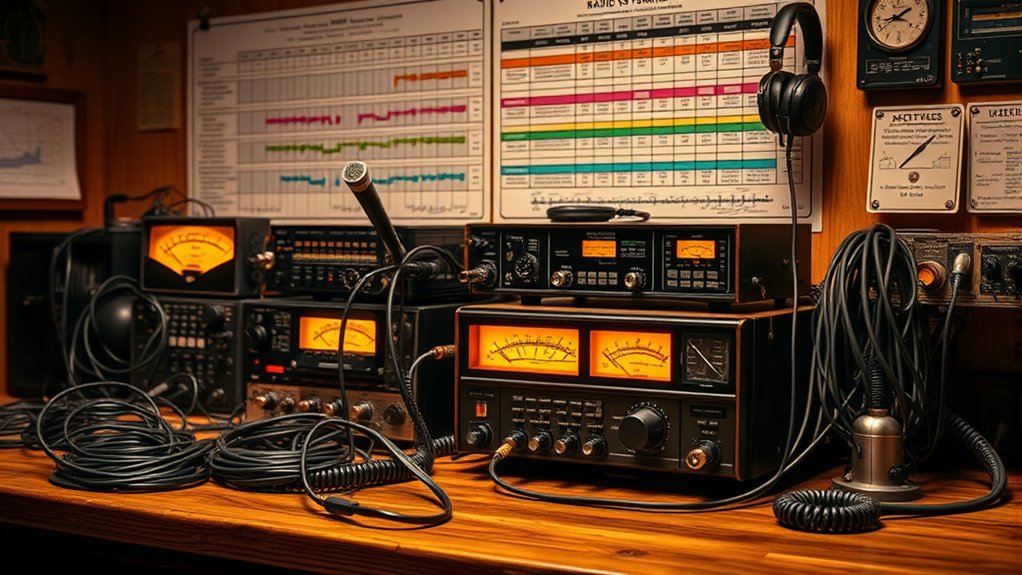
Have you ever wondered how people stay connected across long distances without physical wires? It all comes down to radio communications, which rely on carefully managed signals transmitted through the air. A critical aspect of maintaining clear and reliable communication is proper antenna placement. When you set up your antenna, you want to position it as high as possible and in a location free from obstructions like buildings, trees, or hills. Elevating your antenna helps improve signal strength and coverage, guaranteeing your message reaches its destination without unnecessary loss. Additionally, orienting the antenna correctly toward the intended receiver maximizes efficiency and reduces the chances of signal degradation.
Interference mitigation is equally essential. The airwaves are crowded with signals from various sources—other radios, electronic devices, and even natural phenomena—so managing interference is key to clear communication. You can mitigate interference by choosing a frequency that’s less congested and avoiding channels used by strong, nearby transmitters. Using filters or selecting specific bandwidths can also help block out unwanted noise. Proper antenna placement plays a role here too: keeping your antenna away from electrical appliances, metal structures, or power lines diminishes the risk of signal distortion. When you’re aware of potential sources of interference and take steps to minimize them, your radio communications become more reliable and easier to understand.
Maintaining a disciplined approach to channel use is another way to guarantee smooth communication. Always use designated channels and adhere to established protocols, like calling before transmitting and ending with your call sign. This prevents interference from overlapping conversations and keeps the airwaves organized. When you’re mindful of your antenna placement and actively work to mitigate interference, you contribute to a cleaner, more effective communication environment.
As an affiliate, we earn on qualifying purchases.
Frequently Asked Questions
How Do I Choose the Best Radio Channel for My Needs?
To select the best radio channel, start with frequency selection based on your needs. Pick a channel with clear, strong signal strength to guarantee reliable communication. Avoid crowded channels to reduce interference, and consider channels designated for your specific purpose, like emergency or business use. Test different channels if needed, and stay updated on local frequency assignments to keep your communication clear and effective.
What Are Common Radio Communication Mistakes to Avoid?
Think of your radio as a bridge; avoid miscommunication pitfalls like speaking too fast or unclear signals that cause transmission errors. Keep messages concise, listen actively, and use proper etiquette to prevent confusion. Don’t assume everyone hears your message the same way—verify clarity. By staying disciplined and respectful, you’ll ensure smooth communication, avoiding common mistakes that turn simple exchanges into tangled webs.
How Do I Properly Record Radio Communications?
To properly record radio communications, use reliable recording devices and make certain they’re functioning before transmission. Follow proper radio etiquette by clearly identifying yourself and the station. Keep recordings concise, and avoid unnecessary chatter. Always obtain permission if required, and store recordings securely. Regularly review recordings to ensure clarity and accuracy. By doing so, you maintain professionalism and ensure records are useful for future reference or legal purposes.
What Are the Legal Regulations for Radio Transmissions?
You need to follow strict legal regulations for radio transmissions, or risk serious penalties. Make certain you have the proper licensing requirements to operate legally, and always manage interference carefully to avoid disrupting others’ communications. Ignoring these rules can lead to fines or license revocation. Stay informed about regulations in your area, and always transmit responsibly—your compliance keeps radio communication clear and secure for everyone.
How Can I Improve Clarity on Noisy Radio Channels?
To improve clarity on noisy radio channels, start by optimizing your antenna positioning for better signal reception. Keep your antenna high and free of obstructions. Use signal boosting devices if available to strengthen the transmission. Speak clearly and at a steady pace, avoiding background noise. Regularly check your equipment for faults and guarantee your radio settings are properly configured. These steps help minimize noise and enhance communication clarity.
radio communication recording device
As an affiliate, we earn on qualifying purchases.
As an affiliate, we earn on qualifying purchases.
Conclusion
Radio communications are crucial for clear, efficient interactions, but did you know that over 80% of radio errors are caused by poor etiquette or miscommunication? By understanding channels, following proper etiquette, and recording conversations when needed, you guarantee safety and professionalism. Remember, concise and respectful communication can prevent misunderstandings. Keep practicing these skills, and you’ll become a confident, effective radio user, helping you stay connected and prepared in any situation.
As an affiliate, we earn on qualifying purchases.
As an affiliate, we earn on qualifying purchases.
Halloween Picks
halloween
As an affiliate, we earn on qualifying purchases.