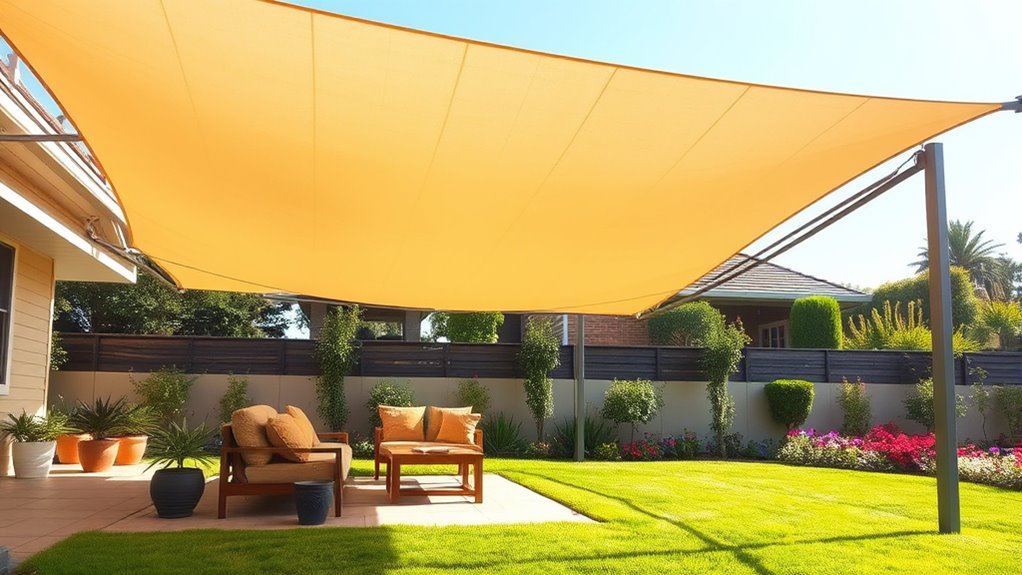

To set up a comfortable shade structure, choose durable, UV-resistant fabric that blocks sunlight but allows airflow. Position sturdy posts deep in the ground with proper anchors or brackets, ensuring they follow the sun’s path for maximum coverage. Secure the fabric tightly with hardware, avoiding over-tightening. Regularly check and tighten hardware, clean the fabric, and inspect the posts for damage. For detailed steps to create a safe, effective shade, keep exploring these expert tips.
Key Takeaways
- Choose UV-resistant, breathable fabrics that block sunlight and promote airflow for comfort.
- Use durable, weather-resistant posts anchored securely for a stable foundation.
- Attach shade fabric tightly with appropriate hardware, avoiding over-tightening to prevent stress.
- Position posts considering sun’s path and nearby obstructions for optimal shade coverage.
- Regularly inspect, clean, and tighten hardware to maintain comfort, safety, and longevity.
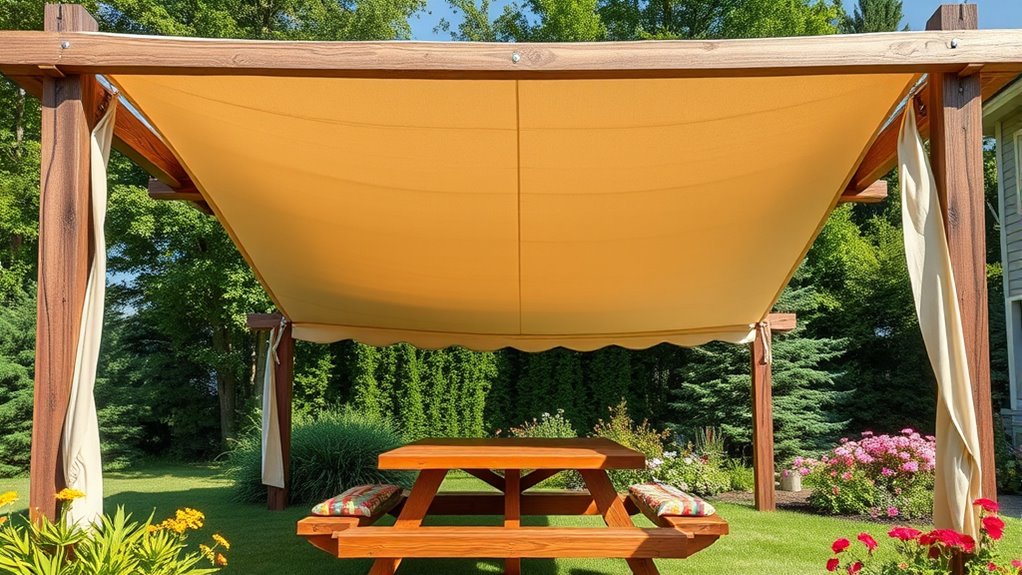
Creating a comfortable shade structure begins with careful planning and proper setup. To do this effectively, you need to start by selecting the right shade fabric. The fabric you choose should be durable, UV-resistant, and suited to your climate. Look for materials that block out a significant amount of sunlight while allowing some airflow, so you and your space stay cool without feeling stuffy. Once you’ve chosen the perfect shade fabric, focus on the post installation. Properly installed posts form the backbone of your shade structure, ensuring it remains stable and safe over time. Use high-quality materials, like galvanized steel or treated wood, that can withstand weather conditions in your area. When installing posts, make sure they are deeply anchored in the ground using concrete or appropriate anchors, and check local building codes to confirm compliance. It’s also helpful to consider individual responses to similar setups, as this can inform your design choices and improve overall comfort.
Start with durable, UV-resistant shade fabric and secure, well-anchored posts for a stable, long-lasting shade structure.
After the posts are securely in place, you can attach your shade fabric. Tensioning is essential here—your fabric should be stretched tight enough to prevent sagging or flapping in the wind but not so tight that it causes stress on the material or posts. Use sturdy hardware, such as heavy-duty hooks, grommets, or cable systems, to secure the fabric to the posts. Regularly inspect these attachments to catch any signs of wear or loosening early, so your shade stays effective and safe.
You also need to think about how the placement of your posts impacts shade coverage. Position them to maximize shade during the hottest parts of the day, taking into account the sun’s path and any nearby structures or trees that could cast shadows. If you’re setting up a freestanding structure, ensure there’s enough clearance around each post for stability and for easy access to maintenance or adjustments. For attached shades, secure the posts to existing structures with appropriate brackets, ensuring they’re aligned correctly for even tension across the fabric.
Finally, once your shade fabric is installed and post installation is complete, walk around your setup to evaluate the overall comfort and coverage. Adjust the tension if needed, and make sure all hardware is tight and secure. Regular maintenance, like cleaning the fabric and inspecting posts for corrosion or damage, will extend the lifespan of your shade structure. With careful planning, precise post installation, and attention to detail, you’ll create a shade that’s not only functional but also a welcoming retreat for relaxing outdoors.
Frequently Asked Questions
What Materials Are Best for a Durable Shade Structure?
You should choose durable shade fabric like high-density polyethylene or acrylic fabric for longevity and UV protection. For frame materials, opt for sturdy options like powder-coated steel, aluminum, or pressure-treated wood, which resist rust and weather damage. These materials assure your shade structure remains stable and resilient over time. Combining quality shade fabric with a strong frame guarantees a long-lasting, comfortable shade that withstands the elements and provides reliable shelter.
How Do I Prevent My Shade From Collapsing in Strong Winds?
Think of your shade as a ship braving stormy seas. To prevent it from collapsing in strong winds, you need a wind resistant design combined with solid anchoring techniques. Use heavy-duty stakes, concrete weights, or anchors to secure legs firmly into the ground. Reinforce the frame with extra support beams, and choose wind-resistant materials. Regularly check and tighten all connections to keep your shade standing tall through gusts.
Can I Install a Shade Structure on Uneven Ground?
Yes, you can install a shade structure on uneven ground. Start by ground leveling to create a stable base, using gravel or sand if necessary. Consider accessory options like adjustable footpads or shims to compensate for uneven surfaces. These help guarantee your structure remains stable and secure. Proper ground preparation and compatible accessories make installation easier and your shade structure more durable, even on challenging terrain.
How Much Ventilation Is Needed for Comfort?
You need enough ventilation to make your shade structure feel like a cool breeze on a scorching day. Aim for excellent airflow efficiency—think large vents, open sides, or adjustable panels—that allows fresh air to sweep through effortlessly. Proper ventilation requirements prevent stuffiness and keep temperatures comfortable, even in the hottest weather. Without it, you risk stifling heat buildup, turning your shaded oasis into an uninviting, suffocating space.
Are There Eco-Friendly Options for Shade Materials?
Yes, you can choose eco-friendly shade materials like sustainable fabrics made from recycled plastics or natural fibers. Look for options with eco-labels or certifications that guarantee responsible sourcing. Recycling options are also available, such as repurposing old fabrics or materials into new shade structures. By selecting these sustainable fabrics and recycling options, you reduce environmental impact and create a comfortable, eco-conscious shade space that benefits both you and the planet.
Conclusion
Now that you’ve set up your shade structure, you’re practically a master of cool comfort! Imagine yourself lounging beneath a perfect canopy, shielded from the blazing sun, feeling like you’ve created your own personal oasis—more relaxing than a beach vacation and cooler than a snowstorm. With your new setup, you’ll turn any hot day into a invigorating retreat. So go ahead, enjoy endless shade and bask in the bliss of your perfectly shaded paradise!