To stay safe while filming in tight crowds, focus on strategic positioning that leverages predictable crowd flow. Use a stable tripod with added weight or nearby objects to prevent shaky footage and accidental bumps. Move deliberately with slow panning or tilting, avoiding sudden shifts. Keep an eye on your surroundings and plan your camera angles to blend into the scene naturally. Mastering these techniques can help you capture professional shots without risking safety—explore the details to make your camera work smoother.

Get movie nights delivered free with Prime
- Fast, free delivery on millions of items
- Prime Video, Amazon Music and more included
- Member-only deals all year
Key Takeaways
- Use slow, deliberate camera movements to avoid startling the crowd and maintain control.
- Position yourself strategically in predictable crowd zones to minimize abrupt shifts.
- Stabilize your tripod with weight bags or nearby objects to prevent shaky footage in tight spaces.
- Focus on controlling your camera’s position rather than rushing ahead or making sudden moves.
- Employ fluid heads on tripods for seamless pans and tilts, reducing jerky motions and enhancing safety.
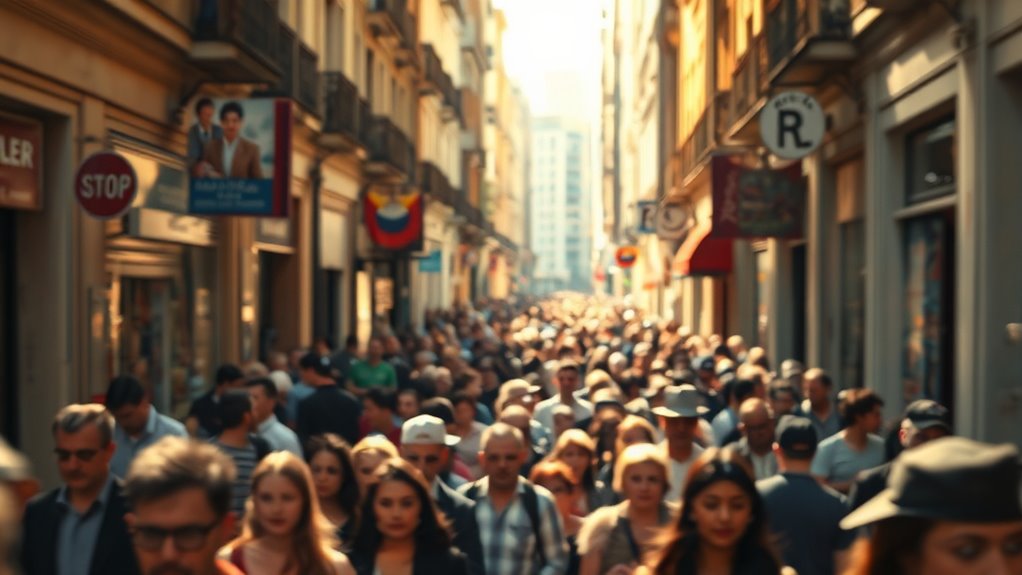
Have you ever wondered how filmmakers capture dynamic scenes in tight crowds without losing focus or clarity? It all comes down to understanding how to manage crowd flow and maintain tripod stability. When filming in densely packed environments, you need to anticipate how the movement of people affects your shot and adapt your technique accordingly. Crowd flow can be unpredictable, with people shifting and weaving around each other, so your camera movement must be smooth and intentional. If you’re not careful, your footage can become shaky or chaotic, making it difficult for viewers to follow the scene. That’s why stabilizing your camera is essential, especially when you’re managing the constant ebb and flow of a crowd. A sturdy tripod or other stabilization equipment keeps your shot steady despite the surrounding chaos, ensuring your footage remains crisp and professional.
In tight crowds, your first priority should be controlling your camera’s position relative to the moving crowd. Instead of rushing ahead or trying to keep up with every shift, focus on observing the flow and finding stable vantage points. Position yourself where the crowd’s movement is predictable, and use that to your advantage. When you set up your tripod, make sure it’s secure and well-balanced. Tripod stability isn’t just about locking the legs; it’s about choosing a solid footing and adjusting the head to prevent any wobbling. This way, even if people brush past or jostle your equipment, your camera stays steady. It also helps to use weight bags or stabilize the tripod with nearby objects if possible, especially in uneven terrain or crowded settings. Utilizing stabilization tools can significantly improve your footage quality in such environments.
Moving the camera within a crowd requires finesse. Instead of rapid panning or jerky motions, employ slow, deliberate movements that mimic the natural flow of the scene. This approach minimizes the risk of losing focus and helps keep your shots stable. Sometimes, a slight tilt or pan can be enough to follow the action without startling the crowd or drawing unnecessary attention. When you’re working with a tripod, consider using fluid heads designed for smooth motion, allowing you to transition seamlessly from one focus point to another. The key is to stay relaxed and steady, avoiding abrupt shifts that can cause motion sickness or disorientation for viewers.
Ultimately, capturing quality footage in tight crowds demands a blend of strategic positioning, understanding crowd flow, and investing in the right stabilization tools. When you respect the environment’s movement patterns and keep your camera stable, your shots will not only be clearer but also more immersive. This careful balance between movement and stability ensures your audience remains engaged, and your footage stands out as professional and captivating.
tripod with weight bags for stable filming
As an affiliate, we earn on qualifying purchases.
As an affiliate, we earn on qualifying purchases.
Frequently Asked Questions
How Do Camera Operators Avoid Causing Panic in Crowds?
You avoid causing panic by staying aware of crowd psychology and following public safety protocols. Keep your movements smooth and deliberate, avoiding sudden or erratic actions that might alarm people. Communicate clearly with your team and use non-threatening gestures. By maintaining a calm demeanor and working within established safety guidelines, you help keep the crowd relaxed and prevent unnecessary chaos, ensuring everyone’s safety during filming.
What Gear Is Best for Maneuvering in Tight Spaces?
When maneuvering in tight spaces, you need gear that’s both flexible and reliable. Rigid tripods provide stability when needed, but handheld stabilizers are your best bet for agile movement through crowds. They let you capture smooth shots without causing alarm or stumbling over obstacles. Think of it as having a steady hand in a hectic situation—you stay in control and keep your footage clean, even when space is limited.
How Do You Maintain Stability During Rapid Camera Movements?
To maintain stability during rapid camera movements, you should use effective stabilization techniques like engaging your core and keeping your elbows close to your body. Apply proper grip methods, such as a firm but relaxed hold on your camera or gimbal, to lessen shake. Practice smooth, controlled motions and anticipate movements to keep footage steady, even in tight crowds. These tips help guarantee your shots stay steady under quick, unpredictable movements.
What Training Is Recommended for Shooting in Crowded Areas?
Think of your skills like a safety net when shooting in crowded areas. You should train in crowd psychology to understand how people behave, helping you anticipate movements. Emergency response training is vital, so you know how to act quickly if chaos erupts. Practice handling your gear smoothly amidst the noise and panic. This combination keeps you safe and guarantees you capture footage without compromising your safety or others’.
How Can Footage Be Captured Discreetly in Dense Crowds?
To capture footage discreetly in dense crowds, focus on stealth filming and covert techniques. Use compact, unobtrusive equipment like small cameras or smartphones and maintain a low profile. Keep movements smooth and minimal to avoid drawing attention. Blend in by dressing casually and avoiding obvious camera gear. Practice quick, subtle shots, and stay aware of your surroundings, so you can adapt your approach if someone notices.
fluid head tripod for smooth camera movement
As an affiliate, we earn on qualifying purchases.
As an affiliate, we earn on qualifying purchases.
Conclusion
As you navigate crowded spaces, remember that subtle movements often speak louder than loud ones. By mastering these gentle techniques, you create a harmony that keeps you safely woven into the flow. Sometimes, the quietest steps carry the strongest message, guiding you softly through the sea of faces. Embrace the art of graceful motion, and you’ll find that safety isn’t just about distance, but about knowing when to move with the crowd and when to stand still.
camera stabilization equipment for crowd filming
As an affiliate, we earn on qualifying purchases.
As an affiliate, we earn on qualifying purchases.
professional camera tripod for tight spaces
As an affiliate, we earn on qualifying purchases.
As an affiliate, we earn on qualifying purchases.
Fall Picks
fall essentials
As an affiliate, we earn on qualifying purchases.