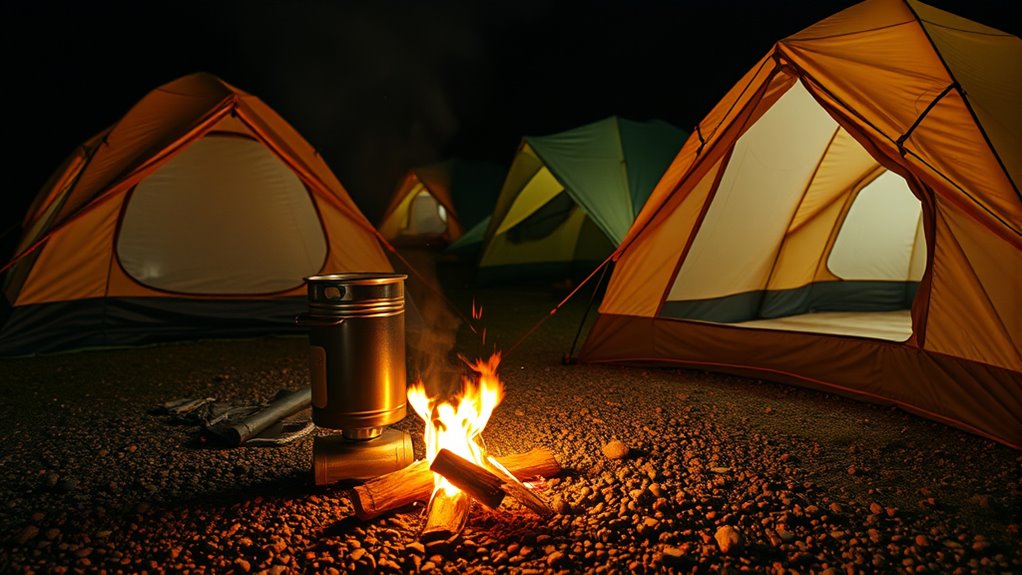

When camping, always choose a safe spot away from tents, trees, and dry grass for your fire or stove, and clear the area of leaves and twigs. Follow manufacturer instructions, keep water or a fire extinguisher nearby, and never leave fires or stoves unattended. Make sure everything is fully out and cooled before packing up. For more detailed safety tips and best practices, keep exploring to guarantee a secure and enjoyable outdoor experience.
Key Takeaways
- Choose a safe, clear, and flat area away from tents and overhanging branches for fire or stove setup.
- Keep a water source or extinguisher nearby and never leave fires or stoves unattended.
- Maintain a safe distance between tents and the fire or stove, using fire-resistant fabrics if possible.
- Fully extinguish fires and turn off stoves, allowing them to cool before packing up or leaving.
- Regularly inspect and clean stove equipment to prevent leaks, malfunctions, and ensure safe operation.
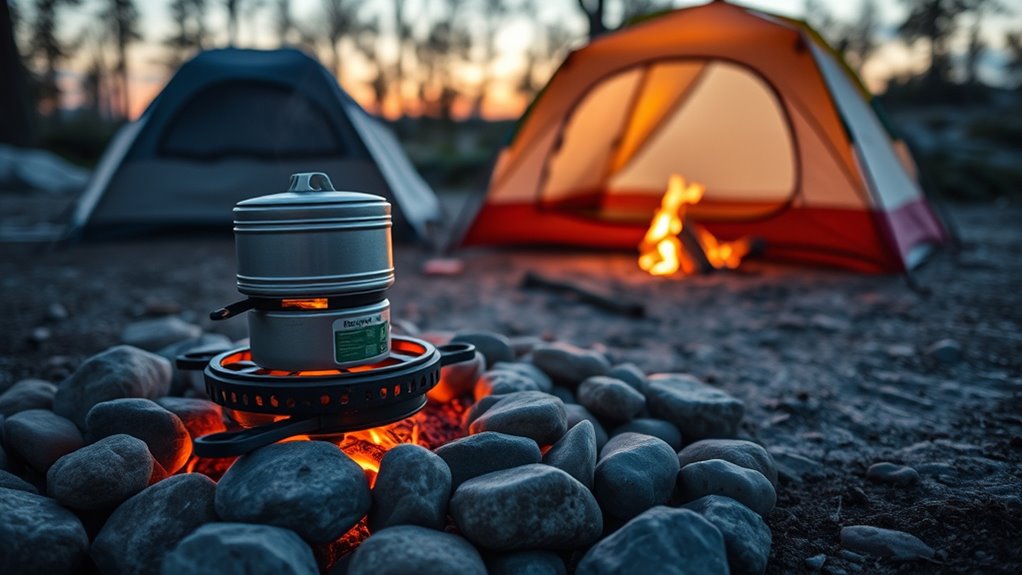
Have you ever wondered how to enjoy a campfire or use a stove safely? When you’re out in the wilderness, it’s essential to prioritize campfire safety to prevent accidents and protect both yourself and the environment. Before lighting any fire, make sure you choose a safe location, away from overhanging branches, tents, and other combustible materials. Clear a space of at least a few feet around the fire pit by removing leaves, twigs, and grass. Keep a bucket of water or a fire extinguisher nearby, so you’re prepared for emergencies. Never leave a campfire unattended, and always fully extinguish it before leaving the site or going to sleep. Stir the ashes and pour water over them until the hissing stops, ensuring no embers remain smoldering. Proper campfire safety isn’t just about the fire itself; it’s also about how you maintain your stove. Regular stove maintenance is critical for safe outdoor cooking. Before use, inspect your stove for any damage, leaks, or blockages. Clean the burners and vents to ensure proper airflow and efficient operation. Use the stove on a flat, stable surface away from tent walls or other flammable gear. When lighting your stove, follow the manufacturer’s instructions carefully, and never attempt to repair it if you notice irregularities. During cooking, keep a close eye on the flame and avoid overfilling pots or pans to prevent spills or flare-ups. After you’re finished, turn off the stove, disconnect fuel sources if applicable, and allow it to cool before packing it away. Consistent stove maintenance not only prolongs the life of your gear but also reduces the risk of malfunctions or dangerous leaks. Remember, safety around tents extends beyond just fire precautions. Always keep a safe distance between your tent and the fire or stove, and ensure your tent fabric is fire-resistant if possible. Use designated fire pits or stoves designed for outdoor use to minimize risks. When cooking or enjoying a campfire, never forget to communicate with your fellow campers about fire safety rules. Educate everyone on how to handle fires responsibly and what steps to take in case of an emergency. Staying vigilant and practicing good campfire safety and stove maintenance can turn your outdoor experience into a safe and enjoyable adventure. By respecting fire safety guidelines and properly caring for your stove, you protect yourself, your companions, and the natural surroundings, making every camping trip memorable for all the right reasons.
Frequently Asked Questions
Can I Use a Propane Stove Inside My Tent?
You shouldn’t use a propane stove inside your tent because it’s dangerous. Indoor cooking with a propane stove creates a risk of carbon monoxide buildup, which can be deadly. Always place your stove outdoors on a stable, flat surface away from tent walls and flammable materials. Proper stove placement is vital for safety, and never operate a stove inside your tent to prevent fire hazards and guarantee good ventilation.
What Fire Extinguisher Should I Carry for Campfires?
Think of your fire extinguisher as your campfire’s shield. You should carry a multi-purpose ABC fire extinguisher because it fights fires involving ordinary combustibles, liquids, and electrical equipment. For portable fire suppression, an ABC extinguisher is your best bet, ensuring quick control if flames get out of hand. Always keep it accessible, and remember, choosing the right fire extinguisher is key to safe camping adventures.
How Close Can a Stove Be to Tent Walls?
You should keep your stove at least three feet away from tent walls made of fire-resistant fabrics or with proper tent insulation. Maintaining this distance helps prevent heat transfer and accidental fires. Always check your tent’s material and verify it’s designed to withstand heat. Using fire-resistant fabrics and proper insulation around your tent can add extra safety, but never compromise on the recommended clearance to keep everyone safe during cooking.
Are There Specific Materials for Safe Campfire Rings?
You might think any materials work for a fire ring, but fire-resistant materials are essential for safety. Using fire-resistant stones, bricks, or metal ensures your fire ring construction withstands high heat and prevents accidental fires. Never use flammable materials like wood or plastic for the ring. Proper fire ring construction with durable, fire-resistant materials helps contain the fire, reducing risks around your campsite and keeping everyone safe.
How Do I Safely Extinguish a Campfire?
To safely extinguish a campfire, you should first make sure the fire is completely out by using proper extinguishing techniques. Pour water over the fire, ensuring you cover all embers and sparks, and stir the ashes to release any remaining heat. Continue adding water and stirring until the ashes are cold to the touch. This fire containment method prevents rekindling and keeps your campsite safe.
Conclusion
Remember, over 80% of campground fires start from unattended or improperly managed fires. Staying vigilant keeps everyone safe and preserves nature’s beauty. Always keep your campfire small, never leave it unattended, and make sure it’s fully extinguished before sleeping or leaving. By following these simple safety tips, you help prevent accidents and protect fellow campers. Your caution can make a real difference—let’s keep our camping spots beautiful and safe for everyone to enjoy.