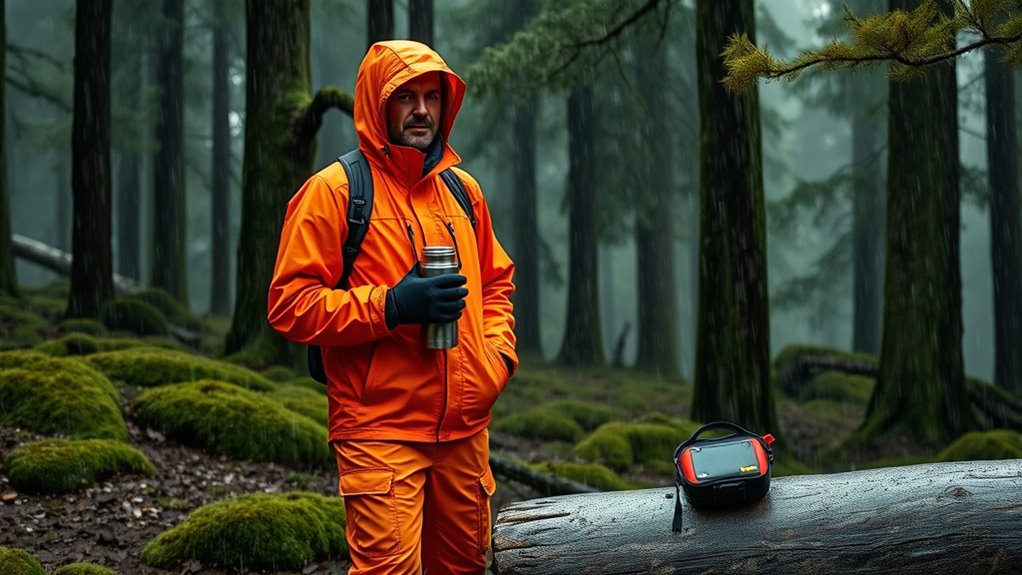

In cold rain survival, you must act fast to stay warm and dry. Put on waterproof gear immediately, use large plastic bags or extra clothing as makeshift protection, and insulate yourself from the cold ground with natural materials. Seek natural shelter from rain and wind, and create visible signals like ground patterns or reflective signals for rescue. Stay calm, conserve energy, and focus on shelter, warmth, and signaling—more essential tips await if you keep going.
Key Takeaways
- Immediately waterproof yourself with rain gear or makeshift covers and insulate from wet ground to prevent heat loss.
- Minimize movement to conserve body heat and avoid hypothermia.
- Seek natural shelter such as caves, dense bushes, or fallen trees to stay dry and protected.
- Use signaling devices like whistles or reflective objects to attract rescuers’ attention quickly.
- Wear bright or contrasting clothing and create ground signals to increase visibility in rainy conditions.
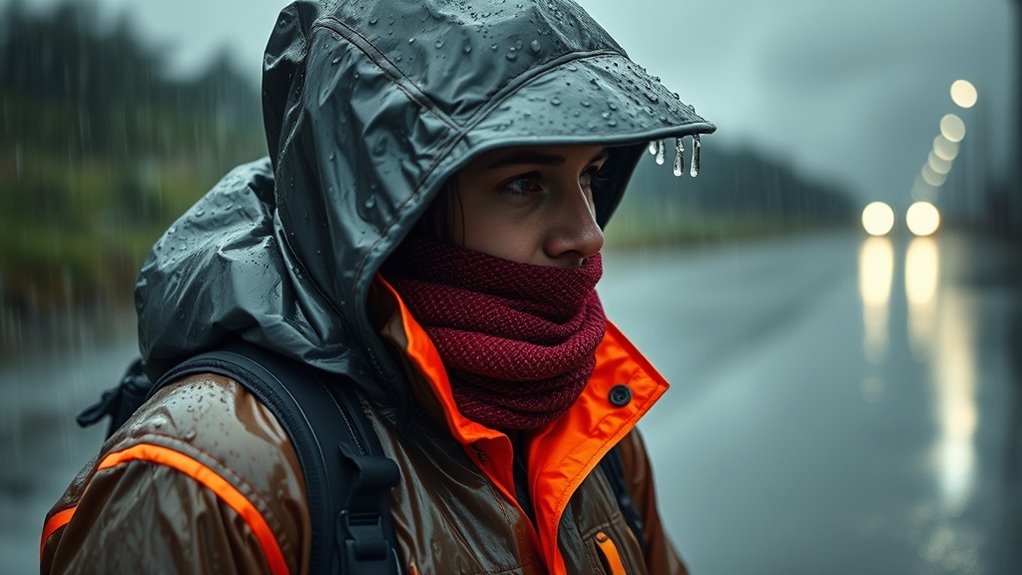
When caught in cold rain without proper gear, survival depends on quick thinking and smart decisions. Your first priority is to minimize heat loss and prevent hypothermia. The right gear selection can make all the difference. If you have a waterproof jacket, raincoat, or poncho, put it on immediately. Use whatever you have to stay as dry as possible, even if it’s a makeshift cover like a large plastic bag or an extra piece of clothing. Insulating yourself from the cold ground is equally important; find dry leaves, branches, or any dry material to sit or kneel on. If you’re carrying a backpack, open it up and use it as a shield or padding to reduce heat loss, and keep your essentials close, especially your emergency signaling items. A whistle, mirror, or brightly colored cloth can be *vital* if you need rescue.
Your next focus should be on emergency signaling. Cold rain makes it harder for rescuers to spot you, but you can increase your chances by creating visible signals. If you have a whistle, blow it in short bursts every few minutes; it’s a loud, effective way to attract attention. If you possess a mirror or any reflective object, use it to reflect sunlight or even flashlight signals if available. Shouting can work in a pinch, but it consumes energy and can worsen your hypothermia risk if you exert yourself too much. Bright clothing or a brightly colored item can also help rescuers see you from a distance. If you’re in an area where signaling devices are not available, create visual signals on the ground—arrange rocks or sticks into large patterns that can be seen from the air or distant vantage points. Additionally, using a hypothermia-proof routine such as minimizing movement and staying dry can significantly improve your chances of survival.
Staying warm and dry is essential, but your efforts should be swift. Avoid unnecessary movement that can sap your energy and increase heat loss. Instead, focus on reducing exposure to the rain and wind, conserving your body heat. Shield yourself as best as you can, and if possible, seek shelter in a natural formation like a cave, dense bushes, or under a fallen tree—anything that can offer protection from the elements. Remember, every second counts, and your ability to quickly select appropriate gear and effectively signal for help can be the *difference* between survival and hypothermia. Keep calm, act decisively, and prioritize shelter, warmth, and communication to increase your chances of making it through the cold rain unscathed.

ANYOO Hooded Rain Poncho for Adults Waterproof Lightweight Rain Coats for Men Women Reusable Rain Jacket for Emergency Camping Outdoor Activities(Army Green) One Size
Waterproof and Sturdy Material: The rain poncho is made of 210T ripstop polyester + TPU coating, this rain…
As an affiliate, we earn on qualifying purchases.
As an affiliate, we earn on qualifying purchases.
Frequently Asked Questions
How Can I Tell if Someone Is Developing Hypothermia?
You can tell someone is developing hypothermia if they start shivering uncontrollably, become sluggish, or confuse easily. Look for pale, cold skin and slow, shallow breathing. If you notice these signs, make certain they’re wearing proper cold weather gear to stay warm and use emergency signaling to get help. Keep them dry, covered, and monitor their condition closely until professional aid arrives.
What Are the First Signs of Hypothermia?
You’ll notice the first signs of hypothermia when you start feeling shivering, cold skin, and numb extremities. As it progresses, you might experience confusion, fatigue, and slow movements. To prevent this, always wear proper cold weather gear and stay dry. Emergency preparedness is key—carry extra clothing and blankets, and recognize symptoms early to seek warmth and medical help before it worsens.
Can Hypothermia Occur Indoors?
Think of your body as a fragile candle flame. Yes, hypothermia can occur indoors if the temperature drops too low, especially below 60°F. Without proper insulation techniques like thick curtains, rugs, or warm clothing, your body’s heat can escape, causing hypothermia. Keep the indoor temperature steady and cozy, and use insulation techniques to protect your core warmth, just like shielding a flame from cold drafts.
How Quickly Does Hypothermia Set in During Rain?
Hypothermia can set in within minutes during rain if you’re exposed for too long, especially in cold, windy, or wet environments. The faster your body loses heat, the quicker hypothermia develops. Environmental factors like rain’s chill, wind, and inadequate clothing accelerate heat loss. To prevent this, limit exposure duration, stay dry, and seek shelter quickly. Recognizing early signs helps you act fast and avoid dangerous health consequences.
Are There Specific Clothing Materials Best for Rain Survival?
You should prioritize clothing made from waterproof fabrics like Gore-Tex or nylon to stay dry and prevent hypothermia. Layer with thermal insulations such as fleece or wool to retain body heat. These materials work together to keep moisture out and trap warmth, which is essential during rain survival. Avoid cotton, as it absorbs water and loses insulating properties, making you colder faster in wet conditions.

SHvivik Emergency Whistle, 2PCS Premium Safety Survival Whistles with Lanyard Keychain, High Pitch Double Tubes for Outdoor Hiking Camping Hunting Fishing Boating
Super Loud: double-tube whistle is extremely loud and easy to blow. Sound power provides up to 120 decibels,…
As an affiliate, we earn on qualifying purchases.
As an affiliate, we earn on qualifying purchases.
Conclusion
Stay prepared and keep your routines tight like a well-woven net, because in cold rain, survival depends on your readiness. When you follow hypothermia-proof practices, you create a shield against the relentless chill that seeks to sap your strength. Remember, every step you take to stay warm and dry is a step away from danger. Don’t let the rain turn your resolve into ruin—stay vigilant, stay alive.
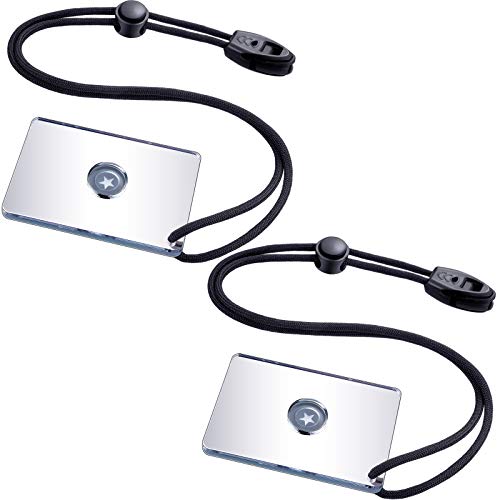
2 Pieces Signal Mirror Survival Reflective Mirror 2 x 3 Inch Send Remotely PFD Mirrors Outdoor Survival Signal Mirror Survival Technologies Small Signal Mirror for Backpacking
Durable material and proper size: made of quality acrylic material, the signal mirror is sturdy and durable, not…
As an affiliate, we earn on qualifying purchases.
As an affiliate, we earn on qualifying purchases.
ANYOO Hooded Rain Poncho for Adults Waterproof Lightweight Rain Coats for Men Women Reusable Rain Jacket for Emergency Camping Outdoor Activities(Army Green) One Size
Waterproof and Sturdy Material: The rain poncho is made of 210T ripstop polyester + TPU coating, this rain…
As an affiliate, we earn on qualifying purchases.
As an affiliate, we earn on qualifying purchases.