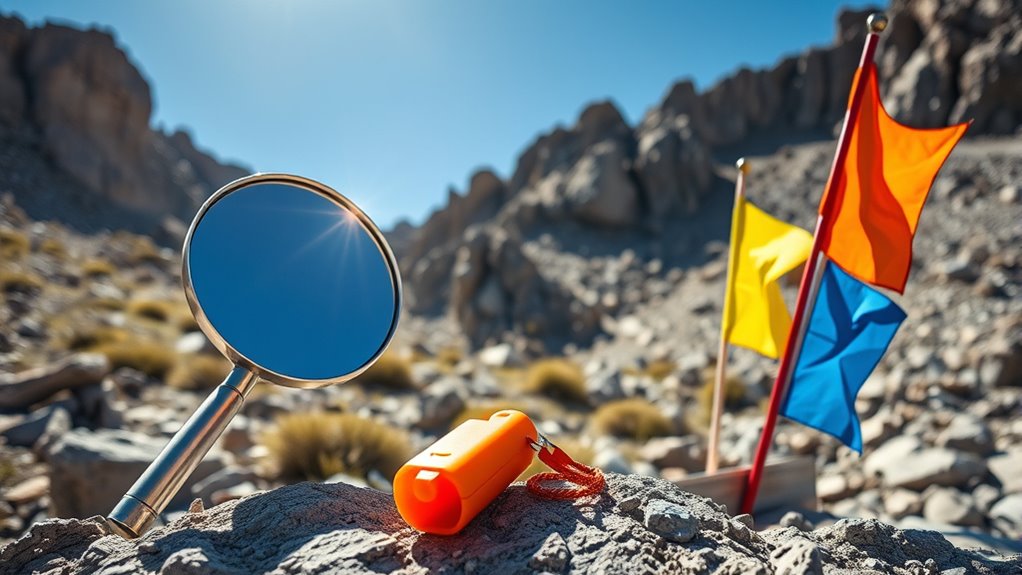

In emergency situations, using mirrors, whistles, and flags can greatly boost your chances of being spotted and rescued. A mirror reflects sunlight over long distances, making quick flashes toward rescuers or aircraft. A whistle emits loud, recognizable signals that cut through fog or rain, while flags improve visibility during daylight hours in open areas. Mastering these tools increases your safety and visibility—stick around to discover how to use each one effectively in your survival kit.
Key Takeaways
- Mirrors can reflect sunlight over long distances to signal rescuers or aircraft effectively.
- Whistles produce loud, distinct sounds that cut through noise, aiding in locating your position.
- Flags are highly visible in daylight, helping to mark your location in open or coastal environments.
- Combining mirror flashes, whistle patterns, and flag signals increases chances of being spotted.
- Using simple signaling tools is vital for survival when navigation aids fail or visibility is poor.
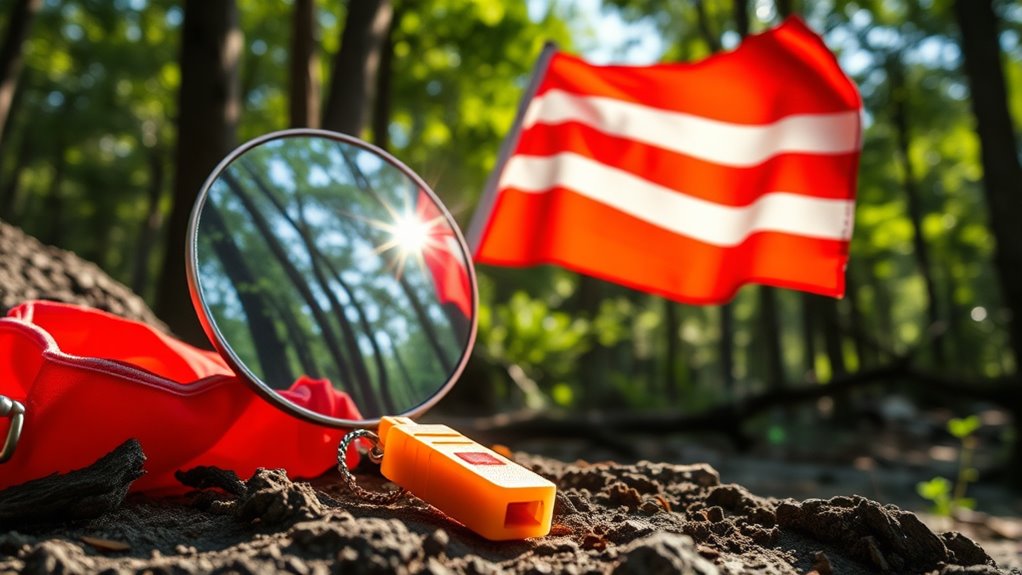
Emergency signaling is a essential skill that can make the difference between rescue and prolonged danger. When you’re stranded or lost, your ability to effectively communicate your location is critical. Using simple tools like mirrors, whistles, and flags can dramatically increase your chances of being spotted by rescuers or passing vessels. These signaling methods are fundamental components of your survival techniques, especially when other navigation tools are unavailable or unreliable.
Mirrors are among the most effective signaling devices because they reflect sunlight over long distances. When you spot an aircraft, boat, or distant search party, you can use the mirror to send a series of flashes or signals, drawing attention to your location. To maximize your chances, aim the reflected light toward the observer’s eye or the source of the sound. Practice using your mirror to get familiar with angles and reflection techniques, so you can quickly produce visible signals in an emergency. Remember, the key is to make your signals as clear and noticeable as possible, especially in open terrain or on water where visibility is paramount.
Mirrors reflect sunlight over long distances, helping you signal rescuers effectively.
Whistles are compact, lightweight, and produce loud sounds that can travel far, making them ideal for attracting attention in various environments. Blowing short, sharp blasts at regular intervals creates a recognizable pattern that rescuers are trained to listen for. If you’re in a group, establishing a continuous or repeated pattern can help search parties identify your location more easily. Whistles are especially useful when visual signals aren’t enough or when visibility is poor, such as in fog or heavy rain. They are also an essential part of your survival techniques, since they don’t rely on batteries or external power sources, ensuring you always have a reliable signaling device on hand.
Flags, whether a brightly colored cloth or a portable device, serve as visual signals that can be seen from a distance. Waving or positioning a flag in an open area increases the likelihood of catching a rescuer’s eye, especially when combined with other signaling methods. During daylight hours, flags are invaluable for making your presence known, particularly in wilderness or coastal settings. As part of your navigation tools, flags help you establish a clear visual signal, especially when you need to mark your location or indicate your direction to rescuers.
Frequently Asked Questions
What Is the Most Effective Signaling Device in Dense Forests?
In dense forests, visual signaling is your best bet because it can be seen from afar, especially with a bright or reflective device like a mirror. Use auditory signals like a whistle to attract attention if visual signals aren’t effective or you’re nearby. Combining both methods increases your chances of being noticed, as visual signals catch the eye, and auditory signals can alert rescuers close by. Always be persistent with your signals.
How Long Can a Signaling Mirror Be Used Effectively?
A signaling mirror can be effective for up to several hours or until you change your location or encounter obstacles. Its duration effectiveness depends on your ability to keep it clean and properly angled toward rescue signals. To maximize its use, regularly clean the mirror surface and adjust the angle for clear reflection. Remember, consistent maintenance tips like keeping it free of dirt and scratches guarantee it remains an effective signaling device in emergencies.
Are There Legal Restrictions on Using Whistles for Signaling?
There are generally no strict legal restrictions on whistle usage for signaling in emergency situations. You can confidently use a whistle to attract attention when needed. However, avoid using it excessively or in non-emergency contexts, as it might disturb others or violate noise regulations in certain areas. Always make certain your whistle use is appropriate and necessary, especially in protected or quiet zones, to avoid any legal issues.
What Colors Are Most Visible for Flags in Snowy Conditions?
In snowy conditions, you should choose flags with high visibility colors like bright orange, vivid red, or neon yellow. These colors stand out against snow, preventing you from blending into snow camouflage. Bright colors catch attention quickly, increasing your chances of being seen by rescue teams or nearby individuals. Always select flags that contrast sharply with the snow to make certain of maximum visibility and effective signaling in winter environments.
Can Multiple Signaling Methods Be Combined for Better Chances?
Yes, combining signal methods improves your chances. Using a signal combination, like flashing a mirror while blowing a whistle, creates device redundancy, ensuring your signals are noticed even if one is missed. You can also wave a brightly colored flag alongside these signals for added visibility. This multi-layered approach increases the likelihood rescuers will spot you quickly, especially in challenging weather or terrain. Always carry multiple signaling devices for better safety.
Conclusion
In emergencies, using mirrors, whistles, and flags can be lifesaving tools, helping rescuers find you faster. Did you know that over 70% of rescue operations rely on visual signals like these? By knowing how and when to use them, you increase your chances of being found quickly. Keep these signaling tools accessible and practice their use—your life might depend on it. Stay prepared, stay safe, and remember that simple signals can make all the difference.