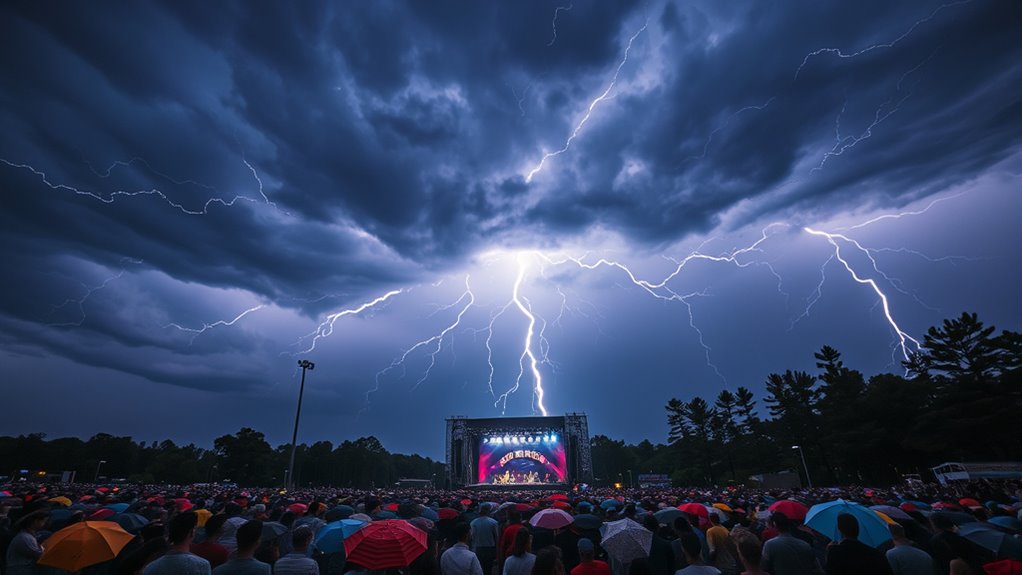

When attending outdoor events, stay alert for signs of an approaching thunderstorm, like dark skies and thunder. Seek shelter immediately in a fully enclosed building or locked vehicle, avoiding small structures or open spaces. Keep everyone calm and organized, and stay away from windows and electrical equipment. Wait at least 30 minutes after the last thunder before resuming activities. Knowing these safety steps can help protect you; discover more essential tips to stay safe outdoors.
Key Takeaways
- Continuously monitor weather updates and seek immediate shelter at the first sign of thunderstorms.
- Identify and designate safe, enclosed shelter locations, avoiding small structures and open spaces.
- Evacuate outdoor areas promptly and calmly, guiding everyone to shelter before lightning strikes.
- Avoid using wired electronics or appliances during storms and stay away from windows and conductive materials.
- Wait at least 30 minutes after the last thunderclap before resuming outdoor activities.
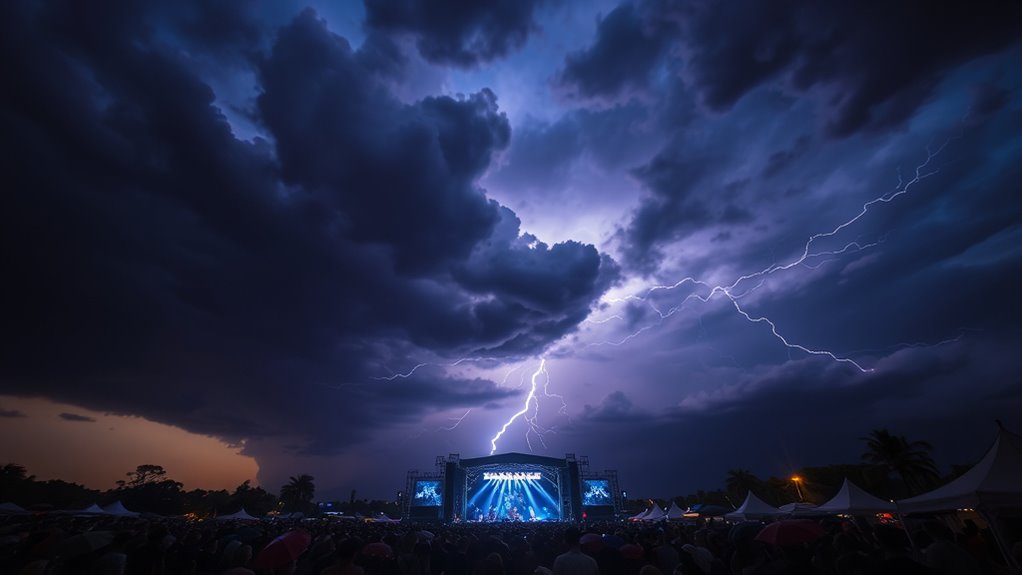
Lightning can strike suddenly and without warning, making outdoor events vulnerable to dangerous weather. As a participant or organizer, it’s vital to know how to stay safe when thunderstorms threaten your gathering. Your first step is practicing thunderstorm preparedness, which means staying informed about weather conditions and having a clear plan in place. Always check the forecast before your event and keep a weather radio or reliable app handy to monitor updates. If a storm is approaching or you notice darkening skies, don’t ignore the signs—act quickly to protect everyone involved.
One of the most important aspects of lightning safety is shelter selection. When you hear thunder or see lightning, you need to seek shelter immediately. The best option is to move to a substantial, enclosed building with wiring and plumbing, which can help ground electrical charges. If no such shelter is available, a fully enclosed vehicle with windows rolled up provides a safer alternative. Avoid small structures like sheds, tents, or pavilions, as they offer little protection from lightning strikes. Staying outdoors in an open space or under a lone tree is extremely dangerous and should be avoided at all costs.
Seek enclosed shelter or vehicle during thunderstorms; avoid small structures, open spaces, and lone trees for safety.
As you shift to shelter, keep everyone calm and organized. Make sure to leave the open areas quickly and avoid rushing through crowds, which can cause accidents. Once inside, stay away from windows, doors, and any conductive materials such as metal fixtures. Don’t use wired electronics or appliances during a storm, since lightning can cause power surges. Instead, wait at least 30 minutes after the last clap of thunder before resuming outdoor activities. This waiting period ensures the storm has moved well away from your location.
Preparation also involves having emergency supplies on hand, such as flashlights, first aid kits, and communication devices. Make sure everyone knows the emergency plan and designated safe spots. If someone is struck by lightning, call emergency services immediately and provide first aid if you’re trained. Remember, lightning injuries can be severe, and quick response can make a difference in outcomes. Additionally, considering the use of portable power banks for camping can help ensure your communication devices stay powered during emergencies.

Midland – WR120B – NOAA Emergency Weather Alert Radio
- NOAA Weather Scan & Alerts: Over 60 weather hazard alerts
- Localized S.A.M.E Programming: Enter specific area codes
- Customizable Notification Settings: Alerts from 25 counties
As an affiliate, we earn on qualifying purchases.
As an affiliate, we earn on qualifying purchases.
Frequently Asked Questions
How Can I Predict Lightning Storms Before Attending an Outdoor Event?
You can predict lightning storms before attending an outdoor event by checking cloud cover analysis and monitoring weather app alerts. Look for dark, towering clouds and sudden changes in sky color, which indicate storm development. Set up notifications on your weather app for real-time alerts, so you get immediate updates about lightning risks. Staying informed helps you make quick decisions, keeping you safe from unexpected storms during your outdoor activities.
What Are the Best Emergency Shelters During a Lightning Storm?
During a lightning storm, your best emergency shelter options are sturdy, lightning-resistant structures like a fully enclosed building or a vehicle with a metal roof. Avoid open shelters, trees, or metal objects. Seek shelter immediately in a place with electrical wiring and plumbing, as these provide safe protection. Stay inside until the storm passes, and keep away from windows and electrical appliances for added safety.
Is It Safe to Stay in a Car During Lightning?
You might think staying in your car during a lightning storm is a safe haven, but it’s actually a myth that offers some comfort. Car safety during lightning relies on the metal frame acting as a Faraday cage, but if you’re touching metal or windows, you risk danger. Instead, seek a sturdy shelter if possible. Rely on accurate information and avoid the misconception that cars are completely lightning-proof.
How Long Should I Wait After Lightning Stops Before Resuming Activities?
You should wait at least 30 minutes after the last lightning strike before resuming activities. This safety wait time guarantees the lightning delay has passed and reduces the risk of being hit by a subsequent strike. Keep monitoring weather updates and stay in a safe shelter until you’re confident the danger has passed. Never rush back outdoors until the official safety clearance confirms it’s safe.
Are There Specific Signs That Indicate Imminent Lightning Strikes?
Lightning strikes like a lightning-fast predator, so watch for signs of imminent danger. You should notice darkening clouds forming rapidly, with ominous, towering cloud formations indicating instability. A sudden temperature drop can also signal an approaching storm. If you see these signs, take immediate shelter—don’t wait or assume it’s far off. Staying alert to cloud formation and temperature changes keeps you safe from lightning’s deadly surprise.

Lichamp LED Camping Lantern, 4 Pack Battery Powered Flashlight for Power Outages, Portable Collapsible Hanging Light Essential for Home, Outdoor, Emergency Lamp Survival Kit Gear for Hurricane, Gray
- Ultra Bright 360° Lighting: 30 LED COB technology with 350 lumens
- Safe and Energy Efficient: Uses 3 AA batteries, low-temperature touch
- Durable Water-Resistant Build: Military-grade plastic, shock-resistant
As an affiliate, we earn on qualifying purchases.
As an affiliate, we earn on qualifying purchases.
Conclusion
Remember, lightning can strike faster than you can blink, turning an outdoor event into a chaotic storm in an instant. Always stay alert, seek shelter at the first sign of danger, and follow safety guidelines. Your quick actions could be the difference between a safe escape and a disaster that strikes like a thunderclap out of nowhere. Stay safe, stay prepared, and don’t underestimate nature’s incredible power — it’s more unpredictable than you think.

Adventure Medical Kits Ultralight/Watertight Medical Kit .5, (2 Person)
- Lightweight and Compact: Fits easily in pack side pocket
- Waterproof DryFlex Bag: Keeps supplies dry in all conditions
- Reusable Waterproof Outer Bag: Water-resistant finish for durability
As an affiliate, we earn on qualifying purchases.
As an affiliate, we earn on qualifying purchases.

DaranEner Portable Power Station, 192Wh LiFePO4 Battery Backup Solar Generator with w/2 300W (Peak 600W) AC Outlets, USB-C PD 60W Fast Charge, Power Bank for Camping, Outdoor, Home,Emergency
- Capacity and Power Output: 192Wh, 300W pure sine wave output
- Battery Type and Longevity: LiFePO4 battery with 3500+ cycles
- Safety Features: Smart BMS for overcharge and overheat protection
As an affiliate, we earn on qualifying purchases.
As an affiliate, we earn on qualifying purchases.