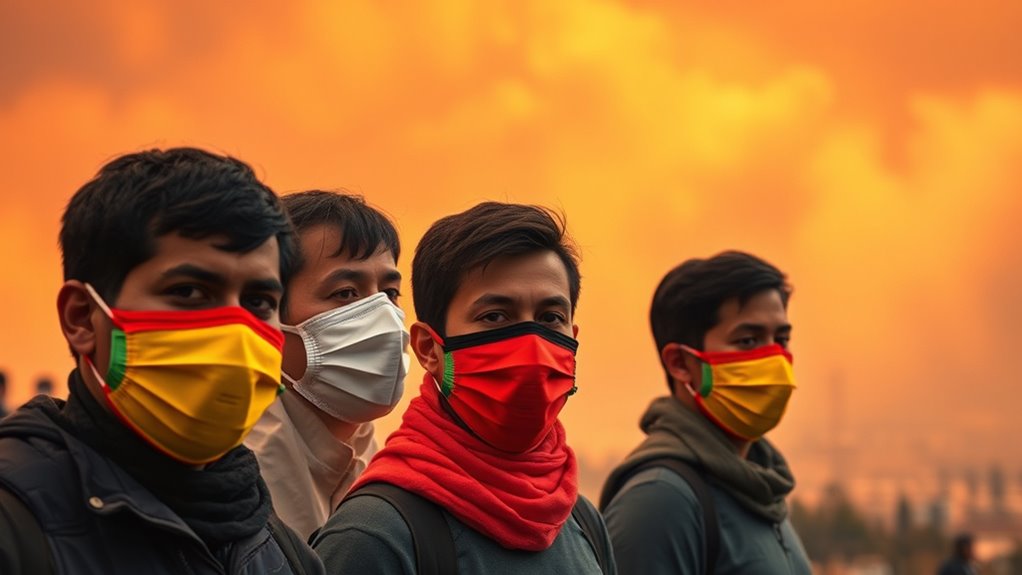

To protect yourself from wildfire smoke, wear a properly fitting N95 mask, which can filter out tiny harmful particles effectively. Stay indoors during high smoke periods, keep windows and doors closed, and use a HEPA filter if possible. Avoid outdoor activities and check real-time air quality reports to decide when it’s safer outside. Taking these steps can greatly reduce your exposure—continue to explore ways to stay safe during wildfire season.

Get movie nights delivered free with Prime
- Fast, free delivery on millions of items
- Prime Video, Amazon Music and more included
- Member-only deals all year
Key Takeaways
- Wear properly fitted N95 respirators to effectively filter out harmful wildfire smoke particles.
- Stay indoors with HEPA filters and keep windows and doors closed during high smoke periods.
- Avoid outdoor activities during peak smoke times and plan outdoor trips for cleaner air periods.
- Monitor local air quality reports and use indoor air quality monitors to assess pollution levels.
- Consult healthcare providers for personalized advice, especially if you have respiratory conditions.
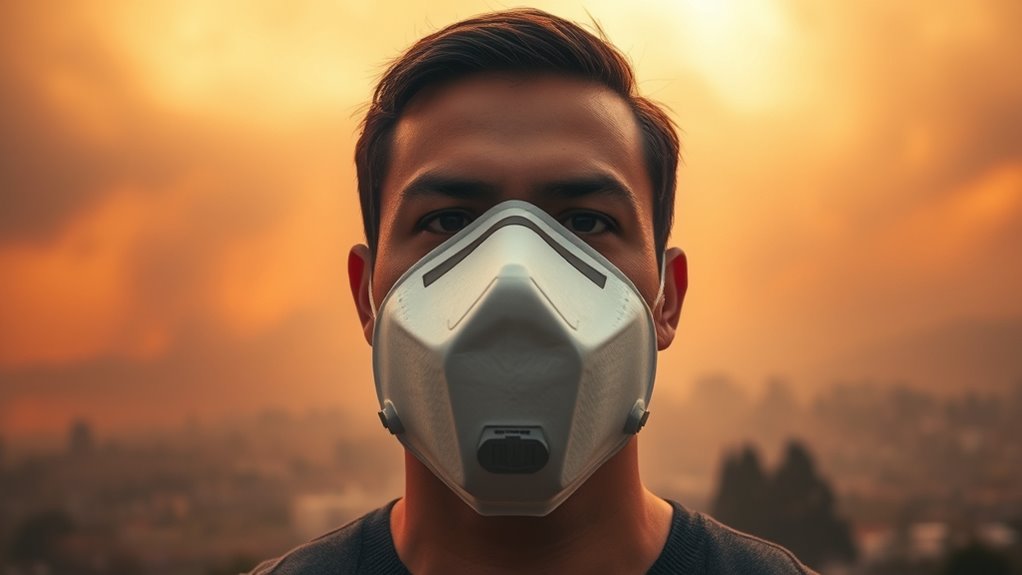
Have you ever wondered how wildfire smoke affects your health and environment? When wildfires rage, the smoke released can travel long distances, impacting air quality far from the flames themselves. This smoke contains tiny particles and harmful chemicals that can penetrate deep into your lungs and bloodstream, making air quality monitoring essential to understanding and managing these risks. As smoke levels rise, it’s crucial to stay informed through local air quality reports. These reports provide real-time data, allowing you to assess how safe it is to be outdoors and whether you need to take precautions to protect your respiratory health.
Your respiratory health becomes vulnerable when exposed to wildfire smoke, especially if you have pre-existing conditions like asthma or COPD. The inhaled particles can cause inflammation, reduce lung function, and trigger symptoms such as coughing, wheezing, and shortness of breath. Even healthy individuals might experience irritation and discomfort after prolonged exposure. That’s why reducing your exposure is vital. Wearing masks designed to filter out fine particles is one of the most effective strategies. N95 respirators, for example, are capable of blocking a significant portion of airborne particles, providing a barrier against the toxic components of wildfire smoke. It’s important to ensure a proper fit for these masks to maximize their effectiveness, especially if you have respiratory issues. Cloth masks, on the other hand, offer minimal protection and shouldn’t be relied upon during wildfire events.
In addition to wearing masks, you can take other steps to reduce your exposure. Staying indoors during high smoke periods is highly recommended, especially if your home has good ventilation and air filtration systems. Using high-efficiency particulate air (HEPA) filters in your home can significantly improve indoor air quality, trapping particles before they reach your respiratory system. Keep windows and doors closed, and avoid activities that increase indoor pollution, such as burning candles or using gas stoves. If you need to go outside, plan your trips during times when air quality is better, often early mornings or after rain, and always monitor local air quality updates. Installing air quality monitors in your home can also help you better understand the pollution levels and take timely action. If you have respiratory conditions, consult your healthcare provider for personalized advice and consider using prescribed inhalers or medications more proactively during smoky periods.
Ultimately, being proactive about air quality monitoring and protective measures can make a big difference in safeguarding your respiratory health during wildfire seasons. Staying informed, wearing appropriate masks, and minimizing outdoor activity during peak smoke times are key strategies to reduce your risk and breathe easier, even when wildfire smoke clouds the sky.
N95 respirator mask for wildfire smoke
As an affiliate, we earn on qualifying purchases.
As an affiliate, we earn on qualifying purchases.
Frequently Asked Questions
Are Cloth Masks Effective Against Wildfire Smoke?
Cloth masks aren’t very effective against wildfire smoke because their filtration capabilities are limited. They do little to block tiny smoke particles, so your exposure remains high. For better wildfire smoke filtration, consider N95 or P100 masks, which are designed to filter out harmful particles effectively. If you must use a cloth mask, choose one with a tight weave and multiple layers, but know it won’t protect you as well as specialized masks.
How Often Should I Replace My Mask Filters?
Ever wonder how often you should replace your mask filters? Generally, for maximum protection, you should change them every 24 to 48 hours of use, depending on the filter’s lifespan and your exposure level. Regular mask maintenance is essential—inspect filters daily for dirt or damage. Don’t forget, using a fresh filter ensures maximum effectiveness against smoke particles, so stay vigilant and replace filters promptly to keep breathing safe.
Can Children or Pets Wear Masks Safely?
Children and pets can wear masks safely if you choose the right type, like masks designed specifically for their size and needs. For child safety, guarantee the mask fits snugly without restricting breathing and is comfortable enough to wear for short periods. For pet protection, use specially designed pet masks, and always supervise them. Consult your vet or pediatrician to confirm the best options and guarantee safe, effective protection.
Do Homemade Masks Protect Against Smoke Inhalation?
Your homemade masks, or DIY masks, offer some protection but aren’t a miracle shield against smoke inhalation. They can help improve mask filtration compared to no mask at all, but their effectiveness varies widely depending on materials and fit. Use multiple layers of tightly woven fabric for better filtration, but remember, they can’t block all harmful particles. For full protection, certified masks like N95s are your best bet.
What Are the Long-Term Health Effects of Smoke Exposure?
You might face serious long-term health risks from wildfire smoke exposure, including respiratory issues, heart problems, and chronic conditions like asthma or COPD. Even short-term exposure can lead to lasting effects if you’re repeatedly exposed. Protect yourself by limiting outdoor activities during smoky days, wearing masks, and seeking cleaner air environments. Staying informed and taking precautions helps reduce your chances of developing these chronic health issues over time.
As an affiliate, we earn on qualifying purchases.
Conclusion
When wildfire smoke blankets your world, don’t let it suffocate your health. Wear masks and stay indoors whenever possible—think of them as your first line of defense against a toxic cloud that can spread faster than wildfire itself. Limit your exposure, breathe clean air, and protect yourself from this invisible threat. Remember, your health is the fragile flame that keeps your life shining bright—don’t let smoke snuff it out. Stay safe and breathe easy.
As an affiliate, we earn on qualifying purchases.
As an affiliate, we earn on qualifying purchases.
Halloween Picks
halloween
As an affiliate, we earn on qualifying purchases.