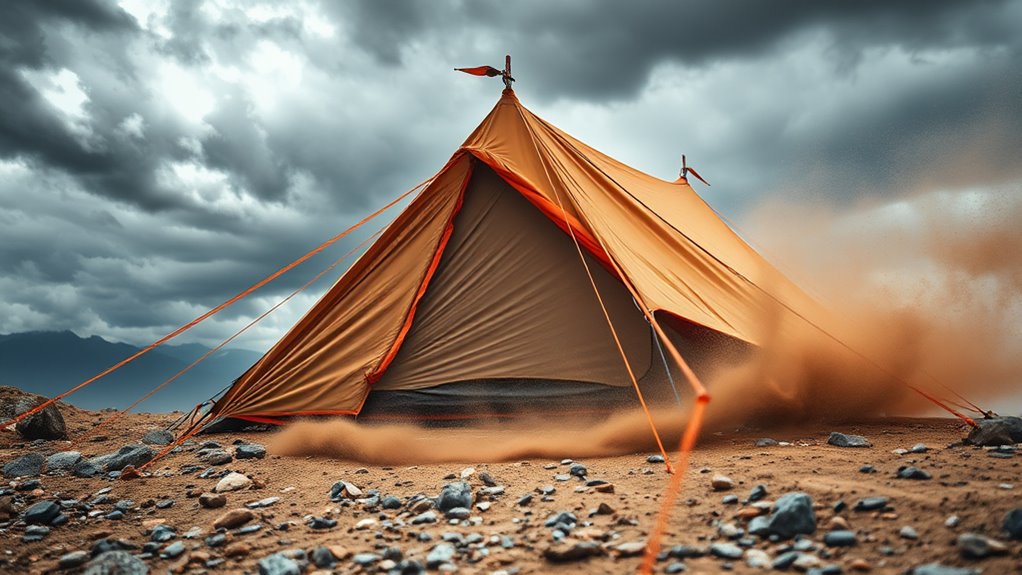
To make your tent withstand gusts, you should use the right anchors for your terrain—stakes in soft soil, rock anchors on rocky ground, or snow anchors in winter conditions. Drive them deep at a 45-degree angle away from the tent and add tensioned guy lines to distribute wind forces evenly. Proper installation and extra support greatly improve stability, helping your tent resist gusts. Keep your setup secure, and you’ll be well-prepared for strong winds; learn more about securing your tent effectively.
Key Takeaways
- Use heavy-duty metal or spiral stakes driven deep into the ground at a 45-degree angle away from the tent.
- Select anchors appropriate for terrain, like snow anchors for snow or rock anchors for rocky ground.
- Attach and tension guy lines properly to distribute wind forces evenly across multiple anchor points.
- Ensure all anchors are securely embedded and properly installed to prevent pulling out during gusts.
- Combine sturdy anchors with well-tensioned guy lines to create a stable, wind-resistant tent structure.

Have you ever struggled to keep your tent steady in windy conditions? Wind resistance plays a huge role in how well your tent holds up against gusts. When the breeze picks up, your tent can become a flapping nuisance or, worse, start to lift off the ground. The key to avoiding these problems lies in choosing the right anchor types and understanding how they work to improve wind resistance. Different anchors serve different purposes, so knowing which to use can make all the difference during a storm.
Choosing the right tent anchors is crucial for wind resistance and stability.
First, consider the types of anchors available. Stakes are the most common, but not all stakes are created equal. For soft soil or sand, heavy-duty metal stakes or specialized spiral stakes work better because they grip the ground more securely. In rocky terrain, you might opt for rock anchors or tie-downs that allow you to secure your tent to immovable objects. For snow or loose dirt, snow anchors or deadmen can provide much-needed stability. The goal is to select anchors designed to maximize holding power in the specific terrain you’re camping in, which directly impacts wind resistance.
When setting up your tent, pay attention to how you drive in these anchors. Push them deep into the ground at a 45-degree angle away from the tent, making sure they’re solidly embedded. This positioning increases their holding power and helps your tent resist gusts. Using the right anchor types in conjunction with proper staking technique creates a tight, stable setup that can withstand wind pressure better. Remember, the more secure your anchors are, the less your tent will move or lift during gusts.
Another tip is to use additional guy lines linked to your anchors. Attach these lines at strategic points around the tent and tension them properly. This distributes wind forces more evenly and reduces strain on individual stakes. When you tighten the guy lines, you’re effectively creating a web of support that enhances wind resistance overall. The combination of sturdy anchor types and well-placed guy lines can turn a flimsy tent into a resilient shelter, even in tough conditions.
Ultimately, your success in surviving gusts depends on selecting the right anchor types and deploying them effectively. The stronger and more secure your anchors, the better your tent will stand up to the wind. Properly installing anchors in the ground and understanding how they work together can make all the difference between a comfortable night’s sleep and battling a tent that’s been blown away. With careful planning and proper setup, you can enjoy your outdoor adventure without the worry of your tent giving in to the elements. Remember, investing in quality anchors and understanding how they work together can make all the difference between a comfortable night’s sleep and battling a tent that’s been blown away.
Frequently Asked Questions
Which Tent Materials Withstand the Strongest Winds?
You should choose tents made from ripstop nylon or polyester with reinforced seams. These materials have excellent material durability and wind resistance, making them ideal for strong gusts. Look for tents with sturdy poles like aluminum or fiberglass, and confirm they have a robust frame to withstand high winds. Proper anchoring and guy lines also boost wind resistance, keeping you safe even during the fiercest gusts.
How Do I Anchor a Tent on Rocky Ground?
Like a steadfast anchor in a storm, you secure your tent on rocky terrain by selecting strong, durable anchor points. Use heavy-duty stakes or specialized rock anchors, hammering them deep into crevices or embedding them into cracks. If possible, tie guy lines to large, immovable rocks, ensuring tension stays firm. This approach transforms your tent into a resilient ship, ready to withstand gusts and rough winds with unwavering stability.
Can I Use Household Items as Tent Anchors?
Yes, you can use household item alternatives for tent anchors, but DIY anchor solutions work best for gust-resistant stability. Look around your home for heavy objects like buckets filled with water or sand, or use sturdy items like bricks, stones, or large jars. Secure your tent stakes to these items with strong cords or ropes, ensuring they hold tight against gusts. Just make sure whatever you choose is heavy enough and stable.
What Are the Signs of an Insecure Tent Setup?
Signs of an insecure tent setup include sagging fabric, slack stakes, and shifting sides, signaling poor stability. When the tent fabric feels flimsy or stretches easily, it hints at weak durability. If stakes seem loose or easily pull out, or if tension adjustments don’t tighten the fabric, your shelter isn’t secure. You’ll notice movement in wind or rain, urging you to reinforce stakes and tighten tension for safety and sturdiness.
How Often Should I Check and Adjust Tent Stakes?
You should check and adjust your tent stakes regularly, especially after any weather changes. Conduct stake maintenance every few hours during windy conditions or storms to make sure your tent stays secure. Keep an eye on the weather monitoring updates, and tighten stakes if you notice any loosening or shifting. Frequent inspections help prevent your tent from collapsing or blowing away, providing safety and peace of mind during your outdoor adventure.
Conclusion
Think of your tent as a sturdy ship steering stormy seas. With strong anchors, you keep it grounded amid fierce gusts, just like a captain steadying their vessel. When you choose the right stakes and secure them well, you’re the sailor guiding your shelter safely through the tempest. Remember, a well-anchored tent is your reliable vessel—ready to weather any storm and bring you back safely to calm shores.