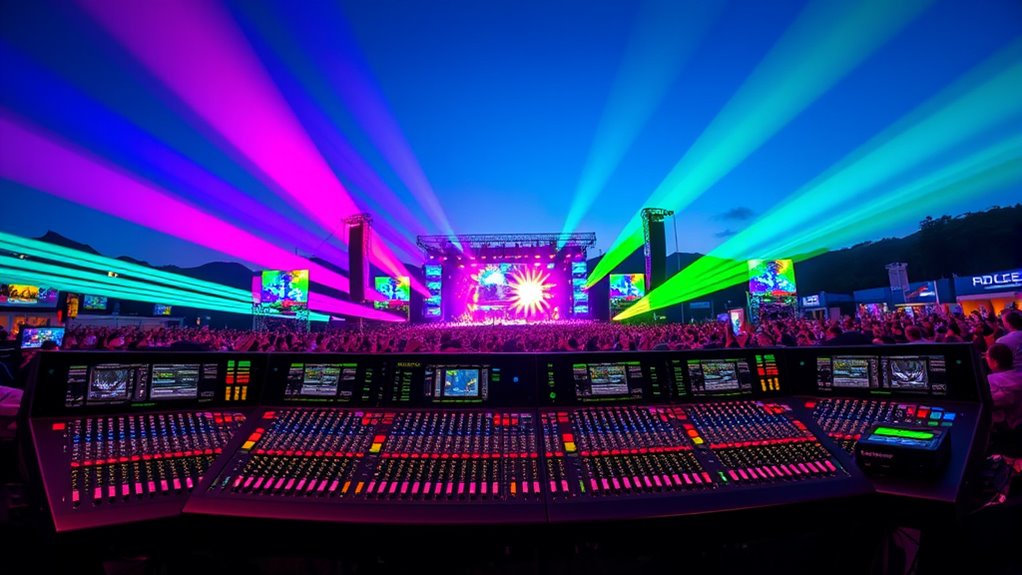
If you’re looking for the best 32-channel digital mixers for festival stages in 2025, I’ve found top options like the Behringer X32, Yamaha TF5, Mackie DL32S, and Yamaha MGP32X. These mixers offer excellent sound quality, versatile connectivity, and user-friendly controls suited for large-scale events. They include onboard effects, expandability, and rugged designs. Keep exploring further to discover which model aligns perfectly with your needs and take your festival setup to the next level.
Key Takeaways
- Prioritize mixers with at least 32 channels, robust onboard effects, and high-quality preamps for clear live sound at festivals.
- Ensure compatibility with multiple input types, expansion options, and digital networking for scalable, future-proof setups.
- Choose models offering durable construction, portability, and weather resistance suitable for demanding outdoor festival environments.
- Look for intuitive control interfaces, scene recall, and remote device integration to streamline complex live performances.
- Consider connectivity features like USB, AES50, Dante, and additional I/O options for versatile routing and expanded system integration.
Behringer X32 Digital Mixer
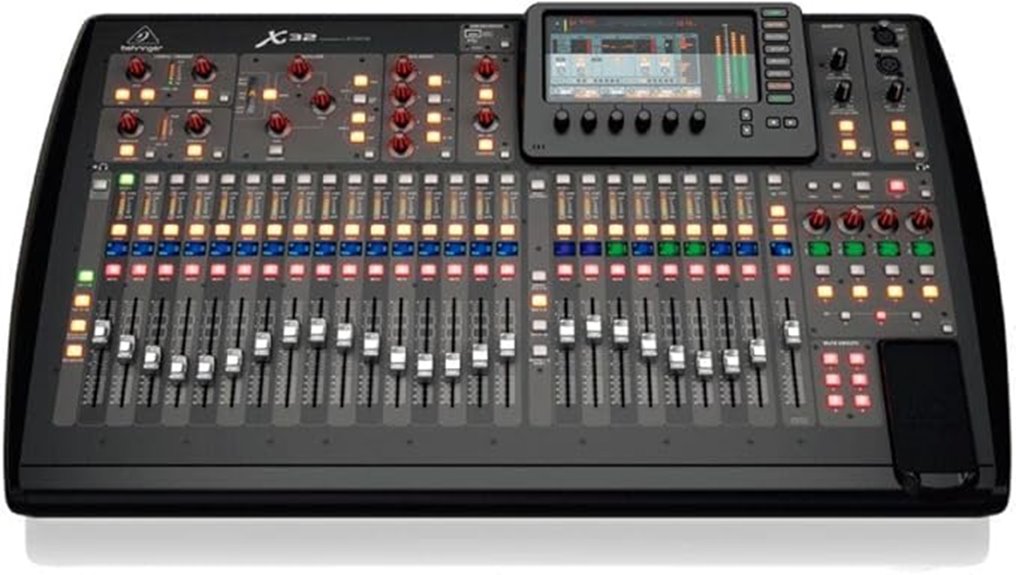
The Behringer X32 Digital Mixer stands out for its combination of advanced engineering and affordability, making it an excellent choice for festival stages where reliable, high-quality sound is essential. With 40 input channels and 25 buses, it offers ample flexibility for complex live setups. Designed with intuitive controls like motorized faders, high-contrast TFT displays, and customizable Scribble Strips, it simplifies operation even in hectic environments. Its onboard effects, including authentic emulations of classic hardware, deliver professional audio quality. Plus, its extensive connectivity options and remote control capabilities through Acoustic Integration make it versatile and scalable, perfect for both live and installed sound applications.
Best For: live sound engineers and venue operators seeking a reliable, feature-rich digital mixer that combines advanced technology with affordability for both touring and installed applications.
Pros:
- Intuitive interface with motorized faders, high-contrast TFT displays, and customizable Scribble Strips for quick, easy operation.
- Extensive connectivity options, including multiple expansion card slots supporting USB, ADAT, MADI, Dante, ULTRANET, and AES50 protocols.
- Authentic onboard effects with True Physical Modeling emulations that deliver professional-grade sound quality.
Cons:
- The large number of features and settings may present a learning curve for beginners or less experienced users.
- Physical size and weight could be cumbersome for portable setups or small venues.
- Some users report that firmware updates and software integration can occasionally be complex or require additional time to master.
Behringer S32 32-Channel Stage Box
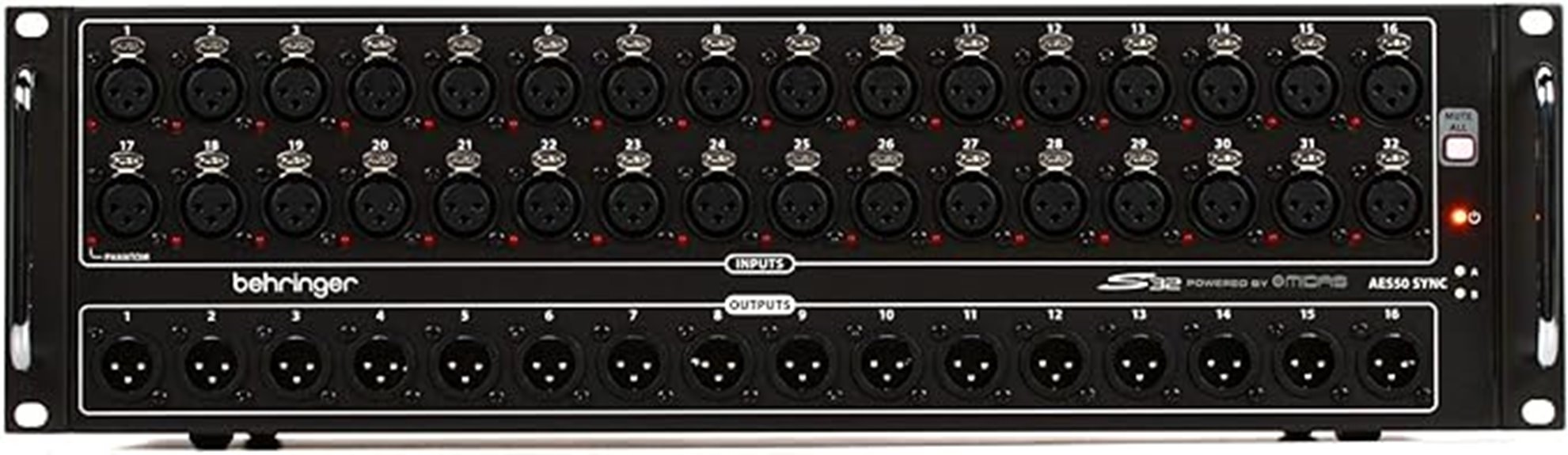
If you’re seeking a reliable and high-quality digital stage box for live festival setups, the Behringer S32 stands out with its Midas-designed microphone preamps. It offers 32 channels of professional-grade sound, supporting advanced AES50 networking with Klark Teknik SuperMac technology for fast, stable digital audio transfer over Ethernet. The S32 also integrates seamlessly with Ultranet for personal monitor mixing via Powerplay P16 systems. Its compact size (14 x 16 x 11 inches) and lightweight design make it easy to transport, while customer ratings of 4.7 out of 5 reflect high satisfaction. It’s a durable, versatile choice for professional live sound applications.
Best For: live sound engineers and professional music performers seeking a reliable, high-quality digital stage box with extensive channel support and advanced networking capabilities.
Pros:
- Features 32 Midas-designed high-quality microphone preamps for professional-grade sound.
- Supports AES50 networking with Klark Teknik SuperMac technology for fast, stable digital audio transfer.
- Compact and lightweight design facilitates easy transportation and setup for live events.
Cons:
- May be more expensive than analog stage boxes, potentially limiting budget-conscious users.
- Requires familiarity with digital networking protocols like AES50 for optimal setup.
- Limited to digital environments; not compatible with analog-only audio systems.
Mackie DL32S 32-Channel Digital Rack Mixer Bundle

For sound engineers seeking a versatile and powerful digital mixer, the Mackie DL32S stands out with its integrated 32-in/32-out USB 2.0 audio interface, making it ideal for seamless recording and playback during festival performances. It offers 32 stereo-linkable input channels, 10 fully assignable XLR outputs, and 15 output buses, providing extensive routing options. Equipped with 32 Onyx+ mic preamps, it guarantees professional sound quality. The mixer supports up to 20 iPads simultaneously, enhancing device integration. The bundle includes high-quality Tascam headphones, EMB XLR cables, and a magnet phone holder, making it a complete package for live sound setups.
Best For: professional sound engineers and live event technicians seeking a versatile, high-capacity digital mixer with comprehensive I/O and device integration.
Pros:
- Extensive I/O options with 32 stereo-linkable input channels and multiple output buses for flexible routing
- High-quality sound with 32 recallable Onyx+ mic preamps suitable for professional use
- Supports up to 20 iPads simultaneously, ideal for multi-engineer setups and seamless device integration
Cons:
- Large and potentially heavy, requiring dedicated space and transport considerations
- Advanced features may have a steep learning curve for beginners
- Limited to USB 2.0 connectivity, which may restrict data transfer speeds compared to newer standards
Yamaha MGP32X Mixing Console
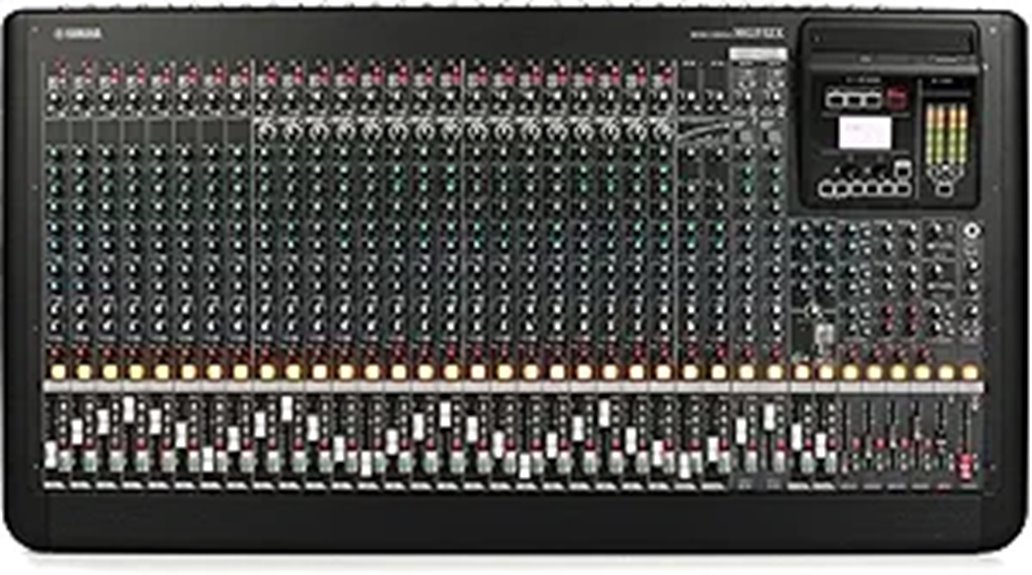
With its combination of analog warmth and digital flexibility, the Yamaha MGP32X Mixing Console stands out as an ideal choice for sound engineers who prioritize intuitive control without sacrificing advanced features. It offers 24 mic inputs with phantom power and high-pass filters, plus 32 line inputs—24 mono and 4 stereo. The console includes 6 AUX sends, 2 FX sends, and multiple buses for versatile routing. Its discrete Class-A D-PRE preamps and Yamaha’s X-pressive EQ deliver rich, musical tones. Designed to blend analog heritage with digital innovation, the MGP32X provides simple, tactile control over sophisticated DSP functions, making it perfect for live festival settings.
Best For: sound engineers and live performers seeking an intuitive mixing console that combines analog warmth with advanced digital features for versatile live sound reinforcement.
Pros:
- Combines analog sound quality with modern digital flexibility for a rich, musical output
- Discrete Class-A D-PRE preamps and Yamaha’s X-pressive EQ enhance sound shaping and tonal richness
- Simple, tactile control over complex DSP functions suitable for live festival and stage settings
Cons:
- Weighs nearly 59 pounds, which may be cumbersome for portable setups
- Limited to corded power, lacking onboard battery options for remote locations
- Not a compact or lightweight unit, which could be a consideration for mobile or tight-space environments
Yamaha TF5 32-Channel Digital Mixing Console
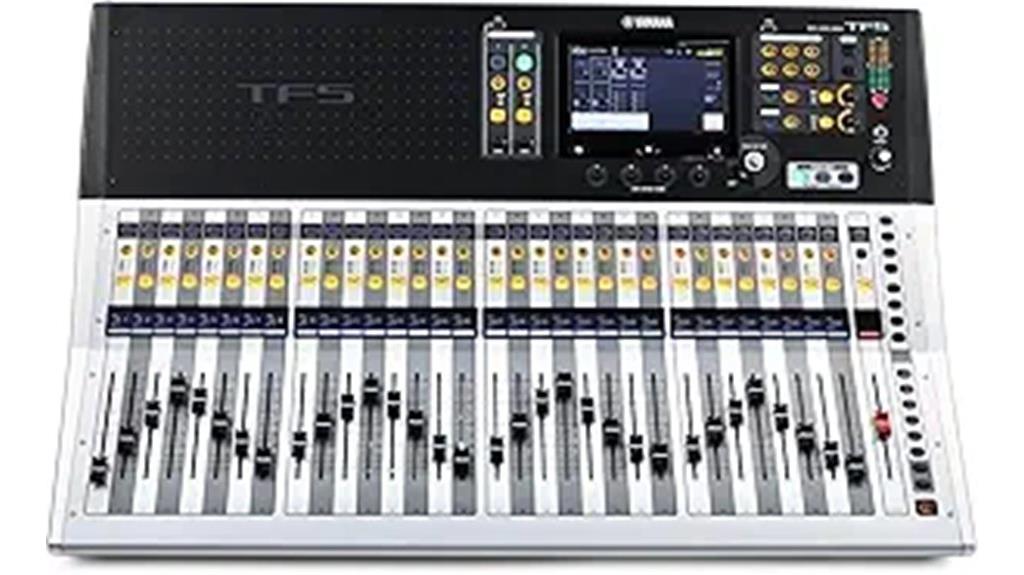
The Yamaha TF5 32-Channel Digital Mixing Console stands out for its high input capacity and versatile bus options, making it an excellent choice for large festival stages. With 33 motorized faders, 48 input channels, and extensive bus configurations including Aux, Stereo, and Sub buses, it offers exceptional flexibility. The console features 8 DCA groups and 32 combo mic/line inputs, supporting complex setups. Weighing around 44 pounds, it’s portable yet robust. Although its interface differs from previous Yamaha models, it’s designed to support creative mixing. Overall, the TF5 provides the power and adaptability needed for demanding live sound environments.
Best For: large live sound applications and festival stages requiring extensive input options and flexible bus configurations.
Pros:
- High input capacity with 48 channels and 33 motorized faders for complex setups
- Extensive bus options including Aux, Stereo, and Sub groups for versatile routing
- Portable design weighing around 44 pounds, suitable for mobility in large venues
Cons:
- Interface differs from traditional Yamaha consoles, requiring a learning curve
- Slightly heavier than smaller mixers, which may impact portability for some users
- Limited to professional users familiar with advanced digital mixing features
Peavey Aureus 28-channel Digital Mixer
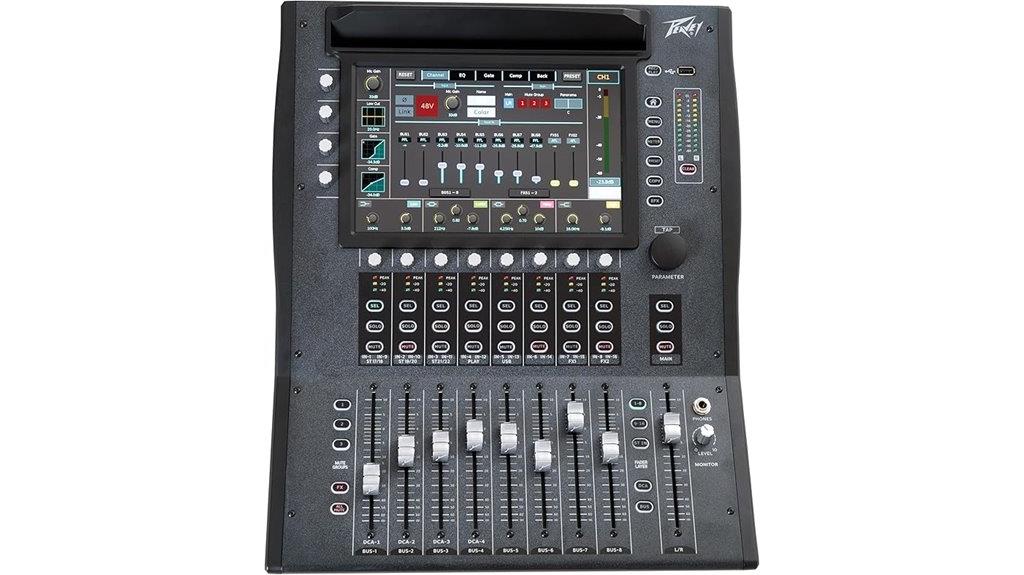
The Peavey Aureus 28-channel Digital Mixer stands out as an excellent choice for live performances thanks to its seamless Bluetooth connectivity. Its compact size—measuring 23 by 19 by 9 inches—and lightweight design at just under 23 pounds make it highly portable on stage. With 28 channels, it’s perfect for handling complex setups, and its user-friendly interface ensures quick adjustments. Rated a perfect 5 stars based on customer reviews, it’s trusted by professionals. Whether for small gigs or larger events, the Aureus provides reliable performance, backed by a solid warranty. It’s a versatile, modern mixer that fits well into any festival stage setup.
Best For: musicians, sound engineers, and event organizers seeking a portable, high-capacity digital mixer for live performances and stage setups.
Pros:
- Seamless Bluetooth connectivity for easy wireless audio control
- Compact, lightweight design for effortless transport and setup
- 28 channels accommodate complex sound configurations and multiple microphones or instruments
Cons:
- Limited to corded power source, reducing flexibility in some locations
- May require technical knowledge to maximize advanced features
- Only available in a single color and style, limiting aesthetic customization
Mackie ProFX30v3 30-channel Mixer with USB and Effects
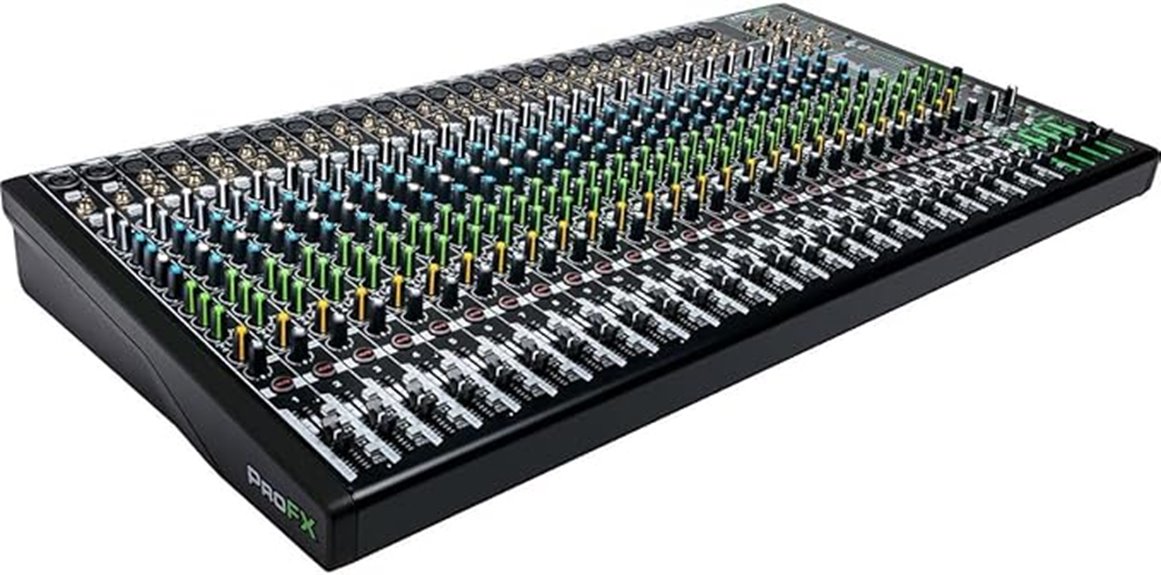
If you’re looking for a versatile mixer that combines professional sound quality with user-friendly features, the Mackie ProFX30v3 stands out as an excellent choice for festival stages in 2025. It offers 30 channels, Onyx mic preamps with 60dB of headroom, and 24 built-in effects via the gig FX engine, ideal for dynamic live sound. The USB interface records in 24-bit/192kHz quality, supporting zero-latency monitoring and seamless streaming. Its durable steel build, multiple connectivity options, and compact design make it perfect for versatile setups. While some users note minor issues like effects distortion and control layout, overall, it provides reliable performance and great value for live sound and recording needs.
Best For: live performers, podcasters, and content creators seeking a versatile, high-quality audio mixer with effects and recording capabilities.
Pros:
- Excellent sound quality with Onyx preamps and 24-bit/192kHz recording
- Built-in 24 effects and USB connectivity for versatile live and recording use
- Durable steel construction with multiple input/output options for flexible setups
Cons:
- Ineffective compressor and subtle effects, limiting dynamic control
- Confusing control layout, especially for USB blend on channels 9/10
- Limited stereo channels and some non-functional meters impact usability in complex setups
MUSYSIC 12 Channel Digital Audio Mixer
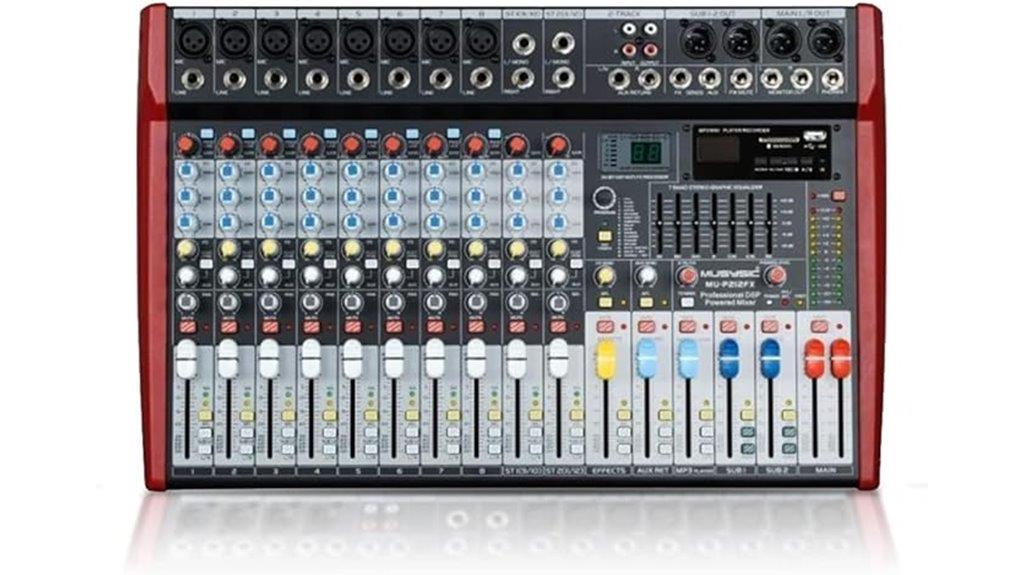
Designed with large-scale live performances in mind, the MUSYSIC 12 Channel Digital Audio Mixer offers exceptional power and flexibility. It features 12 mono channels, 2 stereo balanced inputs, a USB/SD slot for MP3/WMA playback, and multiple speaker outputs, making it versatile for diverse setups. Its built-in amplifier delivers up to 2×4000 W PMPO, ensuring robust sound for large venues. Equipped with a high-quality 24-bit DSP effects processor, +48V phantom power, and a 3-band EQ on each channel, it provides precise control and clear audio. Additional features like a graphic equalizer and various connectivity options make it a reliable choice for professional live sound applications.
Best For: Live sound engineers and event organizers seeking a powerful, versatile digital mixer for large-scale performances and professional sound reinforcement.
Pros:
- High-powered built-in amplifier with up to 2×4000 W PMPO for large venues.
- Extensive input options including 12 mono channels and stereo inputs for diverse audio sources.
- Advanced audio processing features like 24-bit DSP effects and 3-band EQ on each channel for precise sound control.
Cons:
- The large size and weight may require additional setup space and transport considerations.
- Complex controls might have a steep learning curve for beginners.
- Limited information on Bluetooth or wireless connectivity options.
Pyle 800W Bluetooth Powered Mixer with MP3/USB/SD
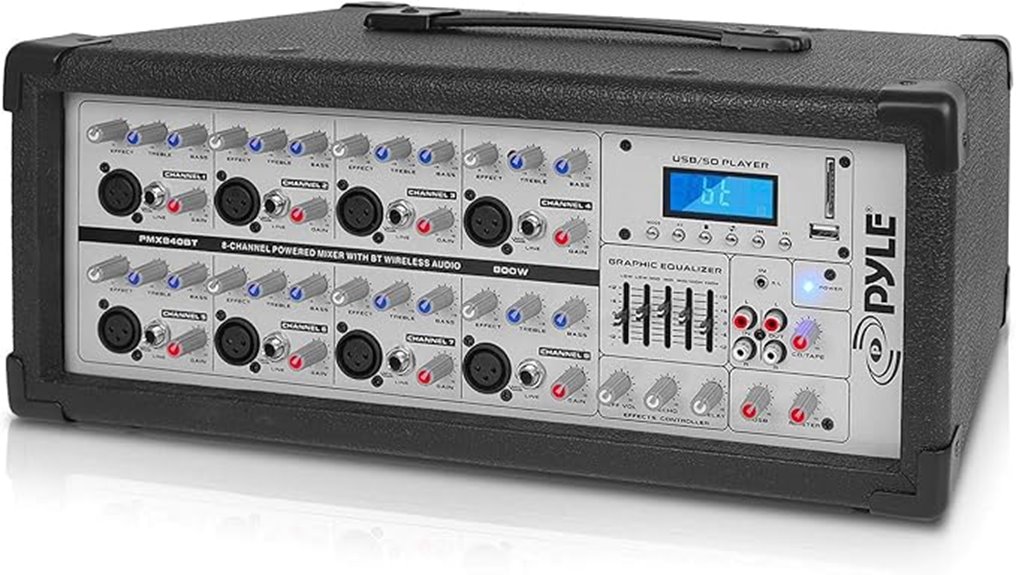
For festival stages where versatile connectivity and powerful sound are essential, the Pyle 800W Bluetooth Powered Mixer stands out with its robust 800W output and extensive media options. Its 8-channel system offers clear control over multiple sources, including professional microphone inputs with low impedance. The mixer features built-in EQ, master effects like reverb and echo, and a digital LCD display for easy operation. Wireless Bluetooth streaming extends convenience, while USB and SD slots support MP3 playback from external drives. Its durable design, cooling fan, and portable handle make it ideal for live performances, providing high-quality sound and flexible media integration in a compact package.
Best For: live performers and event organizers seeking a powerful, versatile mixer with extensive media options and reliable connectivity for professional stage applications.
Pros:
- 800W high-powered output ensures clear, loud sound suitable for large venues and outdoor events.
- Multiple input options including Bluetooth, USB, SD, and professional microphone inputs offer great flexibility for various media sources.
- Built-in effects, equalizer controls, and digital LCD display allow precise sound customization and easy operation.
Cons:
- The size and weight may be less portable for very frequent on-the-go setups.
- The complexity of features might require a learning curve for beginners.
- Limited Bluetooth range may affect use in very large or obstructed outdoor settings.
GX12 Professional Sound Mixer Console (GX12)
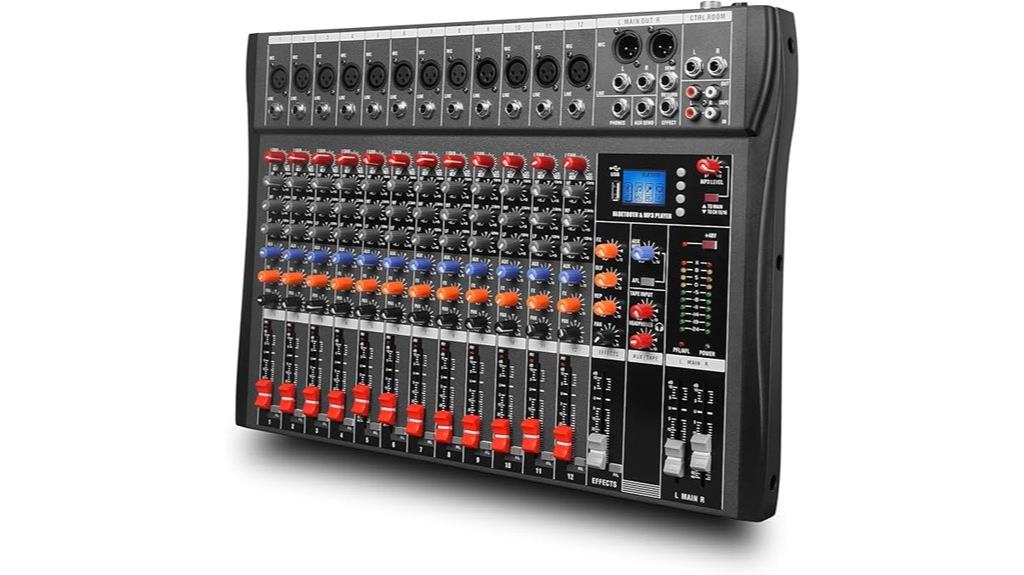
The GX12 Professional Sound Mixer Console stands out for its all-inclusive 12-channel support, making it ideal for live performances, conferences, and recording sessions. It offers inputs for XLR microphones, instruments, Bluetooth, and RCA connections, simplifying setup and reducing clutter. With studio-quality sound and a built-in 48V phantom power, it’s perfect for professional recordings and live gigs. The wireless Bluetooth feature allows quick pairing with phones or tablets, and RCA outputs support outdoor events. Its durable aerospace-class metal shell and precise controls assure stability and easy tuning, even for beginners. Overall, the GX12 combines versatility, reliability, and high-quality audio in one compact package.
Best For: musicians, event organizers, and audio professionals seeking a versatile, high-quality mixer for live performances, recording, and conferences.
Pros:
- Supports 12 channels including XLR, instruments, Bluetooth, and RCA inputs for flexible connectivity
- Built-in 48V phantom power and studio-quality sound for professional audio recording and live gigs
- Durable aerospace-class metal shell with user-friendly controls and LED level displays for easy operation
Cons:
- May be more expensive than basic mixers due to its advanced features and build quality
- Wireless Bluetooth connection might have occasional pairing or stability issues in certain environments
- No built-in effects or digital processing, limiting some sound customization options
Factors to Consider When Choosing 32-Channel Digital Mixers for Festival Stages

When selecting a 32-channel digital mixer for a festival stage, I focus on key factors like channel compatibility and sound quality features. Connectivity options and ease of use also matter, especially in fast-paced environments. Finally, I consider processing capabilities to guarantee the mixer can handle complex setups seamlessly.
Channel Count Compatibility
Choosing a 32-channel digital mixer requires ensuring its channel count aligns with your festival’s needs; otherwise, you risk running out of inputs or needing costly upgrades. Make sure the mixer’s maximum channels match or exceed the number of performers and instruments on stage. Verify it supports all input types you require, like microphones, instruments, and playback devices, within its capacity. Compatibility of input connectors and preamps with your audio sources is essential for smooth integration. It’s also wise to check if the mixer offers expandable channels or additional auxiliary inputs, especially if your festival’s sound setup might grow. Finally, consider the mixer’s channel routing and subgrouping features to manage multiple sound sources efficiently during live performances, ensuring seamless control and flexibility.
Sound Quality Features
High-quality sound in a 32-channel digital mixer hinges on several critical features that directly impact audio clarity and fidelity. Premium preamps and high-resolution analog-to-digital converters are essential for capturing detailed, natural sound without distortion. Effective signal processing algorithms ensure clean, accurate audio output. Advanced onboard effects and precise equalization tools allow me to shape tones and enhance clarity effortlessly. Low total harmonic distortion (THD) and high dynamic range deliver transparent, natural sound suited for large festival environments. Additionally, well-designed input gain staging and noise suppression features minimize hiss and electrical interference, preserving pristine audio quality. Emulating analog hardware characteristics through modeling effects adds warmth and authenticity, making live performances sound richer and more engaging.
Connectivity Options
The connectivity options of a 32-channel digital mixer play a crucial role in ensuring smooth integration with stage equipment and digital workflows. I look for mixers that support multiple digital and analog input/output connections like AES50, USB, MADI, Dante, or ADAT, so I can adapt to different setups easily. Compatibility with wireless interfaces such as Bluetooth or Wi-Fi is also essential for remote control and mobile device integration, streamlining operation during performances. Multiple auxiliary sends and returns give me flexibility for monitor mixes and external effects processing. High-speed, low-latency networking protocols are indispensable to keep audio synchronized across devices. Finally, expandability options like additional input cards or network modules help future-proof the system as stage requirements evolve.
Ease of Use
Since festival stages often demand quick adjustments and seamless operation, an intuitive interface is essential for digital mixers. Clear labels on controls and menus make it easier to learn and reduce mistakes during live performances. A color-coded or programmable Scribble Strip system helps me quickly identify channels and functions, saving valuable time. Touchscreen displays or tactile encoders streamline navigation and adjustments, minimizing errors and keeping focus on the performance. Features like Sends on Fader and scene recall allow rapid access to common settings, boosting workflow efficiency. Additionally, a well-designed physical layout with logically grouped controls enables faster, more confident tweaks during dynamic festival shows. Overall, ease of use directly impacts my ability to deliver a smooth, professional mix under pressure.
Processing Capabilities
Processing capabilities play a key role in ensuring a digital mixer can handle the demands of a lively festival stage. High-quality DSP is essential for managing multiple audio signals and effects simultaneously without latency or sound degradation. The onboard effects and processing modules determine how precisely you can shape sound during live performances, making clarity crucial. Advanced features like real-time analyzers, feedback suppression, and scene recall give you better control and flexibility on stage. The processing engine’s capacity influences how well the mixer handles complex input routing and signal flows, ensuring audio remains pristine under demanding conditions. In short, robust processing capabilities allow your mixer to deliver consistent, high-quality sound, even during intense, multi-source performances.
Expandability Potential
When selecting a 32-channel digital mixer for festival stages, considering its expandability potential is crucial because it directly impacts how well your system can grow with your needs. A highly expandable mixer supports additional I/O modules or expansion cards like Dante, MADI, or AES50, which enable seamless integration with stage boxes, monitors, and external effects. The number of buses and auxiliary sends can often be increased through expansion, allowing for more complex routing essential in large festival setups. Compatibility with third-party or proprietary hardware ensures future-proofing as your technical requirements evolve. Additionally, firmware and software architectures that support updates and hardware integration make upgrading straightforward, preventing the need for complete replacements and ensuring your mixer remains adaptable over time.
Durability and Portability
Selecting a 32-channel digital mixer for festival stages means prioritizing durability and portability to keep up with demanding environments. I recommend choosing a mixer with a rugged, aerospace-grade metal shell or reinforced construction to handle transport and outdoor conditions. A built-in handle or trolley system makes it easier to lift and move the mixer on busy stages. Lightweight models, ideally under 60 pounds, enable quick setup and breakdown without sacrificing durability. Secure, lockable rack ears or mounting options ensure safe installation in mobile racks or flight cases. Additionally, weather-resistant or sealed controls protect against dust, moisture, and spills, which are common outdoors. Focusing on these features helps ensure your mixer withstands the rigors of festival environments while remaining easy to transport and handle.
Frequently Asked Questions
Which Digital Mixer Offers the Best Value for Large Festival Stages?
I believe the Behringer X32 offers the best value for large festival stages. It combines extensive features, like 32 channels, built-in effects, and robust routing options, with an affordable price point. Its user-friendly interface and reliable performance make it a top choice for live sound engineers. If you’re looking for a versatile, cost-effective digital mixer that can handle large-scale events, the X32 truly stands out.
How Do Digital Mixers Handle Multiple Microphone Inputs Simultaneously?
Handling multiple microphone inputs is like conducting a symphony; digital mixers excel at this by combining advanced preamps and onboard processing. I find they automatically adjust gain levels, reduce noise, and apply effects seamlessly, ensuring each mic sounds clear and balanced. With multiple channels, I can tweak individual inputs in real time, making complex setups manageable. This efficiency lets me focus on the performance, confident that each mic gets the attention it deserves.
What Are the Maintenance Requirements for High-Channel Digital Mixers?
I keep my high-channel digital mixers in top shape by regularly updating their firmware and software. I also clean the input and output ports gently with compressed air and a soft brush to prevent dust buildup. I check and calibrate the internal components periodically, especially before big events. Proper storage in a dry, dust-free environment helps extend their lifespan, ensuring reliable performance when I need it most.
Can Digital Mixers Be Integrated With Existing Stage Lighting Systems?
Yes, digital mixers can be integrated with existing stage lighting systems. I’ve done it myself, and it’s pretty straightforward with the right setup. Many mixers support DMX or MIDI protocols, allowing control of lighting via the mixer’s interface or connected software. Just make certain your lighting system is compatible, and you might need a DMX interface or hub for seamless communication, making your stage setup more synchronized and efficient.
What Are the Common Troubleshooting Steps for Digital Mixer Connectivity Issues?
When facing digital mixer connectivity issues, I start by checking all cables and connections—like inspecting a road for potholes before a trip. I make sure firmware is up-to-date, reset the mixer, and verify network settings. If problems persist, I restart devices or switch cables. These basic steps usually clear the roadblocks, helping me get back on track quickly and keep the show running smoothly.
Conclusion
Choosing the right 32-channel digital mixer can feel like steering a labyrinth, but with the right info, you’ll find your way. Whether you prefer the classic reliability of Behringer or the modern versatility of Yamaha, there’s a perfect fit for your festival stage. Remember, as the great Leonardo da Vinci might have said if he were a sound engineer—”Simplicity is the ultimate sophistication.” Trust your instincts, and you’ll be rocking like it’s 1492!