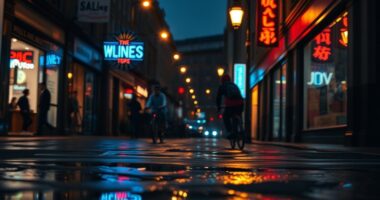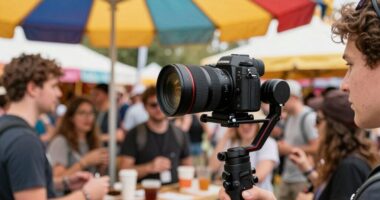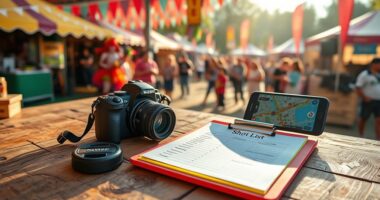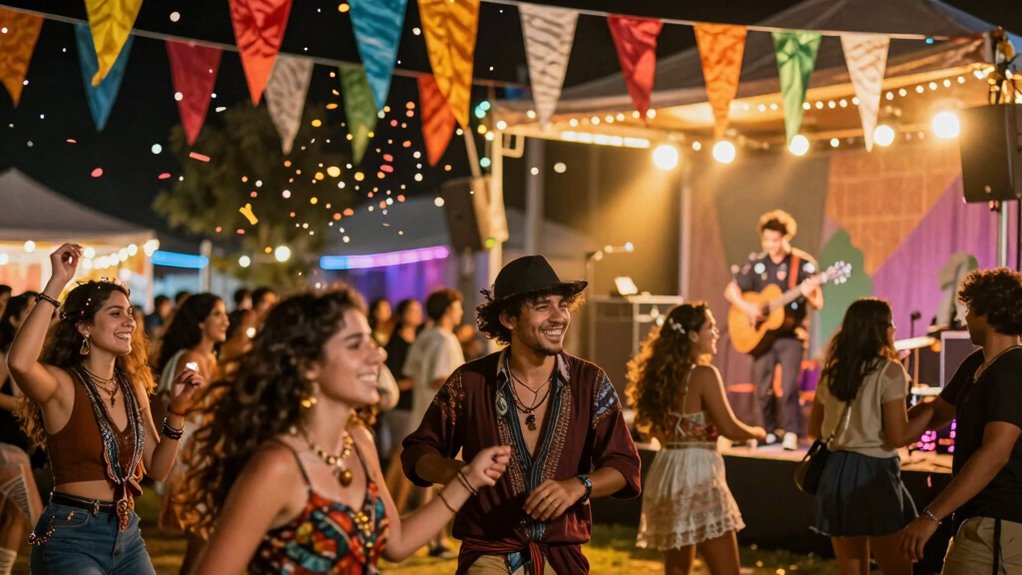
To tell a better festival story in under a minute, focus on vivid sights, sounds, and emotions that capture the event’s energy. Highlight unique traditions or rituals that make the celebration special, explaining their cultural significance. Use active, lively language to describe colorful parades, rhythmic music, and shared moments that spark excitement. Incorporate sensory details like aromas and textures to deepen the connection. Keep it lively and authentic—if you want to master this craft, more tips await you just ahead.
Key Takeaways
- Start with a vivid, attention-grabbing moment to spark curiosity immediately.
- Use active, energetic language to convey excitement and immediacy.
- Focus on specific sensory details—sounds, sights, smells—that evoke strong images.
- Highlight unique traditions or rituals that define the festival’s cultural significance.
- Keep the story concise, emphasizing one or two powerful moments for emotional impact.
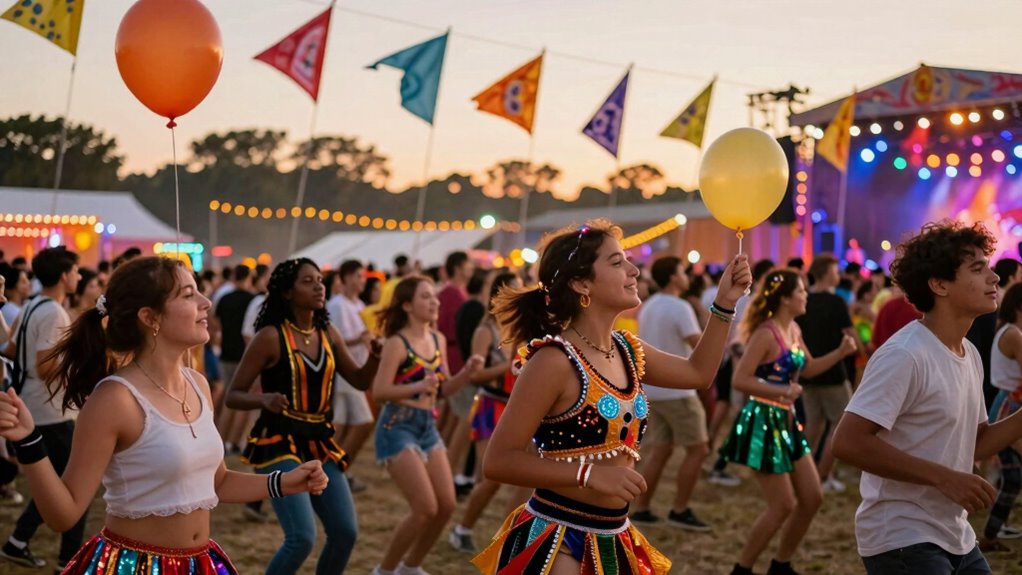
Every great festival story starts with capturing the energy and details that make the event memorable. You want your audience to feel like they’re right there with you, experiencing the sights, sounds, and emotions firsthand. To do that, focus on the festival traditions that set this event apart. Mention unique rituals, cultural practices, or local customs that make the festival special. These details bring authenticity and depth to your story, giving your audience a window into what makes this event meaningful. But don’t just list traditions—show how they create a sense of community or excitement. For example, describe the rhythm of a traditional dance, the aroma of festival foods, or a moment when attendees come together in a shared experience. These elements instantly evoke vivid images and emotions, making your story more engaging. Incorporating specific festival techniques can also elevate your storytelling by highlighting the unique ways these traditions are celebrated. Understanding the cultural significance behind each tradition can deepen the connection your audience feels to the story. Additionally, focusing on the sound healing science of certain rituals can add a fascinating layer of meaning and resonance to your narrative. You can also emphasize how landscaping enhances the environment, creating a more immersive atmosphere that draws people into the celebration. To make your story even more compelling, consider incorporating local customs that showcase the originality and richness of the event. Audience engagement is your secret weapon for telling a compelling festival story in under a minute. You want to draw your listeners in quickly and keep their attention. Start with a striking detail or a lively scene that immediately sparks curiosity. Maybe it’s the burst of color from a parade, the roar of the crowd during a key performance, or a funny mishap that happened during the festivities. Use active voice to create a sense of immediacy, making your audience feel as if they’re right there with you. Instead of saying, “There was a parade,” say, “The parade bursts with color as performers dance through the streets.” This approach energizes your storytelling and makes it more vivid.
Incorporate sensory words to heighten the experience. Describe the bustling chatter, the pounding drums, the taste of a spicy treat, or the warmth of the sun on your skin. The goal is to make your listeners see, hear, and feel what you experienced. Keep your story focused by zeroing in on one or two memorable moments, rather than trying to cover everything. This keeps it concise and impactful within the one-minute limit. Remember, your enthusiasm is contagious. When you speak with genuine excitement about the festival traditions and moments that moved you, your audience will naturally feel more connected and eager to share in the experience. With practice, you’ll master the art of telling a vibrant, compelling festival story in just under a minute, leaving your audience inspired and craving their own festival adventure.

Mini Mic Pro (Latest Model – #1 Microphone for iPhone & Android, Wireless Mini Microphone, Clear Voice, Noise Cancelling, Lavalier Mic for TikTok, YouTube & Interviews
- Original Mini Microphone: Wireless, portable, studio-quality sound
- Seamless Device Compatibility: Works with iPhone, Android, tablets, laptops
- Plug-and-Play Connection: USB-C and Lightning adapters included
As an affiliate, we earn on qualifying purchases.
As an affiliate, we earn on qualifying purchases.
Frequently Asked Questions
What Are Common Pitfalls to Avoid When Telling Festival Stories?
Avoid festival clichés that make your story sound generic, and steer clear of storytelling jargon that confuses your audience. Don’t overuse buzzwords or assume everyone understands your references. Instead, focus on vivid, authentic details that connect emotionally. Keep it simple and engaging, and don’t rush through your story. By avoiding these pitfalls, your festival story becomes memorable and relatable, capturing the true spirit of the event without sounding cliché or overly complicated.
How Can Humor Enhance My Festival Storytelling?
You’ll find humor boosts your festival story by making it more relatable and memorable. Coincidences often bring genuine laughs, and with good comedy timing, your punchline delivery lands perfectly. When you naturally highlight funny moments, your audience connects better, feeling like they’re sharing the experience. Humor also keeps the story lively and engaging, transforming a simple event into a memorable tale that resonates long after the festival ends.
What Equipment or Tools Can Improve Storytelling Clarity?
You can improve your storytelling clarity by using visual aids like photos or simple props to illustrate key moments. Incorporate sound effects to add depth and keep your audience engaged. A portable speaker or smartphone app can help deliver these effects seamlessly. Keep your equipment lightweight and easy to set up so you can focus on your story, ensuring your message is clear, vivid, and memorable in just a minute.
How Do I Tailor My Story for Different Audiences?
You tailor your story by conducting audience analysis to understand their interests and backgrounds. Incorporate cultural nuances to make your story resonate more deeply. Adjust your language, humor, and references to match their values and experiences. Use vivid descriptions and relatable themes that connect universally, but also respect specific cultural sensitivities. This approach guarantees your story engages, informs, and leaves a lasting impression tailored precisely to each unique audience.
What Are Quick Ways to Practice and Refine My Festival Story?
Think of your story as a river, flowing smoothly with vivid imagery to captivate your audience. Practice by recording yourself, then listen for story pacing—speeding up or slowing down to highlight key moments. Rehearse in front of friends or mirror, refining your delivery. Keep it short and punchy, focusing on impactful details. Repetition and feedback are your oars, helping you steer toward a compelling, polished festival story.

Chris Gore's Ultimate Film Festival Survival Guide, 4th edition: The Essential Companion for Filmmakers and Festival-Goers
- Condition: Used Book in Good Condition
As an affiliate, we earn on qualifying purchases.
As an affiliate, we earn on qualifying purchases.
Conclusion
Remember, even if you think your festival story isn’t perfect, your enthusiasm and authenticity will shine through. People want to connect with genuine experiences, not a flawless recount. So, don’t overthink every detail—trust your memory and share what made the moment special to you. By focusing on your passion and keeping it real, you’ll craft a story that resonates and leaves your audience craving more. Just tell it from the heart, and you’re all set.

WinBridge S97 60W Powerful Voice Amplifier with Dual Wireless Microphones
- All-in-One Karaoke & PA System: 60W portable voice amplifier and karaoke speaker
- Multiple Connection Options: Bluetooth, USB, TF card, AUX input
- Dual Microphone Inputs: 3.5mm and 6.35mm ports for microphones
As an affiliate, we earn on qualifying purchases.
As an affiliate, we earn on qualifying purchases.
vivid sensory storytelling props
As an affiliate, we earn on qualifying purchases.
As an affiliate, we earn on qualifying purchases.