If someone goes missing, act quickly by establishing a search perimeter and dividing it into sectors. Use visual methods like binoculars and deploy tools such as drones, thermal imaging, and GPS if available. Communicate clearly with your team through radios and assign roles to ensure organized efforts. Gather detailed info about the person’s routines to prioritize search areas. For effective coordination and more detailed steps, continue exploring essential lost person protocols.
Key Takeaways
- Act quickly and establish a search perimeter dividing the area into sectors.
- Deploy visual search tools like binoculars and utilize high vantage points for efficiency.
- Use technological tools such as drones, GPS, and thermal imaging to aid the search.
- Maintain clear communication among team members via radios and coordinate efforts centrally.
- Gather detailed information on the person’s routines to prioritize search areas effectively.
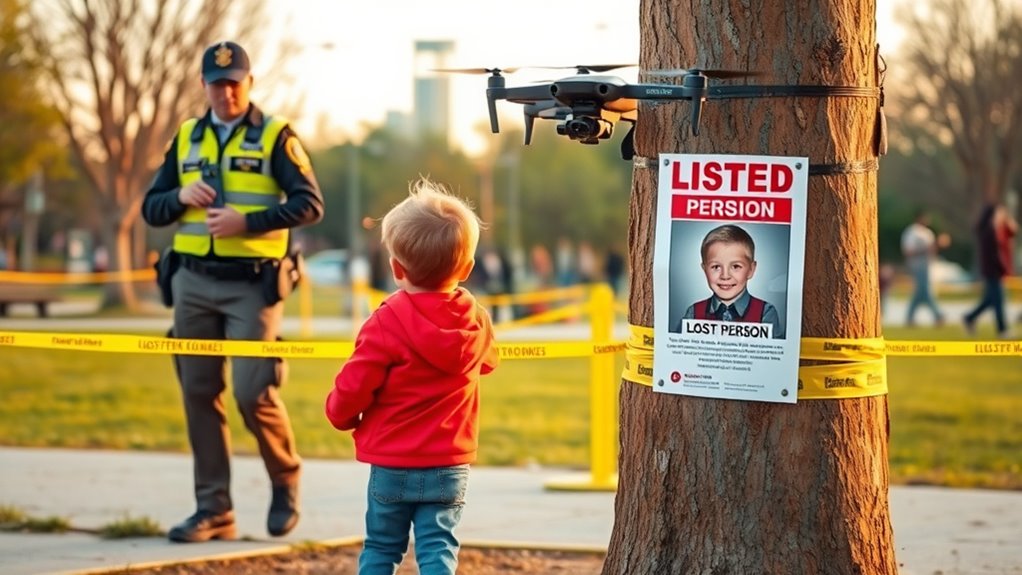
When someone is reported missing, following established Lost Person Protocols guarantees a swift and effective response. Your first priority is to act quickly and systematically, ensuring that every step you take maximizes the chances of locating the individual. One of the most critical aspects is deploying appropriate search techniques. These techniques involve organizing a coordinated search effort that covers the most likely areas where the person might be found. You should establish a clear search perimeter, dividing the area into sectors to ensure no spots are overlooked. Use visual search methods, such as scanning with binoculars or searching systematically from high vantage points, to cover large areas efficiently. Employing ground searches on foot or by vehicle helps to narrow down the search area, especially if you have information about the person’s last known location or habits. Depending on the terrain and circumstances, consider utilizing technological tools like drones, GPS tracking, or thermal imaging to enhance your search efforts. These tools can reveal signs of movement or heat signatures that might otherwise go unnoticed. Incorporating search management plans into your protocols ensures a structured approach, making your response more efficient and effective.
Alongside search techniques, communication strategies are equally crucial. Maintaining clear, consistent communication with all team members prevents confusion and ensures everyone is working in unison. Use radios or other reliable communication devices to relay updates, coordinate movements, and share new information instantly. Establish a command center where information can be gathered, analyzed, and disseminated quickly. It’s important to keep the affected person’s family and friends informed, providing updates and reassurance to help manage their expectations and reduce panic. When communicating with the public or volunteers, give precise instructions about where and how to search, and encourage them to report any sightings immediately. Effective communication also involves gathering as much information as possible about the missing person’s habits, routines, and possible destinations, which guides your search efforts and helps prioritize areas to focus on.
Frequently Asked Questions
How Can Technology Aid in Locating a Lost Person?
Technology can notably aid in locating a lost person by utilizing GPS tracking, which provides real-time location data, and drone technology, which offers aerial surveillance to cover difficult terrain. You can deploy GPS devices or apps on the person’s phone to track their movements, while drones can quickly scan large areas visually. These tools help responders act faster and more accurately, increasing the chances of a safe and swift rescue.
What Are Common Mistakes to Avoid During Search Efforts?
Don’t overlook the importance of a solid search strategy; rushing or wandering aimlessly wastes time and resources. Avoid neglecting volunteer coordination, which can cause chaos or duplicate efforts. Stay organized, assign roles clearly, and keep communication open. Remember, overlooking these mistakes can delay recovery, while a focused approach maximizes your chances of finding the person quickly and safely. Stay disciplined, and use your team wisely.
When Should Authorities Be Contacted in a Missing Person Case?
You should contact authorities immediately when you realize someone is missing, especially if they’re vulnerable or in danger. Doing so guarantees legal considerations are met and helps mobilize community involvement quickly. Prompt action allows authorities to coordinate search efforts, gather vital information, and prevent delays that could jeopardize the person’s safety. Don’t wait—timely contact maximizes chances of a successful recovery and aligns with legal protocols.
How Do Weather Conditions Impact Search and Rescue Operations?
Weather impact can critically hinder search and rescue efforts, making environmental challenges more difficult to overcome. Harsh conditions like rain, snow, or high winds can reduce visibility, slow down responders, and increase risks for both the missing person and rescue teams. Extreme temperatures may cause hypothermia or heat exhaustion. It’s essential to monitor weather forecasts, adapt strategies accordingly, and prioritize safety to guarantee effective and efficient search and rescue operations.
What Psychological Steps Can Help Manage Stress During a Search?
Did you know that practicing mindfulness can reduce stress by up to 30%? During a search, focus on building emotional resilience by taking deep breaths and staying present. Use mindfulness techniques like grounding exercises to calm your mind and maintain clarity. Remember, managing your stress helps you stay alert and effective, increasing the chances of a successful rescue. Stay positive and keep your emotions in check to support the effort.
Conclusion
Remember, acting quickly is your lifeline in a lost person situation—think of it as being the lighthouse guiding someone back to safety. Stay calm, follow the protocols, and don’t hesitate to call for help. Your swift response can turn a moment of desperation into a beacon of hope. By staying vigilant and proactive, you become the steady hand that steers a lost soul back to safety, illuminating the way when it’s needed most.